
Introduction: What Is Digital Rights Management in Music?
Every musician faces a fundamental tension: you want fans to enjoy your music freely, yet you need to protect your work and earn a living. This tension has defined the digital music era.
Digital Rights Management (DRM) is technology that controls how music is used, copied, and distributed. Think of it as a digital lock on your music files—one that determines which devices can play your songs, whether fans can burn them to CD, or how long a downloaded track remains playable.
Streaming now accounts for 69% of global music revenue, making DRM the invisible infrastructure behind every Spotify stream and Apple Music download.
This guide explains what DRM actually does, how it works across different platforms, and whether it genuinely protects your music—or just frustrates your fans.
TLDR:
- DRM encrypts music files and restricts playback to authorized devices and apps
- Streaming platforms apply DRM automatically—artists rarely control this decision
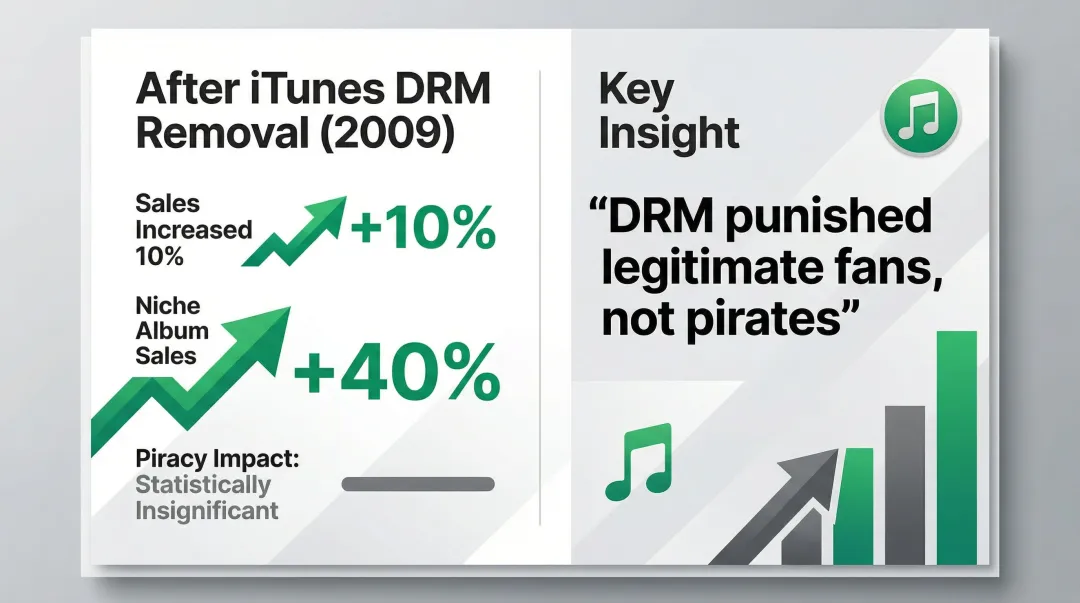
- Removing DRM from downloads increased sales by 10% without boosting piracy
- Modern alternatives like Content ID track usage without blocking playback
- For direct sales, DRM-free often builds better fan relationships
What Is Digital Rights Management (DRM) in Music?
Definition and Core Purpose
Digital Rights Management (DRM) refers to technological measures that control access to and usage of digital music files. At its simplest, DRM acts as a gatekeeper—it encrypts your music and only unlocks it for listeners who've paid for access or have an active subscription.
DRM enforces copyright by:
- Preventing unauthorised copying to other devices or media
- Blocking file sharing through peer-to-peer networks
- Restricting playback to specific apps or hardware
- Controlling streaming quality based on subscription tier
- Limiting the number of devices that can play a single purchase
DRM emerged in the late 1990s and early 2000s as digital music piracy exploded. When Napster launched in 1999, the recording industry watched file sharing reduce album sales by approximately 13% for some segments between 1999 and 2003.
The shift from physical media (CDs you could control) to digital files (infinitely copyable with zero quality loss) created a major challenge for labels and artists alike.
DRM differs from copyright law itself. Copyright gives you legal ownership of your music, while DRM is the technological tool that attempts to enforce those rights by making unauthorised use technically difficult or impossible.
The Historical Context
Early DRM systems were notoriously restrictive. Apple's FairPlay system, which protected iTunes downloads from 2003 to 2009, limited playback to just five authorised computers and allowed playlists to be burned to CD only seven times.
These files wouldn't play on non-Apple devices, locking consumers into the iPod ecosystem.
The industry abandoned DRM for music downloads in 2009 after realising it hurt legitimate customers more than pirates. Research analysing the iTunes DRM removal found it increased digital music sales by 10%, with a 40% surge for niche "long tail" albums, while having virtually zero impact on piracy rates.
Today's music market has split: ownership (downloads) is mostly DRM-free, while access (streaming) relies entirely on DRM.
How DRM Works in Music Distribution
Technical Mechanisms
DRM operates through several layers of technological protection:
Encryption Advanced Encryption Standard (AES) with 128-bit keys scrambles your music file into unreadable data that only the right "key" can decode. Without that key, the file is unplayable.
Authentication Systems Before playing your music, the listener's device or app must verify they have legitimate access.
The verification process works like this:
- The app sends a "license challenge" to a server
- The server checks if the user has purchased the song or holds an active subscription
- If valid, the server sends back a decryption key
- The app unlocks and plays the music
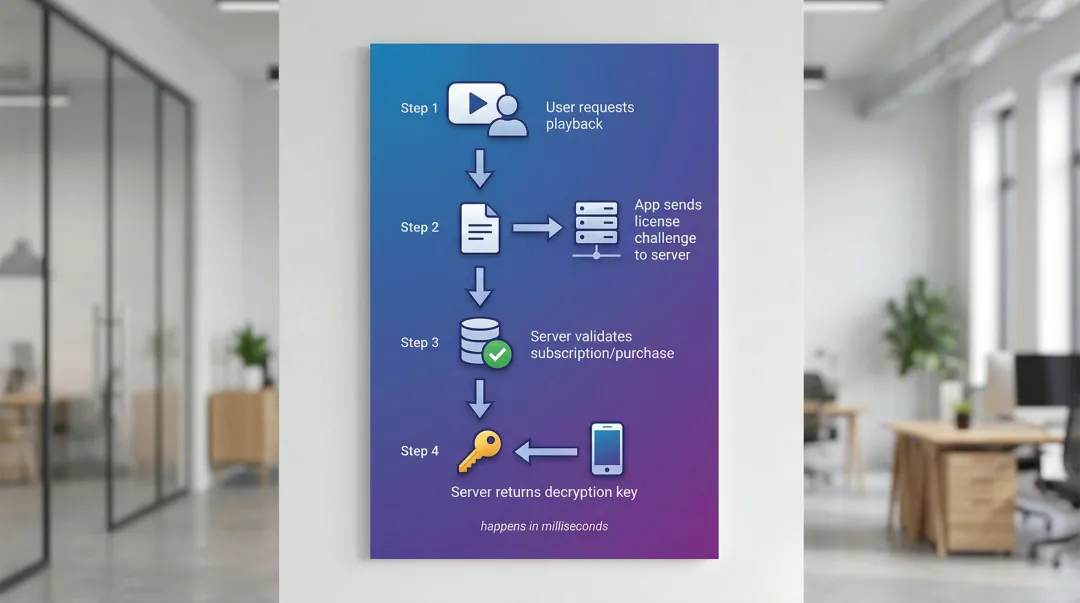
This handshake happens in milliseconds, invisible to the listener.
Usage Restrictions DRM can enforce specific rules:
- Maximum number of devices (e.g., "playable on up to 5 devices")
- Offline listening limits (e.g., "downloaded tracks expire after 30 days offline")
- Quality restrictions (e.g., "high-definition audio requires premium subscription")
- Geographic restrictions (e.g., "not available in your region")
Metadata and Watermarking Some DRM systems embed invisible information into the audio itself. This watermark survives format conversion and can identify who purchased a file if it appears on piracy sites—tracking distribution without preventing playback.
Server-Side vs. Client-Side DRM DRM implementation varies by delivery method:
- Streaming platforms use server-side control: the music stays encrypted on their servers, and they only send the decryption key to authenticated users
- Downloaded files use client-side DRM: the encrypted file and a license live on your device, with expiration rules enforced locally
The Music Distribution Chain
Upload and Encoding You submit high-quality audio files (typically WAV or FLAC). The distributor encodes them into multiple formats and bitrates for different platforms.
Platform Delivery The distributor sends your music to streaming services and download stores. Each platform has its own DRM requirements:
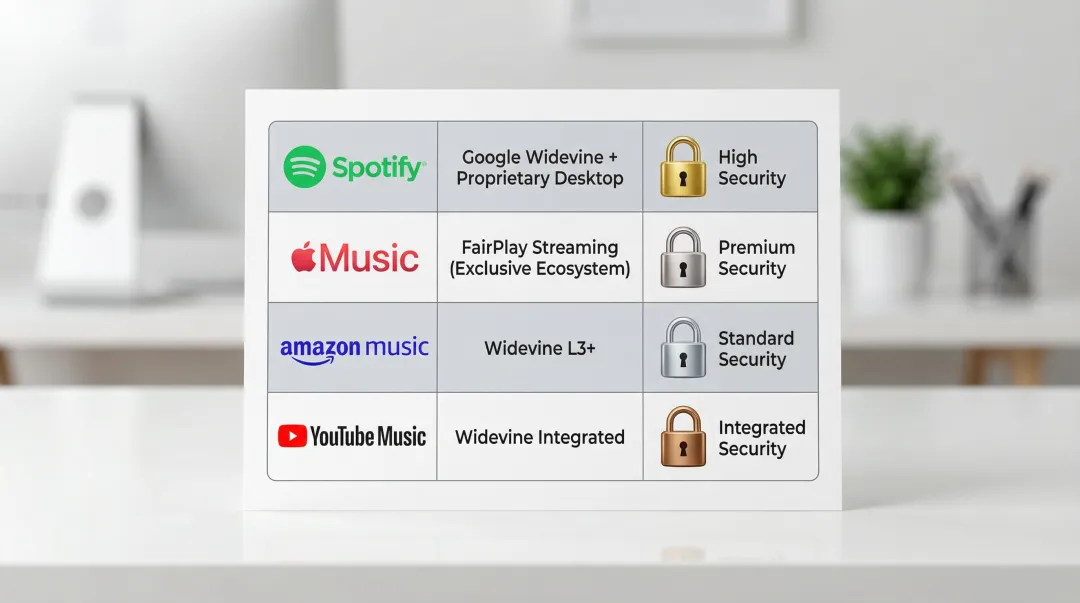
- Spotify applies Google Widevine encryption
- Apple Music uses FairPlay Streaming
- Amazon Music also relies on Widevine
DRM Application The streaming platform—not the distributor or artist—applies DRM. When a listener streams your song, the platform's servers encrypt the audio stream and manage the license verification.
Playback The listener's app requests a license, receives a decryption key, and plays your music. If their subscription lapses, the platform revokes access by refusing to issue new keys.
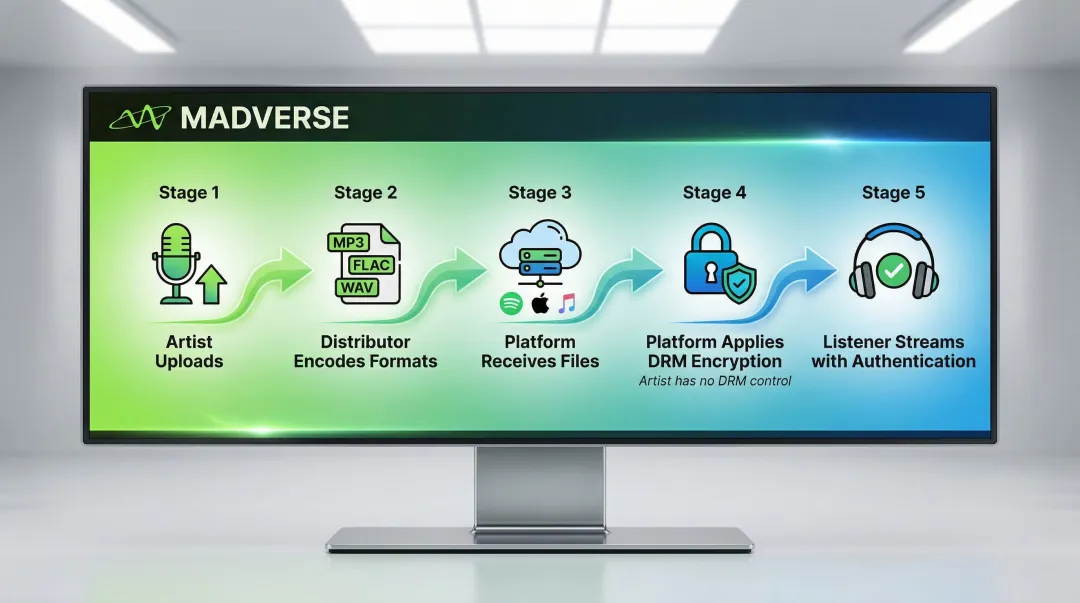
As an independent artist, you typically have zero control over whether your music has DRM on streaming platforms. Spotify, Apple Music, and similar services apply it automatically to protect their business model.
Your only DRM choice comes when selling music directly through your own website or platforms like Bandcamp.
Types of Music DRM Systems
Platform-Specific DRM
Streaming services rely on various encryption technologies to protect music:
| Platform | DRM System | Status | Notes |
|---|---|---|---|
| Spotify | Google Widevine | Active | Uses Widevine for web and Android; proprietary encryption for desktop apps |
| Apple Music | FairPlay Streaming | Active | Different from legacy FairPlay used on iTunes downloads |
| Amazon Music | Google Widevine | Active | Requires Widevine L3 security level or higher |
| YouTube Music | Google Widevine | Active | Integrated with YouTube's broader content protection |
Google Widevine has become the industry standard for browser-based and Android streaming, operating at three security levels:
- L1: Hardware-based protection in a secure chip; required for high-definition audio
- L3: Software-based protection; sufficient for standard quality on desktop browsers
- L2: Intermediate level rarely used in music
Apple FairPlay remains exclusive to Apple's ecosystem but has evolved significantly since its restrictive iTunes days. Modern FairPlay Streaming allows more flexibility while maintaining Apple's security requirements.
Legacy Systems: Microsoft's Windows Media DRM (marketed as "PlaysForSure") powered early subscription services but was discontinued in 2008, leaving purchased music unplayable when license servers shut down.
Content ID and Fingerprinting
While encryption-based DRM controls access to files, fingerprinting technology takes a different approach by tracking content after it's distributed.
YouTube Content ID exemplifies this model:
How It Works:
- Rights holders submit reference files of their music
- YouTube creates a unique "fingerprint" of the audio
- When users upload videos, Content ID scans for matches
- The system identifies matches with over 90% accuracy
Rights Holder Options: When Content ID detects your music, you can:
- Block: Prevent the video from being viewed
- Track: Monitor where and how your music is used
- Monetize: Place ads on the video and collect revenue
This approach lets your music spread organically while ensuring you get paid. A fan's dance video using your song becomes a revenue stream rather than a piracy problem.
Audio Fingerprinting extends beyond YouTube. Platforms like SoundCloud and streaming services use fingerprinting to detect unauthorized uploads, identify songs in user-generated content, and track royalty-eligible plays.
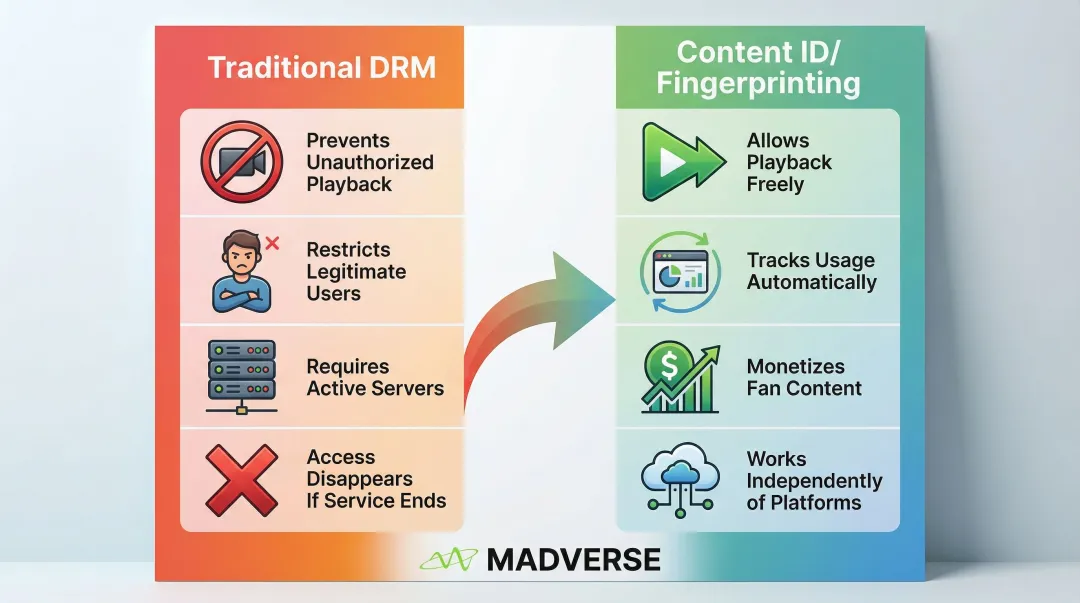
Key Difference: Traditional DRM prevents playback without authorization. Content ID allows playback but tracks and monetizes it.
DRM vs. DRM-Free Music: What's the Difference?
DRM-Protected Music
DRM-protected music comes with built-in restrictions:
- Encrypted files that require specific apps or devices to play
- Platform lock-in—you can't easily move your library between services
- Subscription dependency—downloaded tracks become unplayable if you cancel
- Device limits—playback restricted to a maximum number of devices
Current State: Nearly all streaming services use DRM. Spotify, Apple Music, Amazon Music, and YouTube Music encrypt streams and enforce subscription requirements. Stop paying, and your access disappears instantly.
Historical Context: Early iTunes purchases (2003-2009) used FairPlay DRM that made legally purchased music frustratingly difficult to use. Files wouldn't play on non-Apple devices, and the five-computer limit meant families often hit restrictions. This friction drove many consumers to piracy simply to use music they'd paid for.
The DRM-Free Movement
DRM-free music means unrestricted audio files (typically MP3, FLAC, or AAC) that you can use however you want:
- Play on any device or app
- Copy to unlimited devices
- Burn to CD without restrictions
- Keep forever, regardless of platform shutdowns
- Share with family (though copyright still applies)
Major DRM-Free Platforms:
- Bandcamp: Explicitly DRM-free; artists keep approximately 80-85% of sales revenue
- Beatport: Sells unprotected WAV and MP3 files, primarily for DJs
- CD Baby: Offers DRM-free distribution for direct sales
The 2007-2009 Shift: Under pressure from consumers and artists, major labels agreed to remove DRM from downloads. In January 2009, Apple announced all 10 million iTunes songs would be available DRM-free as "iTunes Plus" tracks. Amazon MP3 launched DRM-free from day one.
The shift proved decisive. The industry acknowledged that DRM on purchased files did more harm than good.
Which Approach Is Right for Your Music?
The Reality: For most artists, this isn't actually a choice. Major streaming platforms require DRM, and streaming is where listeners are. Streaming accounts for 69% of global recorded music revenue, totaling $20.4 billion in 2024.
When You Do Control DRM: For direct sales through your own website or platforms like Bandcamp, consider:
| Scenario | Best Choice | Why |
|---|---|---|
| Building deep fan relationships | DRM-free | Fans value ownership and flexibility more than restrictions |
| Word-of-mouth marketing focus | DRM-free | Music spreads more easily when fans can share freely |
| Premium packages (vinyl + digital) | DRM-free | Buyers expect full control of premium purchases |
| Exclusive controlled content | DRM | Maintains tighter control over distribution |
| Time-limited access | DRM | Enables early access windows for supporters |
| Partner requirements | DRM | Some contracts require protection by agreement |
Trade-offs:
- Protection vs. Accessibility: DRM restricts piracy but also restricts legitimate use
- Control vs. Fan Experience: Tight control frustrates fans who've paid for your music
- Marketing Impact: DRM-free music spreads more easily, potentially reaching new listeners
Distribution services like Madverse handle the technical complexity of delivering your music to DRM-protected streaming platforms while allowing you to retain 100% ownership rights. The platforms apply DRM automatically; you focus on making great music.
Benefits and Challenges of DRM for Musicians
Potential Benefits
DRM offers several protective advantages for musicians:
- Protection against unauthorized copying — Encryption prevents listeners from simply copying and sharing Spotify tracks freely, creating a technical barrier against casual piracy
- Revenue protection — Subscription requirements ensure people pay for access rather than sharing files, maintaining the streaming business model that generates royalties
- Rights tracking — Platforms track play counts precisely, creating clear records for calculating royalties and managing licensing
Significant Challenges
While DRM protects artists technically, it creates significant practical challenges.
Fan Frustration DRM often punishes legitimate fans. When Microsoft shut down MSN Music's license servers in 2008, customers were told to burn their purchased libraries to CD before the deadline or lose access forever. Fans who paid for music lost it entirely due to DRM's dependency on active servers.
Limited Discoverability Sharing restrictions limit word-of-mouth promotion. When fans can't easily share your music with friends, your potential audience shrinks.
DRM-free music spreads more organically—a fan can put your track on a USB drive or email it to a friend who might become a paying supporter.
Platform Dependency If a streaming service shuts down or loses licensing rights to your music, DRM-protected tracks become unplayable. Your music effectively disappears from fans' libraries. DRM-free files purchased from Bandcamp remain playable forever, regardless of platform status.
Effectiveness Concerns Research reveals a surprising reality: removing DRM from iTunes increased sales by 10% while having a statistically insignificant impact on piracy. Determined pirates bypass DRM easily, so it mainly impacts legitimate fans who find it inconvenient.
Revenue Disparities DRM-protected streaming pays significantly less than DRM-free direct sales. A Spotify stream might earn you ₹0.30, requiring thousands of plays to equal a single ₹1,000 album sale on Bandcamp. While streaming offers broader reach, the per-unit economics heavily favor DRM-free direct sales.
Modern Alternatives to Traditional DRM
Streaming as a Business Model
The most effective "alternative" to DRM isn't a technology—it's a business model. Subscription streaming reduced piracy by making music easily accessible at a reasonable price.
Why Streaming Works:
- Convenience beats piracy: Spotify is easier than torrenting
- Access over ownership: Listeners don't need to "own" files to enjoy music
- Invisible DRM: Fans don't notice DRM because they never download files
Music piracy declined 22% globally between 2018 and 2019, with streaming growth directly causing this decline. Spotify data suggests its launch reduced piracy by up to 20% in markets like Norway and Spain.
For independent artists, distribution platforms provide the gateway to these streaming services, handling technical requirements while you retain ownership and focus on your music.
Blockchain and NFTs
Blockchain technology offers new approaches to music rights management through three core mechanisms:
The Technology:
- Blockchain creates an permanent record of ownership and transactions
- Smart contracts can automatically execute royalty payments when music is used
- NFTs allow artists to sell unique digital items with built-in ownership tracking
Current Reality: Blockchain and NFTs function as complementary technologies rather than DRM replacements. They excel at establishing ownership and automating payments but don't prevent unauthorized playback. Think of blockchain as a transparent rights registry, not a lock on your music files.
Projects like Audius use blockchain to create decentralized music platforms where artists control distribution directly, though these platforms still represent a tiny fraction of the streaming market.
While blockchain shows promise for rights management, the practical alternatives that work today focus on tracking rather than restricting.
Watermarking and Fingerprinting
These technologies protect rights without restricting usage:
Forensic Watermarking Invisible data embedded in the audio signal that survives format conversion and even analog recording. If a pre-release track leaks, the watermark identifies which recipient shared it.
This tracks distribution without preventing legitimate fans from enjoying your music.
Content ID Systems YouTube's Content ID represents the middle ground: your music is freely playable, but usage is monitored and monetized. Content ID identifies matches with over 90% accuracy, allowing you to earn revenue from user-generated content rather than blocking it.
Advantages:
- No friction for legitimate listeners
- Tracks usage without preventing sharing
- Monetizes organic promotion (fan videos, covers, etc.)
- Survives format changes and quality reduction
Distribution platforms can help you access Content ID protection, ensuring your music generates revenue across YouTube while remaining freely shareable.
Frequently Asked Questions
Do I need DRM to protect my music as an independent artist?
Streaming platforms like Spotify and Apple Music apply DRM automatically—you don't control this. For direct sales through your website or Bandcamp, DRM-free is often better since it builds fan relationships and helps your music spread organically.
Can DRM prevent people from pirating my music?
Not effectively—dedicated pirates bypass DRM easily. Research shows that when iTunes removed DRM, sales increased 10% while piracy remained unchanged. Accessibility and reasonable pricing prevent piracy better than encryption.
What happened to iTunes DRM?
iTunes removed DRM from music in 2009 after pressure from labels and consumers who found it frustrating. Today, the Apple Music Store sells DRM-free downloads while Apple Music streaming uses DRM.
How does DRM affect my royalties?
DRM doesn't directly impact royalty rates—streaming platforms pay based on plays, not encryption. The business model matters more: streaming pays ₹0.20-0.30 per play, while direct downloads earn ₹650-800 per sale.
Is DRM-free music more likely to be pirated?
Studies show minimal difference. Pirates bypass DRM regardless, so it mainly affects legitimate fans. DRM-free music may actually increase legitimate sales through better user experience and easier sharing. The 2009 iTunes DRM removal proves this: sales increased while piracy remained statistically unchanged.
What should I know about Content ID and DRM?
Content ID identifies your music in YouTube videos and monetizes them, rather than blocking playback like traditional DRM. To access it, work with a distributor like Madverse, which helps independent artists turn fan videos into revenue streams.