
Understanding Level Music Distribution and Its Closure
When Warner Music Group announced Level Music's shutdown in 2024, thousands of independent artists faced an urgent question: What happens to my music? The platform's closure sent ripples through the DIY distribution community, forcing artists to scramble for migration strategies while protecting years of streaming momentum.
This guide documents Level Music's history and closure while providing practical migration strategies to help you make informed decisions about your music's future.
You'll learn what Level Music offered, why Warner abandoned the DIY space, how to preserve streaming stats during migration, and which alternatives best match your career stage and release volume.
The closure reveals fundamental shifts in how major labels view independent distribution. It highlights critical stability factors every artist should evaluate before choosing a distribution partner.
TLDR: Key Takeaways About Level Music Distribution
- Level Music launched in 2018 by Warner Music Group offering 100% royalty retention to compete with TuneCore
- Warner shut down Level Music in 2024 to consolidate resources behind their ADA artist services division
- Platform shutdown removed all releases by November 18, 2024, with final wallet access closing July 11, 2025
- Migrating with identical ISRCs and UPCs preserved artist streaming stats across new distributors
- Major-label ownership creates platform risk—always verify distributor stability and ownership before committing
What Was Level Music? A Brief History
Level Music entered the independent distribution market in early 2018 as Warner Music Group's strategic play to capture DIY artists. The company aimed to funnel emerging talent upward to Warner's label roster.
The platform distinguished itself during beta with an aggressive pricing model: zero fees and 100% royalty retention for artists. This approach directly challenged established players like TuneCore and DistroKid, which charged annual subscriptions or per-release fees.
Artists kept complete ownership of their masters and rights—a critical differentiator from traditional label deals.
Beyond the pricing advantage, Level Music provided comprehensive distribution services:
- Distribution to major DSPs (Spotify, Apple Music, Amazon Music, Tidal)
- Social platform distribution (Instagram, TikTok, YouTube)
- Basic analytics dashboard for performance tracking
- Level Wallet system for royalty management and withdrawals
Level Music's value proposition centered on broad platform reach combined with artist-friendly terms. The no-fee structure during launch attracted emerging artists seeking to test the distribution waters without financial commitment, while the Warner backing suggested stability and industry connections.
Why Did Level Music Shut Down? Understanding Warner's Strategic Pivot
Warner Music Group officially announced the closure in September 2024 with a clear strategic rationale.
"We're focusing all of our efforts behind the ADA brand, as we continue to strengthen our global suite of services for artists and label partners across the independent community."
From Open DIY to Curated Services
The closure mirrors Universal Music Group's 2022 shutdown of Spinnup, which transitioned from open distribution to invite-only before closing entirely. This pattern reveals a fundamental shift: major labels are abandoning mass-market DIY distribution in favor of curated, higher-margin services.
Why major labels quit DIY distribution:
- Operational overhead: Managing customer support, fraud detection, and metadata quality for thousands of low-revenue artists proved unsustainable
- Misaligned economics: The DIY model's thin margins couldn't justify the infrastructure investment required
- Strategic mismatch: Open platforms didn't effectively serve as talent funnels compared to curated A&R approaches
- Resource reallocation: Curated services like ADA generate higher margins while maintaining industry relationships
Warner's Broader Distribution Strategy
This shift reflects broader industry consolidation trends affecting independent artists worldwide.
Warner remained active in distribution through strategic investments. In early 2024, WMG confirmed interest in acquiring Believe, a major digital music company, though the bid didn't proceed.
In July 2024, WMG invested in Sua Música Group, a Brazilian regional platform. This signaled focus on established, scalable infrastructure rather than building internal DIY tools.
What this means for independent artists:
- Major label-backed DIY platforms are consolidating or closing
- Fragmentation and consolidation pressures make "open to all" models less viable
- Independent distributors without major label backing offer more stability
- Artists need distribution partners committed to the DIY model long-term
What Happened to Level Music Artists? The Migration Timeline
When Level Music shut down in 2024, thousands of independent artists faced an urgent challenge. The compressed timeline gave them just weeks to migrate their entire catalogs or risk losing streaming stats, playlist placements, and unclaimed royalties.
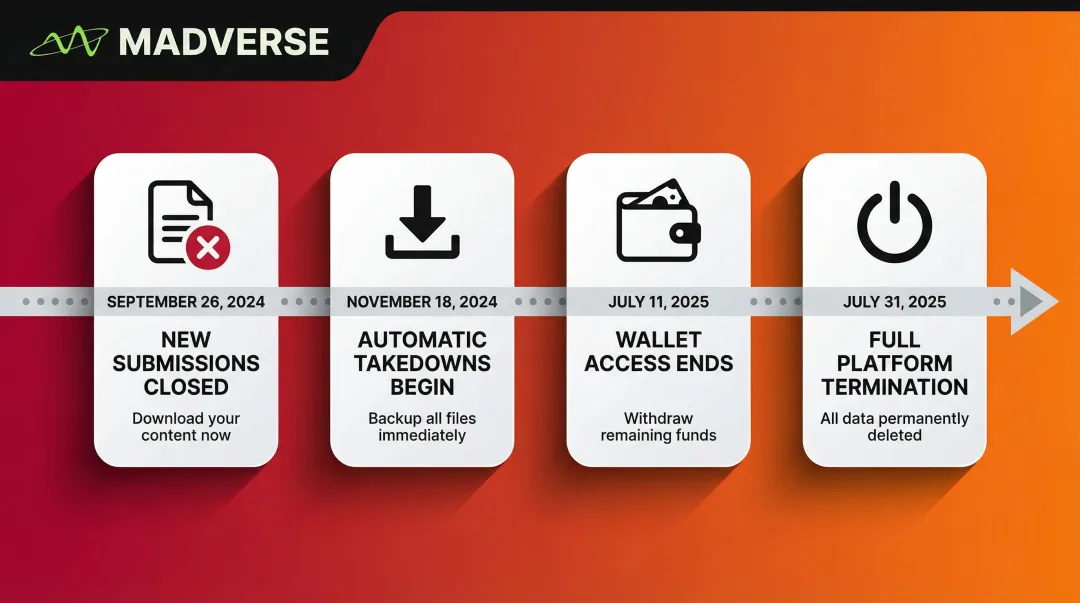
Shutdown timeline:
- September 26, 2024: New content submissions and edits closed
- November 18, 2024: Automatic takedowns began—Level removed all releases from DSPs
- July 11, 2025: Level Wallet access ends permanently
- July 31, 2025: Full platform termination
Critical Migration Steps
Artists had to complete several essential steps quickly to protect their catalogs and royalties.
Required actions:
- Export metadata and assets: Download all track information, artwork, and audio files before termination
- Withdraw funds: Empty Level Wallet before the July 11, 2025 deadline to avoid losing funds permanently
- Capture ISRCs and UPCs: Record these codes for every release to maintain streaming continuity
Preserving Streaming Stats During Migration
These catalog identifiers became critical during migration. Maintaining stream counts and playlist placements requires strict metadata discipline. Platforms like Spotify and Apple Music use ISRCs (International Standard Recording Codes) and UPCs (Universal Product Codes) to link tracks across distributors.
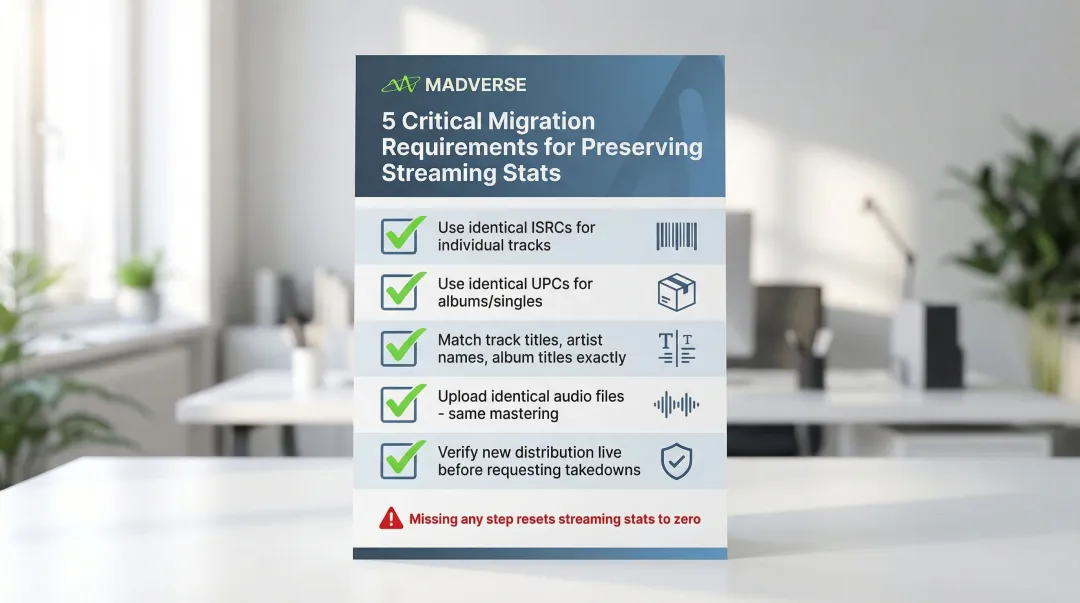
Technical requirements:
- Use identical ISRCs for individual tracks
- Use identical UPCs for albums and singles
- Match track titles, artist names, and album titles exactly
- Upload identical audio files (same mastering)
- Verify new distribution is live before requesting Level takedowns
Consequences of Missing the Deadline
Artists who didn't migrate before November 18, 2024 faced immediate catalog removal. Those who miss the July 11, 2025 wallet deadline may lose unclaimed royalties permanently.
Re-establishing catalog presence requires completely new uploads, which means:
- Starting stream counts from zero
- Losing existing playlist placements
- Breaking links in fan libraries and playlists
- Potential gaps in royalty collection during the transition
Best Alternatives to Level Music for Independent Artists
Free Distribution Platforms
RouteNote offers the most established free distribution model in the market. Artists keep 85% of streaming royalties while distributing to 150+ platforms including Spotify, Apple Music, TikTok, and YouTube.
The platform includes YouTube Content ID at no extra cost, a significant advantage for artists with viral potential or cover song releases.
Amuse provides another free option with 100% royalty retention on streaming, though YouTube Content ID carries a 15% fee. The mobile-first platform offers "Fast Forward" royalty advances for eligible artists, providing early access to projected earnings.
Trade-offs of free platforms:
- Slower customer support (RouteNote averages 3.3 on Trustpilot)
- Limited advanced features compared to premium services
- Revenue sharing reduces long-term earnings for successful releases
Premium Distribution Services
For artists releasing frequently, the premium tier offers better long-term value. These services charge annual fees but let you keep 100% of your royalties.
DistroKid dominates the high-volume segment with its $24.99/year Musician plan offering unlimited uploads and 100% royalty retention. The platform distributes to 150+ stores with industry-leading upload speed. Ideal for artists releasing multiple tracks monthly.
TuneCore uses the same $24.99/year Rising Artist pricing but takes a 20% commission on social platform revenues (TikTok, YouTube, Facebook). This social media cut significantly impacts artists whose music goes viral on these platforms.
The platform's daily trend reports and established brand provide value for artists prioritizing detailed analytics.
Ditto Music offers exceptional value at approximately $24/year for unlimited releases with 100% royalty retention, included YouTube Content ID, sync pitching, and strong customer reviews (4.5+ on Trustpilot).
Advanced Distribution with Label Services
Madverse Music provides distribution with 95% royalty retention on premium plans. The platform offers Dolby Atmos distribution, sync licensing opportunities for TV, movies, and video games, and advanced team collaboration tools.
The platform includes automated royalty splits at source, editorial playlist pitching (up to 4 releases/year on Star plan), YouTube Official Artist Channel setup, and music video distribution to VEVO, Apple Music, and Tidal. Enterprise clients receive dedicated account managers, and catalog migration support is included.
CD Baby uses a $9.99 one-time fee per single with artists keeping 91% of digital revenue. The no-subscription model works well for artists with smaller catalogs or legacy releases. However, sync licensing (40% commission) and social video monetization (30% commission) charge higher fees than competitors.
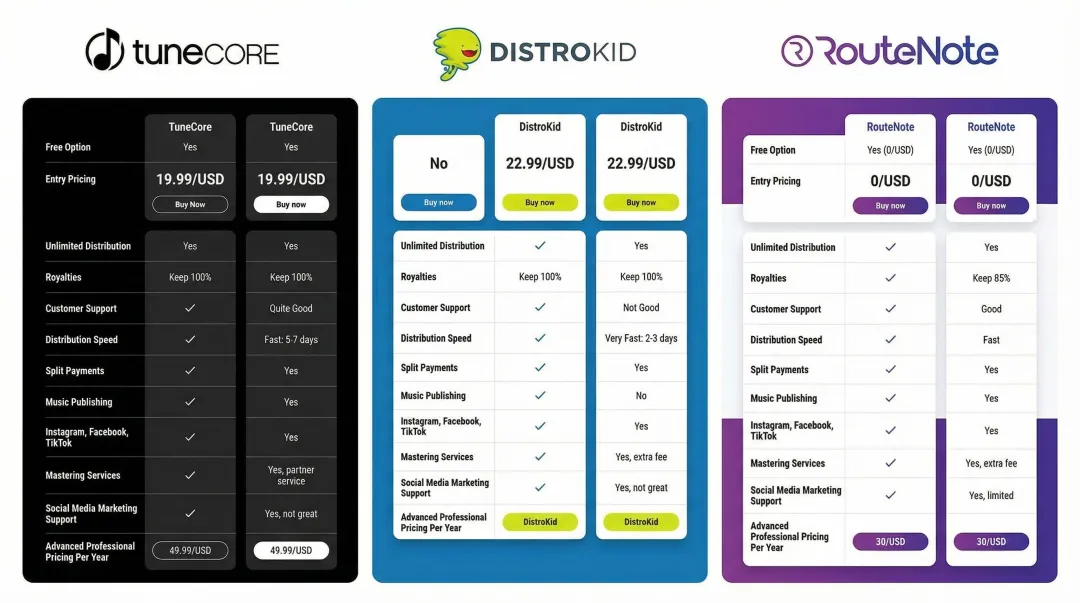
Distribution Comparison Framework
| Distributor | Pricing | Royalty % | YouTube Content ID | Sync Licensing |
|---|---|---|---|---|
| RouteNote (Free) | Free | 85% | Included | No |
| Amuse (Free) | Free | 100% | 15% fee | No |
| DistroKid | $24.99/yr | 100% | Add-on fee | No |
| TuneCore | $24.99/yr | 100% (80% social) | 20% fee | Add-on |
| Ditto Music | ~$24/yr | 100% | Included | Yes |
| Madverse Music | $34.99/yr (Star) | 95% | Included (Rise+) | Yes |
| CD Baby | $9.99 one-time | 91% | 30% commission | Yes (40% cut) |
How to Choose the Right Music Distributor: Lessons from Level Music
Platform Stability and Ownership Structure
The Level Music and Spinnup closures teach a critical lesson: major-label-owned DIY platforms carry inherent instability risk. Companies that don't focus primarily on distribution often eliminate these services during strategic shifts.
Stability signals to evaluate:
- Is distribution the company's primary revenue stream?
- How long has the platform operated continuously?
- Does the company have diversified revenue (B2B services, label arms)?
- What is the ownership structure (independent vs. major-label subsidiary)?
Established independent players like DistroKid, TuneCore, and CD Baby have survived multiple market shifts because distribution drives their core revenue. Platforms like Madverse, which built their business model around empowering independent artists and labels, demonstrate this stability-focused approach.
Once you've assessed platform stability, examine the financial structure carefully.
Transparent Pricing and Hidden Fees
Look beyond headline royalty percentages to understand total cost of ownership.
Red flags in pricing:
- Social media commissions: Some platforms take 20% cuts on TikTok and YouTube revenue, impacting viral artists
- Feature paywalls: Many "100% royalty" claims exclude Content ID requiring separate fees
- Withdrawal thresholds: High minimum payout thresholds lock up earnings
- Annual fee increases: Check whether pricing is locked or subject to annual increases
When evaluating costs, platforms like Madverse that offer 95% royalty retention with features like YouTube Content ID included demonstrate transparent pricing structures. Calculate your total cost based on realistic release volume and expected revenue sources, not just the base subscription fee.
Platform Coverage and Emerging Platform Adoption
Distribution speed to new platforms indicates technical agility. Distributors that rapidly integrated TikTok Music and the Artist Impact Program demonstrate their ability to capitalize on emerging opportunities.
Essential platform coverage:
- Core DSPs (Spotify, Apple Music, Amazon Music, Tidal, Deezer)
- Social platforms (TikTok, Instagram, Facebook, YouTube)
- Regional platforms for target markets (JioSaavn, Anghami, regional services)
- Video platforms (VEVO for music videos)
Beyond Basic Distribution
Platform coverage establishes the foundation, but advanced features separate professional-grade services from commodity distribution.
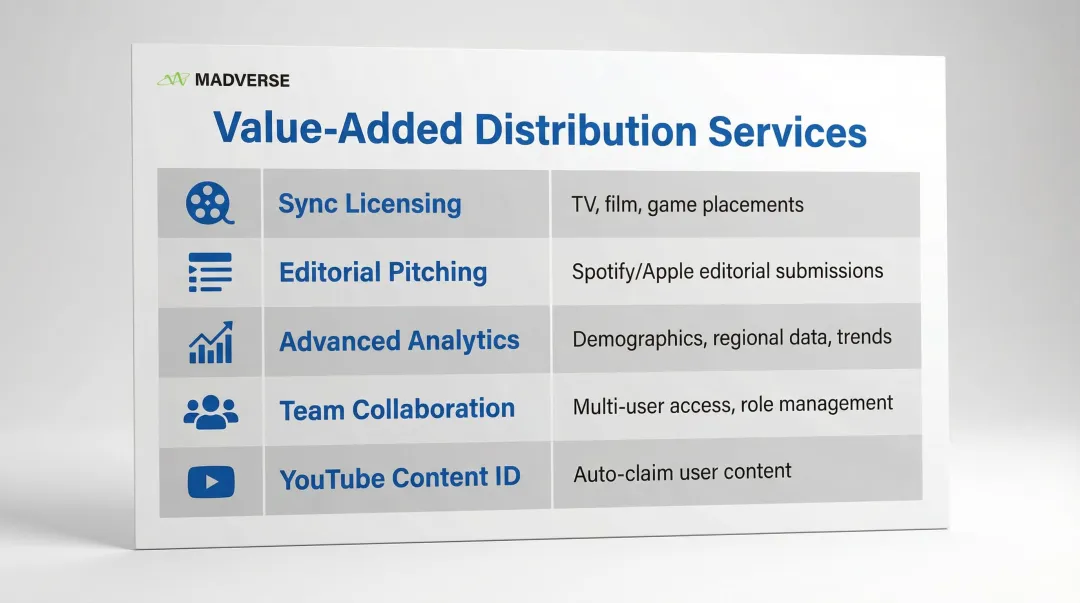
Value-adding services:
- Sync licensing access: Opportunities for TV, film, commercial, and game placements
- Editorial playlist pitching: Professional submissions to Spotify and Apple Music editorial teams
- Advanced analytics: Demographic data, regional performance, and trend analysis beyond basic stream counts
- Team collaboration tools: Essential for labels, collectives, and artists working with multiple collaborators
- YouTube Content ID: Automatic claiming and monetization of user-generated content
Diversification Strategies
Don't put your entire catalog at risk with a single platform.
Risk mitigation approaches:
- Maintain complete local backups of all audio files, artwork, and metadata
- Document all ISRCs and UPCs in an independent database
- Consider splitting catalog between two distributors for critical releases
- Understand contract terms and exit strategies before committing
- Monitor distributor news for acquisition rumors or strategic shifts
Frequently Asked Questions
Who owns Level Music?
Level Music was owned and operated by Warner Music Group, one of the "Big Three" major record labels. Warner shut down the platform in 2024-2025 to redirect resources toward ADA (Alternative Distribution Alliance), their curated artist services division focused on established independent artists and labels rather than open DIY distribution.
Is Level Music still accepting submissions?
No. Level Music stopped accepting new content submissions on September 26, 2024, and fully ceased operations on July 31, 2025. Artists seeking distribution should explore alternative platforms like RouteNote, DistroKid, TuneCore, or comprehensive services like Madverse Music.
What happened to my music after Level Music shut down?
All Level Music releases were removed from streaming platforms by November 18, 2024. If you didn't migrate before this deadline, re-upload through a new distributor using identical ISRCs and UPCs to preserve streaming history.
What are the best alternatives to Level Music?
RouteNote provides free distribution with 85% royalty retention, while DistroKid offers unlimited uploads for an annual fee. For comprehensive services including 95% royalty retention, Dolby Atmos distribution, and sync licensing, platforms like Madverse Music provide professional-grade features.
How do I transfer my music from Level Music to another distributor?
Export all metadata, artwork, and audio files from Level Music. Upload to your new distributor using identical ISRCs, UPCs, and track information to maintain continuity. Withdraw remaining funds before platform termination.
Can I keep my streaming stats when switching distributors?
Yes, but only with strict metadata continuity. Use the exact same ISRCs for individual tracks and UPCs for albums/singles when uploading to your new distributor. Match all text fields precisely—track titles, artist names, album names, and featured artist credits. Platforms like Spotify and Apple Music link releases using these identifiers, preserving play counts and playlist placements when they match exactly.