Introduction
By 2026, more than 70% of independent software vendors are expected to embed generative AI into their applications—a massive leap from less than 1% in 2023. Generative AI is fundamentally reshaping how modern marketers operate.
Today's marketing teams face crushing pressure: managing campaigns across 8-10+ channels, personalizing experiences for increasingly fragmented audiences, and extracting actionable insights from mountains of customer data.
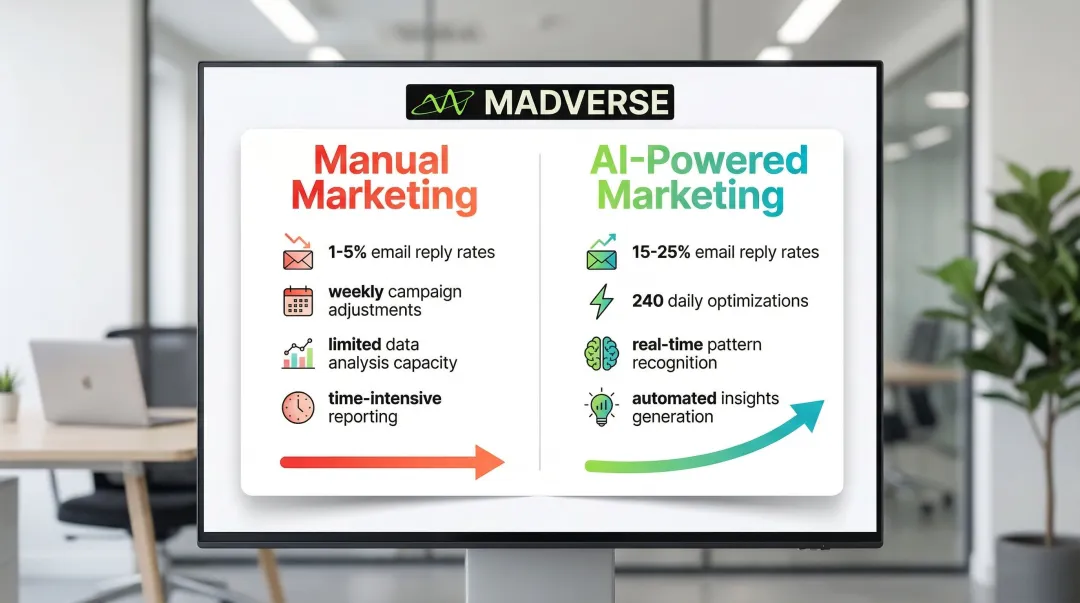
Manual processes can't keep pace with these demands. That's where AI automation delivers measurable impact—AI-driven campaigns achieve 15-25% reply rates compared to the 1-5% baseline for standard approaches.
This guide explores 26 AI marketing automation tools across content creation, email marketing, social media, analytics, and workflow automation. You'll discover how each tool works, what makes it unique, and how to choose the right solutions for your team's goals and budget.
TLDR
- AI marketing automation uses machine learning and predictive analytics to execute and optimize campaigns automatically
- 73% of companies see positive ROI within 6 months of implementing AI marketing tools
- Tools range from free options like Google Analytics 4 to premium enterprise solutions with usage-based pricing
- Successful implementation starts with one high-impact pilot project, clear success metrics, and proper integration with your existing marketing stack
What is AI Marketing Automation?
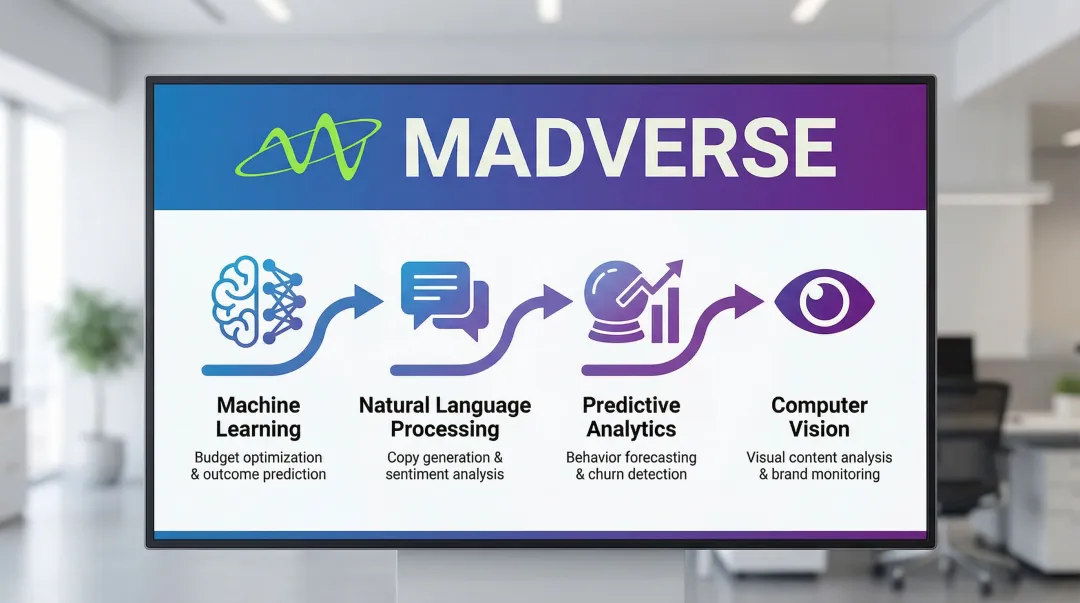
AI marketing automation integrates artificial intelligence capabilities—machine learning, natural language processing, predictive analytics—with marketing platforms to execute and optimize campaigns autonomously.
Unlike traditional automation that follows pre-programmed rules, AI systems continuously learn from data patterns and adapt strategies in real-time.
Core technologies powering these systems:
- Machine learning algorithms analyze historical data to predict outcomes and optimize budget allocation
- Natural language processing generates human-like marketing copy and analyzes customer sentiment
- Predictive analytics forecasts customer behavior including purchase likelihood and churn risk
- Computer vision analyzes visual content in ads and detects brand mentions in images and videos
Real-World Applications
Dynamic email personalization adapts subject lines based on individual user behavior patterns. AI chatbots learn from every conversation to improve response accuracy—Intercom's Fin AI Agent now resolves 59% of customer queries automatically. Predictive lead scoring identifies high-value prospects by analyzing dozens of behavioral signals that humans would miss.
For music industry professionals, platforms like Madverse demonstrate this evolution by combining AI-powered advertising automation with distribution services.
Their Express Ads tool uses machine learning to optimize promotional campaigns across streaming platforms, helping artists like JOG achieve 342% monthly listener growth through automated audience targeting.
Why AI Marketing Automation Matters for Modern Marketers
Managing campaigns across 8-10+ channels while personalizing experiences for segmented audiences is impossible to execute manually at scale.
A single campaign now requires coordination across email, social media, paid ads, content marketing, and multiple customer touchpoints, each demanding unique creative assets and messaging strategies.
The data explosion adds to this challenge. Marketing teams collect massive amounts of customer data—behavioral signals, engagement patterns, demographic information—but lack resources to analyze it effectively in real-time.
Without AI, valuable insights remain buried in spreadsheets while opportunities slip away.
AI automation solves both problems simultaneously, and the performance gains are measurable:
- AI-driven, hyper-personalized campaigns achieve 15-25% reply rates, dramatically outperforming the 1-5% baseline for standard campaigns
- Mailchimp users employing predictive segmentation saw 266% more revenue compared to those using non-predictive segments
- Adext AI performs up to 240 daily budget updates per ad automatically—a task no human team could match
Beyond performance metrics, AI handles repetitive tasks like data entry, report generation, A/B testing, and budget reallocation. This frees marketers to focus on strategy and creativity rather than spreadsheet management.
Key Benefits of AI Marketing Automation
Hyper-Personalisation at Scale
AI tracks how each listener interacts with your music—which tracks they replay, what playlists they create, when they engage most—then automatically personalises your marketing to match their behaviour.
The system processes thousands of data points across streaming platforms, email opens, social media engagement, and website visits to create unique experiences for every fan.
For independent artists, this means:
- Email campaigns that automatically promote your acoustic tracks to fans who replay stripped-down versions
- Social ads that highlight your latest release to listeners who engaged with similar genres
- Spotify Canvas recommendations based on which visual styles drive the most saves
- Pre-save campaigns timed to when individual fans are most active online
This customisation happens instantly across thousands of fans simultaneously.
Enhanced Predictive Analytics
AI uses historical data and machine learning models to predict future fan behaviour with remarkable accuracy. Google Analytics 4's predictive metrics forecast purchase probability, churn risk, and lifetime value for individual listeners, enabling campaign adjustments ahead of time.
For labels managing multiple artists, predictive analytics identifies which tracks are likely to gain momentum before they peak, allowing you to allocate marketing budget strategically.
AI can identify fans losing interest before they unfollow or unsubscribe. The system analyses patterns like decreased streaming frequency, reduced social engagement, or changed listening times, then automatically triggers re-engagement campaigns—exclusive content drops, early access offers, or personalised messages—before the fan disconnects completely.
Improved Efficiency and Cost Savings
AI marketing automation reduces time spent on manual tasks by handling repetitive workflows automatically. 73% of firms achieve positive ROI within 6 months of deploying AI marketing tools, demonstrating rapid value realisation.
AI delivers cost benefits beyond time savings. AI optimises ad spending by automatically reallocating budget to high-performing channels and audiences in real-time. Rather than waiting for weekly reports to adjust campaigns, the system makes hundreds of micro-optimisations daily, reducing wasted spend and improving overall campaign ROI.
Better Data-Driven Decision Making
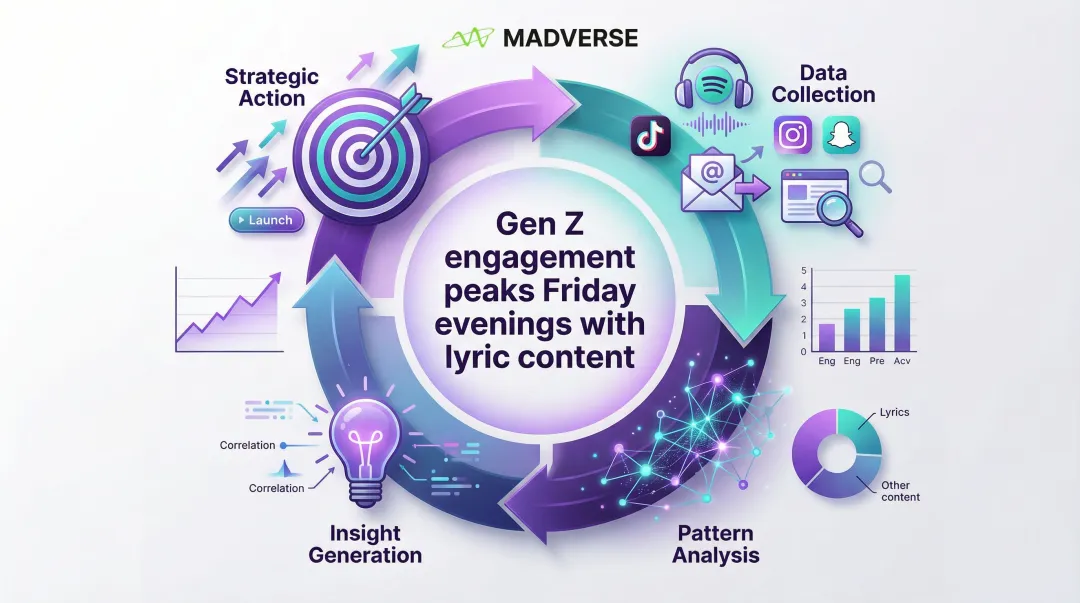
AI processes vast amounts of data from multiple sources to surface insights and trends that humans would miss. The technology identifies unexpected correlations—like which content topics drive engagement among specific audience segments, or which combination of ad creative elements performs best for different demographics.
For musicians, AI might discover that your audience engages more with behind-the-scenes studio content on weekday mornings but prefers lyric videos on Friday evenings. It could identify an unexpected listener segment—like Gen Z fans in Latin America engaging heavily with your older catalog—allowing you to pivot your release strategy based on actual behaviour rather than assumptions about your core audience.
26 Best AI Marketing Automation Tools to Supercharge Your Strategy
The right AI marketing automation tool can transform how you create content, engage audiences, and measure results. Below are 26 platforms organized by use case—from copywriting and email optimization to video creation and workflow automation.
Content Creation & Copywriting
Jasper AI
AI-powered copywriting platform that generates marketing content including blog posts, social media captions, ad copy, and email campaigns using natural language processing.
The platform automates content creation while maintaining consistent brand voice across all materials.
Key features:
- Supports 25+ languages with 50+ content templates
- Integrates with Surfer SEO for optimization
- Learns brand voice from examples you provide
| Best For | Pricing | Key AI Capability |
|---|---|---|
| Long-form content, blog posts, ad copy, email campaigns | Visit website for current pricing tiers | GPT-4 powered content generation with brand voice customization |
Copy.ai
AI writing assistant focused on short-form marketing copy, helping teams generate headlines, product descriptions, social media posts, and ad variations quickly. Specializes in conversion-focused copy that drives action.
Key features:
- Workflow automation for content creation
- Plagiarism checker and team collaboration tools
- Rapid generation of multiple copy variations for A/B testing
| Best For | Pricing | Key AI Capability |
|---|---|---|
| Short-form copy, social media, ad variations, product descriptions | Free plan available; paid plans start around $49/mo | Rapid copy generation optimized for conversions and engagement |
Grammarly Business
AI-powered writing assistant that goes beyond grammar checking to improve clarity, tone, engagement, and brand consistency across all marketing communications. Works seamlessly across 500,000+ apps and websites.
Key features:
- Real-time suggestions as you write
- Tone detector and plagiarism checker
- Brand style guide enforcement
- Consistency checks across team communications
| Best For | Pricing | Key AI Capability |
|---|---|---|
| Content editing, brand consistency, team writing quality | From $15/member/month | Context-aware writing suggestions and brand voice consistency |
Email Marketing & Personalization
Moving from content creation to distribution, email marketing tools use AI to optimize when and how messages reach your audience.
Mailchimp with AI
Popular email marketing platform enhanced with AI features for send-time optimization, subject line suggestions, content recommendations, and predictive segmentation. Users employing predictive segments saw 266% more revenue compared to non-predictive approaches.
Key features:
- Drag-and-drop email builder with A/B testing automation
- Predictive demographics and customer journey builder
- Integrates with 300+ apps
| Best For | Pricing | Key AI Capability |
|---|---|---|
| Email campaigns, audience segmentation, marketing automation | Free plan available; paid plans from $13/month | Send-time optimization and predictive audience segmentation |
Seventh Sense
AI-powered email delivery optimization tool that analyzes individual recipient behavior to determine the optimal send time for each person on your list. Integrates specifically with HubSpot and Marketo.
Key features:
- Increases email engagement by 7-30% on average
- Learns from each campaign to improve future sends
- Behavioral analysis for personalized timing
| Best For | Pricing | Key AI Capability |
|---|---|---|
| Email deliverability optimization, engagement improvement | Contact for pricing based on list size | Behavioral analysis for personalized send-time optimization |
Phrasee
AI platform that generates and optimizes email subject lines, push notifications, and social media copy using natural language generation trained on billions of marketing messages. Claims to outperform human copywriters in A/B tests.
Key features:
- Learns brand voice and provides real-time optimization
- Used by major brands including Virgin and Domino's
- Continuous performance improvement
| Best For | Pricing | Key AI Capability |
|---|---|---|
| Email subject lines, push notifications, SMS campaigns | Enterprise pricing, contact for quote | Natural language generation optimized for engagement and conversions |
Social Media Management
Social media tools apply AI to scheduling, content creation, and audience analysis across platforms.
Hootsuite Insights (powered by Talkwalker)
AI-powered social listening and analytics tool that monitors brand mentions, sentiment, and trends across social media channels to inform content strategy. Monitors 150M+ sources in 187 languages.
Key features:
- AI-powered sentiment analysis and competitive benchmarking
- Influencer identification and crisis detection
- Image and video recognition for brand mentions
| Best For | Pricing | Key AI Capability |
|---|---|---|
| Social listening, sentiment analysis, competitive intelligence | Available as add-on to higher-tier Hootsuite plans | Real-time sentiment analysis and trend prediction |
Lately
AI content repurposing tool that transforms long-form content—blogs, videos, podcasts—into dozens of social media posts while maintaining brand voice and key messages. Learns your brand voice from past successful posts.
Key features:
- Generates hundreds of social posts from one piece of content
- Includes scheduling and analytics
- Maintains message consistency across platforms
| Best For | Pricing | Key AI Capability |
|---|---|---|
| Content repurposing, social media scheduling, brand voice consistency | Contact for current pricing tiers | Automated content atomization with brand voice learning |
Sprout Social
Comprehensive social media management platform with AI-powered features for optimal posting times, content suggestions, and audience insights across all major platforms.
Key features:
- Unified social inbox with AI-powered chatbots
- Employee advocacy tools and competitive analysis
- Detailed analytics and reporting
| Best For | Pricing | Key AI Capability |
|---|---|---|
| Enterprise social media management, team collaboration | Plans from $249/month | ViralPost technology for optimal posting times and engagement prediction |
Chatbots & Conversational Marketing
Conversational AI tools handle customer interactions in real-time, qualifying leads and providing support automatically.
Drift
Conversational marketing platform using AI chatbots to qualify leads, book meetings, and provide instant customer support, replacing traditional forms with real-time conversations. AI Chat agents engage visitors with personalized conversations automatically.
Key features:
- Integrates with CRM and marketing automation platforms
- AI learns from conversations
- Includes video chat and targets high-value accounts automatically
| Best For | Pricing | Key AI Capability |
|---|---|---|
| B2B lead qualification, meeting scheduling, conversational marketing | Free plan available; paid plans from $2,500/month | Intelligent lead qualification and routing based on conversation analysis |
ManyChat
Chatbot platform for creating AI-powered automated conversations on Facebook Messenger, Instagram, WhatsApp, and SMS to nurture leads and drive sales. Pro plan starts at $15/month with AI features available as add-ons.
Key features:
- Visual flow builder with e-commerce integrations
- Abandoned cart recovery and broadcast messaging
- Detailed conversation analytics
| Best For | Pricing | Key AI Capability |
|---|---|---|
| E-commerce, social media messaging, lead nurturing | From $15/month; AI features $29/month additional | Natural language understanding for automated customer conversations |
Intercom
Customer messaging platform with AI-powered chatbots (Fin) that resolve customer support inquiries, qualify leads, and provide personalized product tours automatically. Fin resolves 59% of queries without human intervention.
Key features:
- Omnichannel messaging and product tours
- Customer data platform and team inbox
- AI answers trained on your support content
| Best For | Pricing | Key AI Capability |
|---|---|---|
| Customer support automation, onboarding, product education | From $29/seat/month; Fin AI at $0.99/resolution | AI agent resolves support tickets using your knowledge base |
Analytics & Insights
Analytics platforms use machine learning to surface insights and predict outcomes without manual data analysis.
Google Analytics 4 with AI Insights
Latest version of Google's analytics platform enhanced with machine learning to automatically surface insights, predict user behavior, and identify trends without manual analysis.
Key features:
- Predictive metrics (purchase probability, churn probability)
- Anomaly detection and cross-platform tracking
- Privacy-focused measurement
| Best For | Pricing | Key AI Capability |
|---|---|---|
| Website and app analytics, user behavior tracking, conversion optimization | Free (enterprise version available) | Automated insights and predictive analytics for user behavior |
Tableau with Einstein AI
Data visualization platform enhanced with Salesforce's Einstein AI to automatically discover insights, predict outcomes, and generate natural language explanations of data trends.
Key features:
- Connects to 100+ data sources
- AI-powered statistical analysis with natural language queries
- Automated dashboard generation and enterprise-grade security
| Best For | Pricing | Key AI Capability |
|---|---|---|
| Data visualization, business intelligence, cross-functional reporting | From $15/user/month (Viewer) to $75/user/month (Creator) | Einstein Discovery for automated insights and predictive modeling |
Crayon
AI-powered competitive intelligence platform that automatically tracks competitor website changes, content updates, pricing shifts, and marketing campaigns to inform strategy.
Key features:
- Monitors competitors 24/7
- AI categorizes and prioritizes updates
- Delivers actionable intelligence with Slack integration
| Best For | Pricing | Key AI Capability |
|---|---|---|
| Competitive intelligence, market research, strategic planning | Custom pricing based on needs | Automated competitor monitoring with AI-powered insight prioritization |
Advertising & Paid Media
Paid advertising platforms use AI to optimize targeting, creative performance, and budget allocation across channels.
Albert.ai
Autonomous AI platform that manages and optimizes digital advertising campaigns across channels (Google, Facebook, Instagram) by continuously testing and reallocating budget. Dole Philippines achieved 87% sales increase using Albert.
Key features:
- Operates 24/7 testing thousands of variations
- Cross-channel optimization
- Integrates with existing ad accounts
| Best For | Pricing | Key AI Capability |
|---|---|---|
| Multi-channel paid advertising, budget optimization, enterprise campaigns | Enterprise pricing, contact for quote | Autonomous campaign management with continuous cross-channel optimization |
Adext AI
AI platform that automatically manages Google and Facebook ad audiences and budgets, using machine learning to find the most profitable audience segments for each ad. Performs up to 240 daily budget updates per ad.
Key features:
- Claims to improve ROI by 80% on average
- Manages audiences not just bids
- Works with existing campaigns
| Best For | Pricing | Key AI Capability |
|---|---|---|
| Audience optimization, budget allocation, small to mid-size businesses | Pricing based on ad spend | Automated audience discovery and budget reallocation based on performance |
Pattern89
AI platform that analyzes creative elements in ads—images, copy, CTAs—to predict performance and provide recommendations for improving creative effectiveness.
Key features:
- Analyzes thousands of creative elements
- Provides benchmarks against competitors
- Integrates with Facebook and Instagram for actionable recommendations
| Best For | Pricing | Key AI Capability |
|---|---|---|
| Creative optimization, ad performance prediction, agencies | Contact for pricing tiers | Computer vision and NLP to analyze and predict ad creative performance |
SEO & Content Optimization
SEO tools use natural language processing to analyze search intent and optimize content for higher rankings.
Surfer SEO
AI-powered content optimization tool that analyzes top-ranking pages to provide data-driven recommendations for improving on-page SEO and content structure. Used by FedEx and Shopify.
Key features:
- Real-time content editor with SEO score
- SERP analyzer and content planner
- Integrates with Google Docs and WordPress
| Best For | Pricing | Key AI Capability |
|---|---|---|
| Content optimization, on-page SEO, content strategy | Plans from $69/month | NLP-based content analysis and optimization recommendations |
Clearscope
Content optimization platform that uses AI to analyze search intent and provide keyword recommendations, content structure suggestions, and readability improvements. Used by Shopify, Expedia, and Deloitte.
Key features:
- Google Docs integration
- Content inventory management and competitive analysis
- Search intent analysis
| Best For | Pricing | Key AI Capability |
|---|---|---|
| Content teams, SEO content optimization, editorial planning | From $170/month per user | AI-powered search intent analysis and content relevance scoring |
MarketMuse
AI content research and optimization platform that analyzes your content against competitors to identify gaps, suggest topics, and improve content quality and authority.
Key features:
- Content briefs with AI-generated outlines
- Competitive content analysis and topic clustering
- Content inventory auditing
| Best For | Pricing | Key AI Capability |
|---|---|---|
| Enterprise content strategy, content gap analysis, editorial planning | Free plan available; paid plans from $149/month | AI-powered content intelligence and topic modeling |
Video & Visual Content
Video and design platforms use AI to automate content creation, from generating videos from text to creating graphics from prompts.
Synthesia
AI video generation platform that creates professional videos with AI avatars from text scripts, eliminating the need for cameras, actors, and video editing skills. Trusted by over 50,000 companies.
Key features:
- 240+ AI avatars in 160+ languages
- Custom avatar creation and screen recording
- Video templates used by Amazon, BBC, and Nike
| Best For | Pricing | Key AI Capability |
|---|---|---|
| Training videos, product demos, personalized video messages | From $29/month (Starter) to custom enterprise pricing | Text-to-video generation with realistic AI avatars and voices |
Canva with Magic Studio
Popular design platform enhanced with AI features including Magic Write for copy, Magic Design for instant layouts, background removal, and image generation from text prompts. Trusted by 95% of the Fortune 500.
Key features:
- 250,000+ templates with brand kit for consistency
- Team collaboration and social post scheduling
- Integrates with multiple platforms
| Best For | Pricing | Key AI Capability |
|---|---|---|
| Social media graphics, presentations, marketing materials | Free plan available; Pro from $14.99/month | AI-powered design suggestions, text-to-image generation, and content creation |
Lumen5
AI video creation platform that automatically transforms blog posts and articles into engaging social media videos with relevant stock footage, music, and text overlays. Used by over 4 million companies.
Key features:
- Drag-and-drop editor with millions of stock media assets
- Brand customization and automated scene creation from text
- Optimized for social platforms
| Best For | Pricing | Key AI Capability |
|---|---|---|
| Content repurposing, social media videos, video marketing | From $19/month to $99/month | Automated video creation from text with intelligent media matching |
Workflow Automation
Automation platforms connect apps and services, using AI to build workflows and handle repetitive tasks.
Zapier with AI
No-code automation platform connecting 5,000+ apps with AI-powered features for building workflows, chatbots, and data transformations without technical skills. Used by over 2 million businesses.
Key features:
- Easy workflow builder with AI-powered Zap suggestions
- ChatGPT integration and multi-step workflows
- Extensive app ecosystem
| Best For | Pricing | Key AI Capability |
|---|---|---|
| Cross-platform automation, workflow building, productivity | Free plan available; paid from $19.99/month | AI-powered workflow suggestions and ChatGPT integration for intelligent automation |
Make (formerly Integromat)
Visual automation platform that connects apps and services with advanced features for data transformation, error handling, and complex workflow logic.
Key features:
- Visual workflow designer with 1,500+ integrations
- Advanced data manipulation
- Scheduled and real-time triggers with competitive pricing
| Best For | Pricing | Key AI Capability |
|---|---|---|
| Complex automations, data transformation, technical users | Free plan available; paid from $9/month | Intelligent data routing and transformation with AI-assisted workflow building |
Music & Entertainment Marketing
AI marketing automation also serves specialized industries like music distribution, where platforms help artists reach audiences efficiently.
Madverse
AI-powered music distribution and marketing platform that helps artists and labels automate promotional workflows, optimize playlist pitching, and analyze audience engagement across streaming platforms.
Their Express Ads platform uses machine learning to automate audience targeting for promotional campaigns. Artists like JOG achieved 342% monthly listener growth through intelligent targeting and playlist placement.
Key features:
- Automated playlist pitching with AI-optimized submissions
- Real-time analytics and audience demographics
- Sync licensing opportunities with royalty splits at source
- YouTube Content ID with 95% royalty retention
| Best For | Pricing | Key AI Capability |
|---|---|---|
| Independent artists, music labels, artist managers seeking automated distribution and marketing | From free tier to ₹3,499/year for premium features | AI-powered audience targeting for promotional campaigns and predictive analytics for release strategy |
How to Choose the Right AI Marketing Automation Tool for Your Needs
Assess Your Specific Marketing Challenges and Goals
Identify the specific pain points you're trying to solve. Is it content creation bottlenecks, email engagement, ad performance, or data analysis? Choose tools that directly address your highest-priority challenges rather than adopting technology for its own sake.
Your team's skill level matters. Some tools require minimal training while others need dedicated specialists. A sophisticated AI analytics platform won't deliver value if your team lacks the expertise to interpret its insights or act on recommendations.
Integration requirements deserve careful attention. The best tool becomes worthless if it doesn't integrate with your existing marketing stack—CRM, email platform, analytics, content management system. Prioritize tools with native integrations or robust API access to ensure seamless data flow.
Evaluate Pricing Models and ROI Potential
Once you've identified the right capabilities, budget becomes the next filter. Pricing structures vary widely across AI marketing tools.
Compare these key pricing factors:
- Per-user vs. per-contact vs. usage-based models
- Base subscription price vs. actual cost with essential features
- Free trial availability and demo periods
- Case studies from businesses similar to yours (enterprise e-commerce tools often don't suit service businesses)
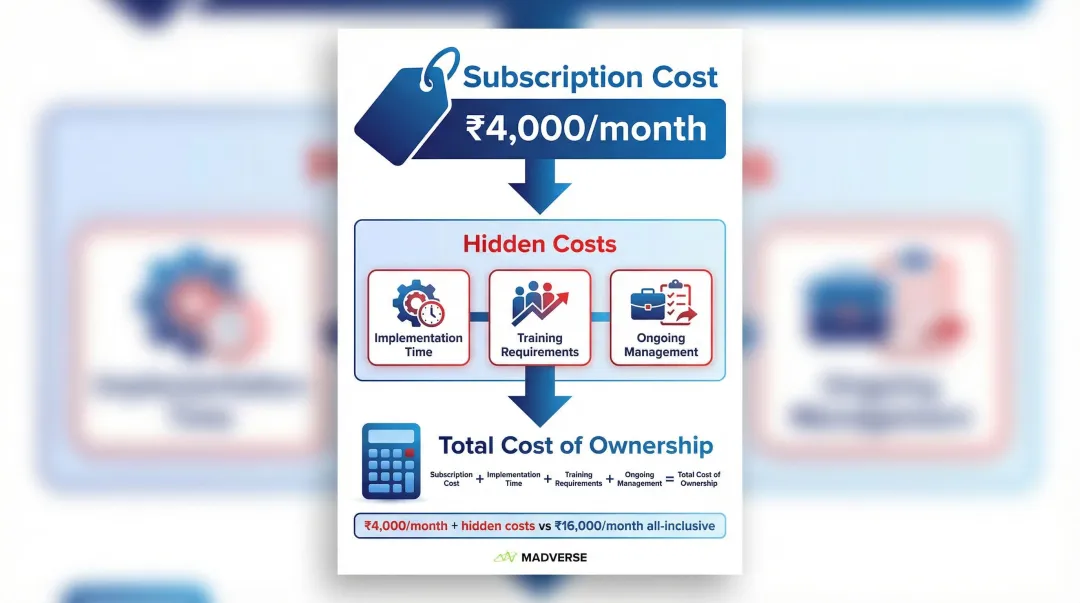
Calculate total cost based on your actual needs, not just the advertised starting price. A ₹4,000/month tool that charges extra for key features can cost more than a ₹16,000/month all-inclusive solution.
Don't overlook hidden costs beyond the subscription price. Implementation time, training requirements, and ongoing management all factor into total cost of ownership. A tool requiring 40 hours of setup and monthly maintenance may not justify the savings over a more expensive but turnkey solution.
Prioritize Data Privacy, Security, and Compliance
Verify that tools comply with relevant data protection regulations—GDPR, CCPA, and others—especially if handling customer personal information. Non-compliance can result in massive fines and reputational damage.
Understand how each tool uses your data. Does it train AI models on your proprietary information? Can you opt out? Review terms of service and data processing agreements carefully. Some vendors use customer data to improve their AI models, potentially exposing competitive insights.
Finally, evaluate vendor reliability and support. Research the company's track record, financial stability, customer support quality, and commitment to ongoing product development. A tool that stops receiving updates or loses support becomes a liability rather than an asset.
How to Get Started with AI Marketing Automation
Start with a Pilot Project
Pick one specific use case rather than trying to automate everything at once. Email personalization or social media scheduling work well as starting points—you can measure results quickly and prove value to decision-makers.
Set clear success metrics before implementation. Define what success looks like—time saved, engagement increase, conversion rate improvement—so you can objectively evaluate performance. Without baseline metrics, you can't prove ROI or identify what's working.
Document your process and results thoroughly. Track what works and what doesn't, gather feedback from your team, and use these learnings to refine your approach before expanding to other areas. This documentation becomes invaluable when scaling to additional use cases.
Integrate AI Tools with Your Existing Marketing Stack
Once your pilot shows promise, focus on integration. Map out your current marketing technology stack and identify where new AI tools need to connect—your CRM, analytics platform, email system, and other core tools should share data freely.
Data silos undermine AI's value by limiting available information for analysis.
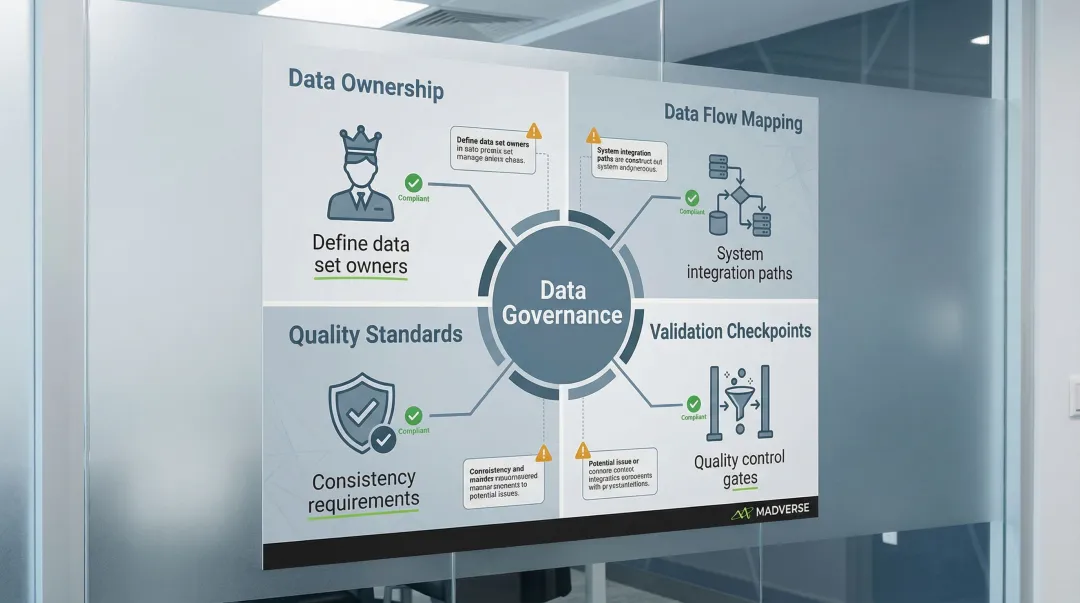
Before deployment, establish data governance protocols:
- Define who owns each data set
- Map how data flows between systems
- Set quality standards for consistency
- Create validation checkpoints
Poor data quality produces poor AI outputs regardless of technology sophistication.
Invest in proper team training. Create documentation for common workflows and designate power users who can troubleshoot issues. The best tools fail without proper adoption.
Monitor Performance and Optimize Continuously
Schedule monthly or quarterly reviews of AI tool performance against your success metrics. Identify what's working and what needs adjustment. AI isn't set-and-forget; it requires ongoing optimization.
Balance automation with human oversight. AI should enhance human creativity and judgment, not replace it. Maintain quality control processes and creative input from your team to ensure brand consistency and strategic alignment.
Stay updated on new features and capabilities. AI technology evolves rapidly, so regularly review product updates and new features that could provide additional value. AI governance software spend is projected to see 30% CAGR from 2024 to 2030, indicating continuous innovation in this space.
Frequently Asked Questions
Which AI tools (like ChatGPT) are best for marketing and content creation?
Jasper AI excels at long-form content like blog posts with strong brand voice customization, while Copy.ai specializes in short-form conversion copy. For integrated workflows, ChatGPT plugins within platforms like Zapier enable custom automation.
What AI analytics tools support marketing automation and social media analysis?
Google Analytics 4 provides free predictive metrics including purchase probability and churn risk. Hootsuite Insights offers social listening with sentiment analysis across 150M+ sources, while Sprout Social combines management with AI-powered posting optimization.
Is it legal to use AI for marketing?
Yes, AI marketing tools are legal, but compliance with data privacy regulations is essential. GDPR requires transparency about automated decision-making that affects individuals. CCPA grants California consumers rights regarding their personal information. The FTC requires transparency in AI usage and prohibits deceptive practices. Always disclose AI-generated content where relevant and obtain proper consent for data usage.
How will AI be used in marketing in the future?
Hyper-personalization will reach individual-level customization with AI creating unique content for each customer. Predictive journey mapping will anticipate needs before they're expressed, while autonomous campaign management will handle end-to-end optimization with minimal human intervention.
What's the difference between marketing automation and AI marketing automation?
Traditional automation follows pre-set rules (if X, then Y), while AI marketing automation uses machine learning to continuously adapt based on data patterns. AI learns which approaches work best and adjusts strategy autonomously, identifying patterns and making real-time optimizations impossible with rule-based systems.
How much do AI marketing automation tools cost?
Pricing varies dramatically based on capabilities. Free options include Google Analytics 4 and limited plans from Canva and Mailchimp. Mid-range tools cost ₹4,000-40,000/month, while enterprise solutions command lakhs monthly with custom pricing.