Introduction: Why Music Distribution Matters for Independent Artists
You cannot upload your music directly to Spotify, Apple Music, or TikTok—these platforms require approved distributors to act as gatekeepers. This barrier exists even as independent artists are capturing unprecedented revenue.
In 2024, non-major labels and self-releasing artists captured 29.7% of global recorded music revenue—totaling ₹88,700 crore—while self-releasing artists alone generated ₹16,600 crore.
That distributor requirement exists because platforms like Spotify need intermediaries to handle licensing, metadata, and royalty payments—functions YouTube and SoundCloud manage internally. This creates a pain point for independent musicians who need professional distribution but want to retain ownership and maximize earnings.
Choosing the right distributor determines where your music appears, how much you earn, and how easily you can split royalties with collaborators.
TLDR:
- Major streaming platforms require approved distributors—you cannot upload directly
- Self-releasing artists generated ₹16,600 crore in 2024, growing 4.7% year-over-year
- Distributors don't own your music; you retain 100% rights and copyrights
- Pricing: subscription plans (100% royalties) or commission-based (85-95% retention)
- Advanced features like Content ID and sync licensing create additional revenue streams
What is Music Distribution and Why It Matters
Digital music distribution is the technical pipeline connecting your recordings to streaming platforms and digital stores worldwide.
Think of distributors as the logistics companies of the music industry—they format your audio files, deliver metadata to platforms, assign tracking codes (ISRCs and UPCs), and collect royalties on your behalf.
Why You Can't Upload Directly
Spotify requires music delivery through approved distributors to handle licensing and royalty accounting. Apple Music requires content delivery through certified partners to meet strict technical and metadata standards.
These platforms process millions of tracks monthly—they need distributors to ensure consistent quality and proper rights management.
You Keep Your Rights
Distributors are not record labels. They don't take ownership of your master recordings or publishing rights.
What you keep:
- 100% of your copyrights
- Freedom to leave anytime
- Complete control over your masters
The distributor simply acts as your delivery service, taking either a subscription fee or commission percentage in exchange for their technical infrastructure and platform relationships.
Key Features Every Distribution Service Should Have
Royalty Structure: Commission vs. Subscription Models
The industry splits into two pricing approaches:
| Model Type | How It Works | Best For | Example |
|---|---|---|---|
| Subscription (DistroKid, TuneCore, Madverse) | Pay annual fee per artist or unlimited releases; keep 100% of royalties | Frequent releasers with steady income | Madverse: 95% royalty retention on Star plan |
| Commission (CD Baby) | Pay one-time fee per release; distributor takes 9% of future earnings | Infrequent releases with uncertain revenue | CD Baby: 9% commission on all earnings |
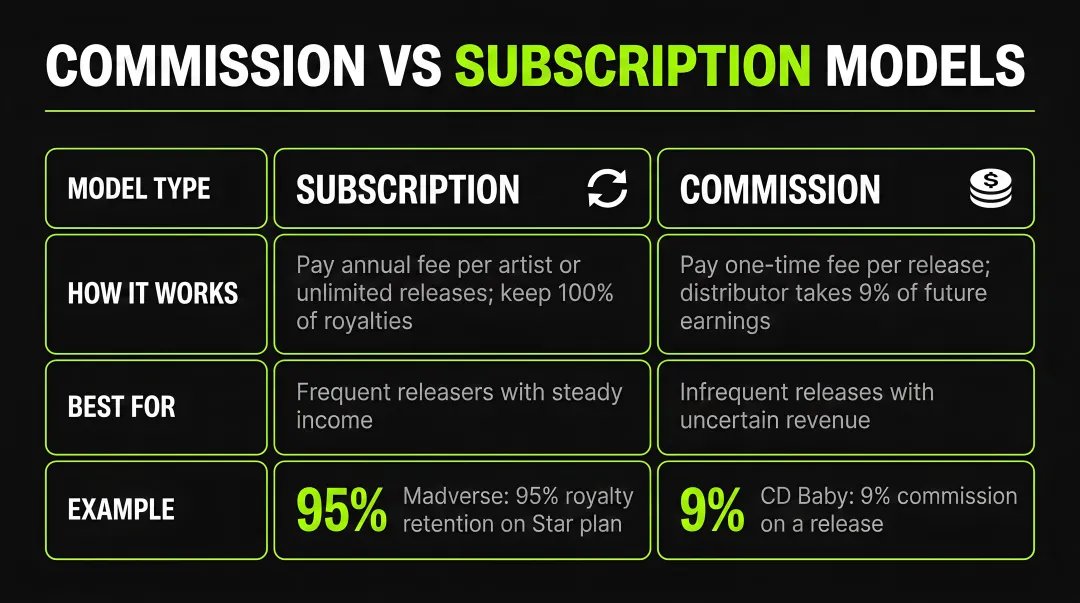
Example: Madverse offers 95% royalty retention on their Star plan, compared to typical industry rates of 85-91%. If you earn ₹8,00,000 annually, you'd keep ₹7,60,000 with Madverse versus ₹7,28,000 with a standard commission model—a ₹32,000 difference.
Break-even calculation: If you earn more than ₹20,000-25,000 annually from streaming, subscription models typically save money compared to commission-based distributors.
Payment Splitting and Royalty Management
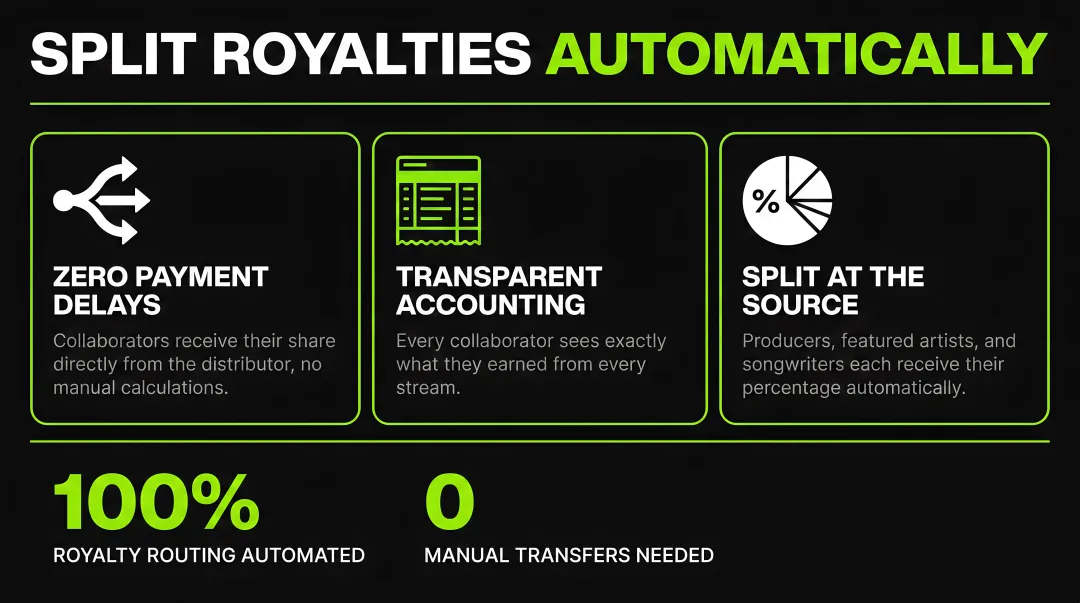
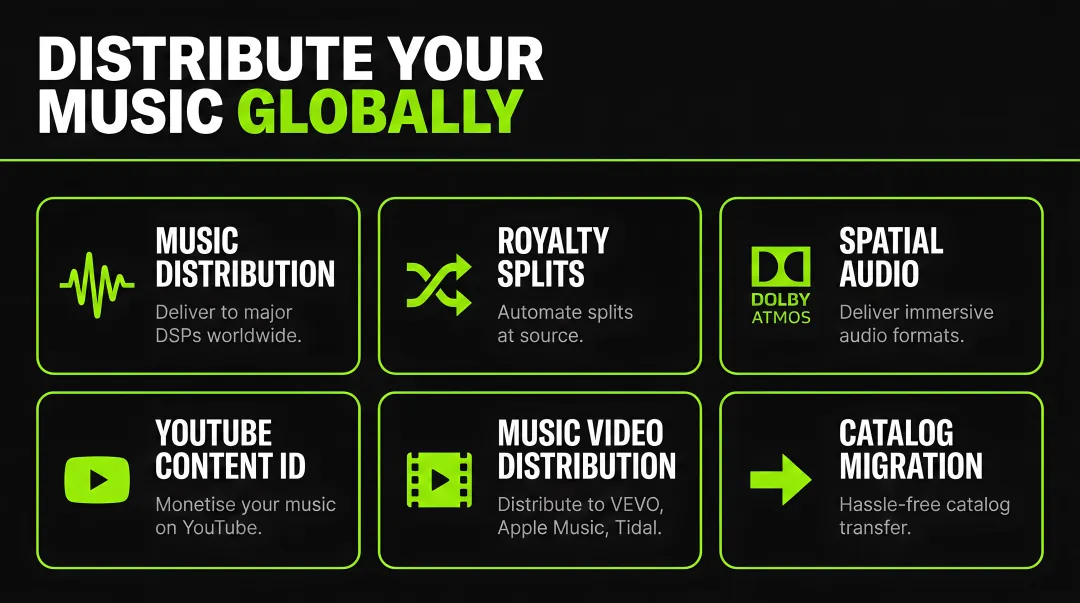
Modern distribution requires automated royalty splits for collaborative tracks. DistroKid's Royalty Splits feature automatically routes percentages to collaborators.
Platforms like Madverse split payments at the source—meaning producers, featured artists, and songwriters receive their share directly from the distributor without you manually calculating and sending payments.
Why this matters:
- Eliminates payment delays and disputes
- Provides transparent accounting for all collaborators
- Reduces administrative burden on primary artist
- Creates professional payment trail for tax purposes
Global Distribution Reach
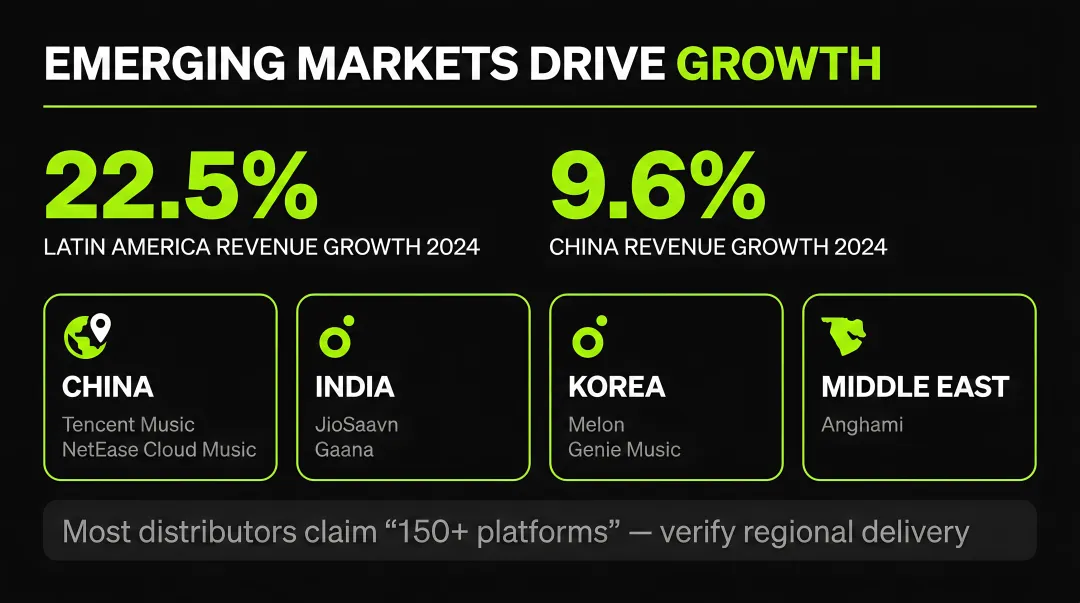
Beyond royalty management, your distributor's reach determines your revenue potential. Emerging markets drive industry growth—in 2024, Latin America saw 22.5% revenue growth, while China grew 9.6%.
Your distributor must deliver to regional platforms in these markets—not just Spotify and Apple Music.
Key platforms by region:
- China: Tencent Music, NetEase Cloud Music
- India: JioSaavn, Gaana
- Korea: Melon, Genie Music
- Middle East: Anghami
Most distributors claim "150+ platforms," but verify they include region-specific services that dominate local markets.
Advanced Features: Sync Licensing and Content ID
YouTube Content ID scans user-uploaded videos against your catalog. When Content ID finds matches, you can block videos, monetize them with ads, or simply track usage.
This captures revenue from:
- Cover versions of your songs
- Remixes and samples
- Background music in vlogs and videos
- User-generated content featuring your tracks
These secondary uses often generate significant income beyond direct streams.
Sync licensing places your music in TV shows, films, commercials, and video games. Distributors act as your sync agent, pitching to music supervisors. CD Baby's sync program takes a 40% cut of placement fees, while some distributors include this service at no additional commission. Madverse notably secured the first South Asian track placement in The Kardashians, demonstrating their sync capabilities.
Marketing and Promotional Tools
Essential promotional features include:
- Pre-save campaigns that build momentum before release day
- Playlist pitching to submit tracks for editorial consideration on Spotify and Apple Music
- Analytics dashboards tracking streams by platform, region, and demographic
- Smart links directing fans to their preferred streaming service
- Audience insights revealing listener behavior to inform marketing decisions
Top Distribution Services Compared
Choosing the right distribution service depends on your release frequency, revenue expectations, and feature needs. This comparison highlights key differences across pricing models, royalty structures, and platform-specific tools.
| Feature | DistroKid | TuneCore | CD Baby | Madverse |
|---|---|---|---|---|
| Pricing | ₹1,900-6,600/year | ₹2,050-4,150/year | ₹825/single + 9% commission | ₹999-6,999/year |
| Royalty Retention | 100% | 100% | 91% | 90-95% |
| Upload Limit | Unlimited | Unlimited | Pay per release | Unlimited (paid plans) |
| Content ID | Paid add-on | Included | Included (30% fee) | Included |
| Playlist Pitching | Limited | Available | Available | 4 releases/year (Star plan) |
| Payment Splits | Yes | Yes | Limited | At source |
DistroKid: The Popular Choice
DistroKid's Musician plan costs $22.99/year for unlimited releases with 100% royalty retention. The platform emphasizes speed—tracks typically go live within 1-2 days.
What works well:
- Fastest distribution processing in the industry
- Simple, streamlined interface
- Unlimited releases at competitive annual rate
- 4.5/5 rating on Trustpilot
The tradeoffs include slower customer support response times and extra costs for YouTube Content ID. Additional fees apply for features like HyperFollow and Spotify pre-saves. Your music stays online only while maintaining an active subscription.
TuneCore: The Established Player
TuneCore's Rising Artist plan costs $24.99/year for unlimited distribution to 150+ stores with 100% royalties. The platform offers robust analytics and publishing administration options.
TuneCore stands out for its comprehensive analytics dashboard and optional publishing administration services. YouTube Content ID comes included, and the platform maintains strong relationships with streaming services.
However, pricing runs higher than competitors offering similar features. The platform also takes 20% commission on social platform revenue, and the interface feels less intuitive compared to newer alternatives.
CD Baby: The Legacy Distributor
CD Baby charges $9.99 per single or $14.99 per album as a one-time fee, plus a permanent 9% commission on all future earnings.
The pay-per-release model works well for artists who release infrequently. Benefits include:
- No recurring annual subscription
- Established relationships with streaming platforms
- Sync licensing program access
The 9% permanent commission becomes costly for high-earning releases. CD Baby also takes 30% of YouTube revenue. Customer support quality has declined in recent years, and the platform removed publishing services.
Madverse: India-Based Distribution
Madverse offers tiered pricing from ₹999/year (Rise plan) to ₹6,999/year (Label plan), with 90-95% royalty retention depending on tier. The platform focuses on tools for independent creators and labels managing multiple artists.
Key features include:
- 95% royalty retention on Star and Label plans
- Royalty splits at source for automatic collaborator payments
- YouTube Content ID included in paid plans
- Editorial playlist pitching (4 releases/year on Star plan)
The platform offers label management tools, team collaboration features, and music video distribution to VEVO, Apple Music, and Tidal. Distribution processing takes 7 days on premium plans. Sync licensing opportunities include placements like the first South Asian track in The Kardashians.
Pricing Models Explained: Finding What Fits Your Budget
Annual Subscription vs. Commission-Based Models
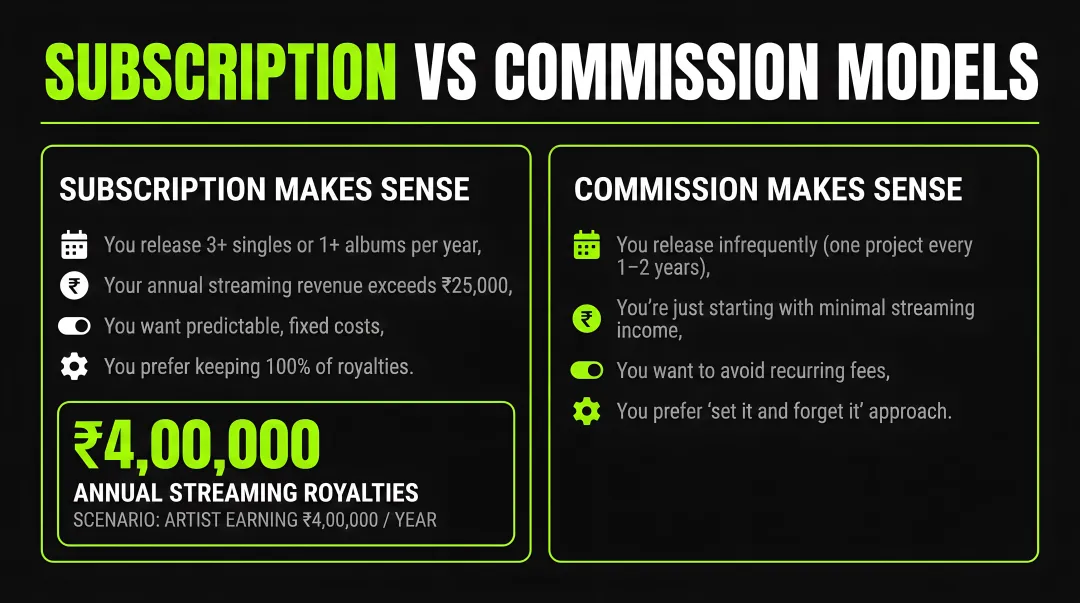
When subscription makes sense:
- You release 3+ singles or 1+ albums per year
- Your annual streaming revenue exceeds ₹25,000
- You want predictable, fixed costs
- You prefer keeping 100% of royalties
When commission makes sense:
- You release infrequently (one project every 1-2 years)
- You're just starting with minimal streaming income
- You want to avoid recurring fees
- You prefer "set it and forget it" approach
Calculation example:
Scenario: Artist earning ₹4,00,000/year in streaming royalties
| Platform | Annual Cost | Commission | Net Earnings | Retention |
|---|---|---|---|---|
| DistroKid | ₹1,900/year | 0% | ₹3,98,100 | 99.5% |
| CD Baby | ₹1,200 setup | 9% | ₹3,62,800 | 90.7% |
| Madverse | ₹2,900/year | 5% | ₹3,77,100 | 94.3% |
The subscription model is clearly better for artists with established streaming income.
Beyond the base pricing, hidden fees can significantly impact your actual costs.
Hidden Fees to Watch For
Common charges that inflate your total costs:
- Cover song licensing: ₹1,200-2,000 per cover to obtain mechanical licenses
- Payment splitting: ₹800-1,600 annually to activate splits with collaborators
- YouTube Content ID: ₹1,200-3,200/year as add-on feature
- Platform exit fees: ₹4,000-8,000 to remove your catalog when leaving
- Social media cuts: CD Baby takes 30% of TikTok/Instagram revenue
Always read the fine print before committing. Calculate total annual cost including all features you'll actually use.
How to Choose the Right Distributor for Your Music
Match Your Release Schedule to Pricing Models
Your release frequency determines which pricing model makes financial sense:
- 1-2 releases/year: Commission models avoid upfront costs
- 3-6 releases/year: Subscription models typically save money
- 6+ releases/year: Unlimited subscription plans become essential
Evaluate Collaboration and Payment Features
How you work with others shapes which features matter most:
- Multiple producers/features: Look for free, automatic payment splitting at source
- Solo releases: Basic royalty collection handles your needs
- Label managing roster: Comprehensive team management tools are essential
Calculate Revenue-Based Value
Your current earnings indicate which plan type maximizes your take-home royalties:
- Earning under ₹16,500/year: Commission models avoid upfront costs
- Earning ₹16,500-82,500/year: Basic subscription plans optimize retention
- Earning ₹82,500+/year: Premium plans with higher retention percentages pay for themselves
For instance, keeping 95% of royalties versus 85% means an artist earning ₹1,00,000 annually retains an extra ₹10,000.
Consider Geographic Reach
Where your audience listens determines platform coverage requirements:
- Targeting Asian markets: Verify reach to Tencent, NetEase, JioSaavn, and regional streaming services
- Building global presence: Prioritize distributors with 150+ platform partnerships
- Focused on specific regions: Ensure coverage of local platforms beyond major DSPs
Assess Advanced Service Needs
Beyond basic distribution, consider which premium services support your growth:
- Sync licensing for TV/film placements: Compare commission rates (30-40% typical)
- YouTube Content ID: Check if included or requires additional fees
- Editorial playlist pitching: Verify submission limits and which platforms are covered
Frequently Asked Questions
What is the best distribution service for independent artists?
It depends on your release frequency and budget. Frequent releasers benefit from unlimited plans like DistroKid, while infrequent releasers may prefer pay-per-release models. Artists prioritising royalty retention should consider platforms offering 95% splits like Madverse.
Can I switch distributors without losing my streams and playlists?
Yes, by using identical ISRC codes and metadata. Keep both versions live for 5 days so platforms recognise them as duplicates, then request takedown from your old distributor to preserve streams and playlists.
Do I need a distributor if I'm only releasing on SoundCloud or Bandcamp?
No—both platforms allow direct uploads. However, you need a distributor to reach Spotify, Apple Music, Amazon Music, Tidal, and other major streaming services. If you want your music on platforms where most streaming revenue is generated, distribution is essential.
How long does it take for music to appear on streaming platforms?
Spotify typically takes 2-5 days after submission, though some distributors are faster. Best practice: submit releases 4-6 weeks in advance to allow time for playlist pitching and metadata corrections. Premium plans often offer expedited processing (7-day turnaround).
What's the difference between distribution and a record label?
Distributors deliver your music to platforms whilst you retain full ownership and rights. Record labels take ownership of your masters in exchange for funding, marketing, and career support—offering more services but requiring you to give up rights and revenue.
Can I use multiple distributors for different releases?
Yes, you can use different distributors for separate releases (one single with DistroKid, an album with CD Baby). However, you cannot use multiple distributors for the same release simultaneously, as this creates metadata conflicts and duplicate content issues on streaming platforms.