
Did you know that in 2025, a survey by Xposure Music found that nearly 78% of independent artists earned less than $15,000? Additionally, 64% said financial constraints were their biggest challenge.
This highlights the reality that even millions of streams on major platforms often generate only modest income for most independent artists. Royalty systems remain complex, and many musicians still work side jobs just to sustain their careers.
In this article, you will explore 8 practical steps for music career development. These steps will help you protect your rights, grow your audience, earn consistently, and build a sustainable long-term career.
Key Takeaways
Strengthen Your Craft: Focus on songwriting, vocals, and instruments with measurable practice goals to build a reliable musical foundation.
Define Your Identity: Document your sound, themes, and target audience to make every release consistent and recognizable.
Protect Your Rights: Keep masters, register with PROs, and formalize collaboration splits to secure all revenue streams.
Utilize Data and Distribution: Track revenue, audience growth, and catalog performance while releasing music globally to maximize earnings.
Plan for Long-Term Growth: Review your catalog, reinvest royalties, build a team, and form strategic partnerships for sustained career growth.
Step 1: Artistic Foundation and Skill Development
Every successful music career begins with developing your craft. At this stage, focus on improving the skills that form the backbone of your music before thinking about streams, followers, or marketing. A solid foundation ensures your work can grow and sustain a long-term career.
Key Elements to Focus On:
Songwriting and Composition: Create a consistent process for writing songs, including melody, harmony, and arrangement. Keep a catalog of ideas to track progress and patterns.
Vocal or Instrumental Proficiency: Practice with intention. Set clear goals, such as singing specific passages accurately or performing difficult instrumental sections smoothly.
Genre Clarity and Experimentation: Identify the styles that suit you, but explore different approaches to find your distinctive sound. Note what feels natural and authentic.
Performance Readiness: Even if you only record in the studio, focus on timing, expression, and dynamics. Record yourself and review objectively to improve.
Actionable Tip: Schedule weekly practice sessions, maintain a song journal, and set measurable milestones for composition and technique. Success at this stage is measured by consistency and creative clarity, not streams or social metrics.
Once your craft is steady, the next step is defining your unique identity and brand as an artist, which will guide how you release, promote, and monetize your music.
Step 2: Define Your Artistic Identity, Sound, and Direction

At this stage, you answer a key question: Why should someone choose your music over thousands of others? Defining your identity gives your work direction and makes your career more sustainable. Without it, releases can feel scattered, and audience growth becomes unpredictable.
Key Elements to Focus On:
Sonic Identity and Genre Positioning: Decide the sound that reflects you and the genres where your music fits. Consistency helps listeners recognize your work and builds loyalty.
Emotional Themes and Storytelling Style: Identify the feelings, stories, or messages that define your music. This creates connection and resonance with your audience.
Target Listener Profile: Understand who will engage with your music. Consider age, interests, listening habits, and platforms they use. This knowledge guides release strategy and promotion.
Long-term Artistic Direction: Plan where you want your music to go over the next 2–5 years. Map out how your style, messaging, and releases will evolve while remaining authentic.
Actionable Tip: Create a document outlining your sound, themes, and target listener. Before every release, review it to ensure each song aligns with your identity. Clear identity makes marketing, playlist pitching, and catalog growth more effective.
Also Read: Step-by-step Guide: Uploading Your Music to Spotify and Other Platforms
After defining your artistic identity, focus on protecting your work and retaining ownership to ensure you capture royalties and maintain control over your creative rights.
Step 3: Secure Ownership, Rights, and Career Structure
This is the stage where many traditional artist development frameworks stop, but in today’s music industry, a sustainable career truly begins here. Protecting your work ensures that every release contributes to long-term growth instead of starting over each time.
Key Elements to Focus On:
Retain Ownership of Masters and Publishing: Keep full rights to your recordings and songs. This ensures all revenue from streams, licensing, and sync opportunities flows to you.
Choose the Right Distribution Model: Use platforms that allow you to distribute globally without giving up rights. Avoid agreements that lock your music under restrictive terms.
Document Collaboration Splits: For every co-written song or collaboration, have written agreements detailing revenue shares. This prevents disputes and ensures fair payouts.
Understand Copyright Basics: Learn essential concepts like C-lines (copyright for the composition) and P-lines (copyright for the recording). Accurate metadata significantly improves your chances of collecting royalties globally, alongside proper registration with PROs and publishers and the execution of contracts.
Actionable Tip: Audit your catalog and contracts to make sure all rights are properly assigned and metadata is accurate. This foundation lets your music earn consistently while scaling globally. Platforms like Madverse make this easier by helping you retain full ownership, manage publishing, and automate collaborator splits seamlessly.
With ownership secured, the next step is building a strong catalog and planning releases strategically, which lays the groundwork for audience growth and career momentum.
Step 4: Distribution, Publishing, and Royalty Systems
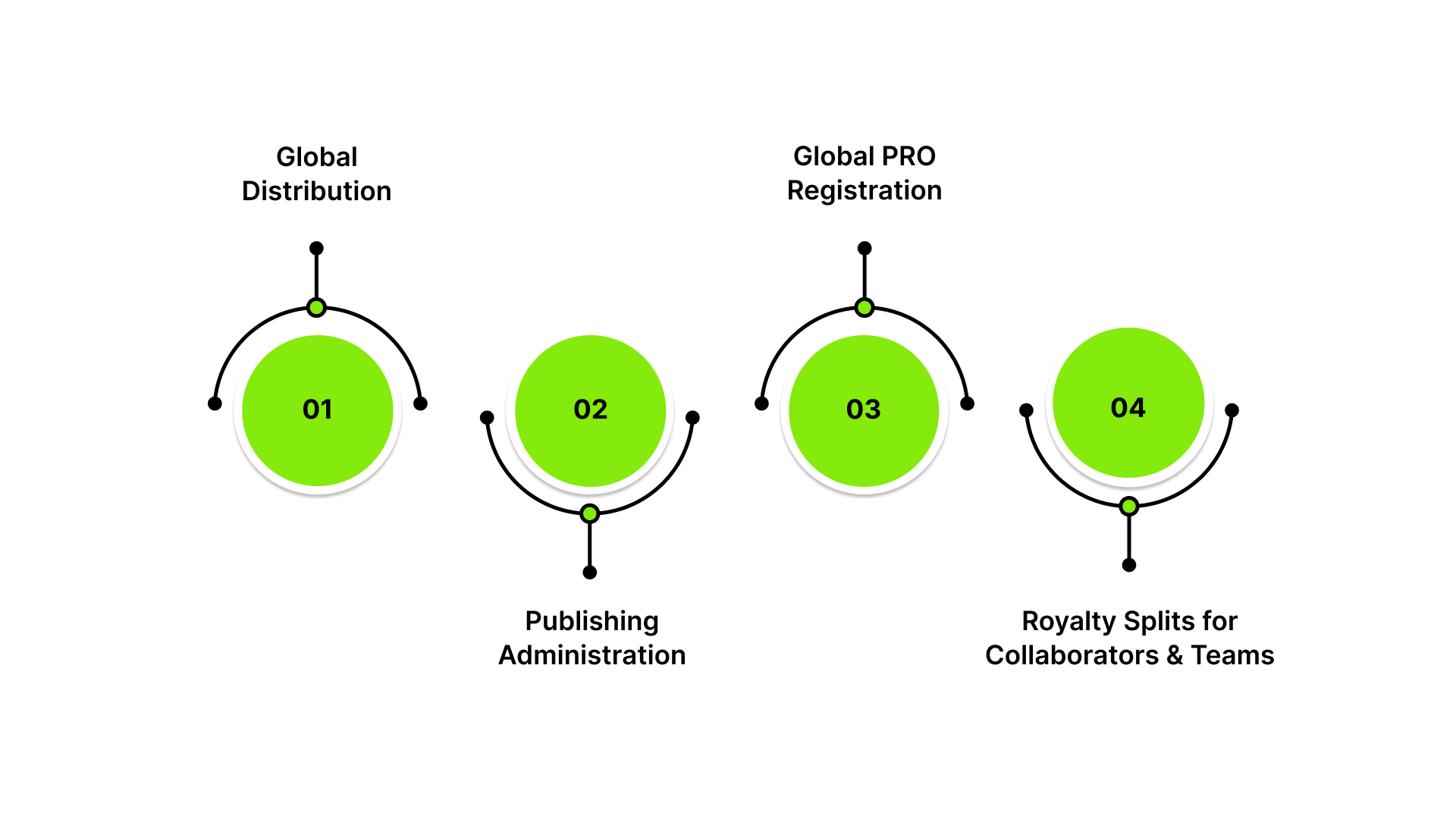
At this stage, your music moves beyond art and becomes a revenue-generating asset. Setting up the right systems ensures you capture income from every possible source and pay collaborators accurately.
Key Elements to Focus On:
Global Distribution: Release your music across major DSPs like Spotify, Apple Music, and YouTube, as well as regional platforms. Ensure your tracks are available worldwide to maximize reach.
Publishing Administration: Register your songs with publishing administration platforms to collect songwriter royalties globally. This step ensures you are paid whenever your music is used commercially.
Global PRO Registration: Sign up with performing rights organizations to claim royalties from international performances, streams, and broadcasts. Without registration, income from overseas plays may be lost.
Royalty Splits for Collaborators and Teams: Automate or document revenue splits to ensure all collaborators receive fair compensation. This protects relationships and avoids disputes.
Actionable Tip: Use a single platform or system that integrates distribution, publishing, and royalty management. Check that your metadata is accurate for all collaborators and territories.
With your income pathways active, the next focus is reaching listeners intentionally, growing your audience strategically, and turning streams into loyal fans.
Step 5: Test Marketing and Audience Discovery
At this stage, the focus shifts from creating music to understanding your listeners. Instead of chasing virality, the goal is to gather insights that guide future releases and promotions.
Key Elements to Focus On:
Platform Performance: Identify which streaming services and social channels convert casual listeners into followers and fans. Track engagement by platform to know where to focus efforts.
Regional Response: Analyze which cities, states, or countries respond best to your music. This helps plan tours, collaborations, and marketing campaigns efficiently.
Content Formats: Test different formats, such as videos, short-form clips, behind-the-scenes content, or lyric videos, to see which drive engagement and shares.
Song Performance: Compare tracks in your catalog to determine which style, theme, or tempo resonates most with your audience.
Tools to Apply: Use fan links, pre-saves, targeted advertising, and playlist submissions to collect data. Track metrics like click-through rates, saves, and follows rather than just streams.
Actionable Tip: Treat each release as a learning experiment. Document results and patterns so scaling marketing later becomes less risky and more predictable.
Also Read: How to Use Madverse Express Ads: Your Guide to Music Performance Marketing
With these insights in hand, the next step is strategically scaling your marketing to grow a loyal audience and community.
Step 6: Use Data and Analytics to Optimize Your Career

At this stage, insights from data turn activity into informed decisions. Tracking the right metrics ensures you focus on what drives revenue, audience growth, and long-term career sustainability.
Key Elements to Focus On:
Platform-Wise Revenue Trends: Monitor which streaming services or sales channels generate the most income. Use this to prioritize future releases and promotions.
Listener Geography and Growth: Track where your audience is located and how quickly it’s expanding. This informs touring, collaborations, and marketing decisions.
Marketing Spend vs Outcomes: Analyze which campaigns deliver real results in streams, follows, or pre-saves. Adjust strategies based on ROI rather than assumptions.
Catalog Performance Over Time: Identify your best-performing songs and releases. Use this insight to guide future projects and playlist pitching.
Actionable Tip: Set up dashboards to track revenue trends, listener growth, and catalog performance. Use this insight to guide future projects and playlist pitching.
Ready to grow your music career with full control and global reach? Sign up for Madverse today and use its analytics dashboard to monitor streams, revenue, and audience growth, helping you make smarter career decisions.
With data insights in place, let’s see how to strategically promote your music to grow a loyal audience and expand your reach.
Step 7: Global Expansion and Catalog Scaling
In today’s music industry, careers are borderless. Many Indian artists now earn more from overseas listeners than from domestic audiences, making an international strategy essential.
Key Elements to Focus On:
International Royalty Collection: Ensure your publishing and recordings are registered with global PROs and collection societies so you capture income from every territory.
Region-Specific Marketing: Tailor promotion strategies for different countries, considering local listening habits, playlists, and social media platforms.
Sync and Licensing Opportunities: Explore placements in films, games, commercials, and TV internationally. This creates additional revenue streams and audience exposure.
Consistent Catalog Growth: Build a body of work that can be marketed globally. Regular releases improve playlist performance, streaming income, and fan retention.
Actionable Tip: Audit your catalog for international readiness. Check metadata, rights ownership, and registration to ensure every song can be earned globally. Planning for global markets early reduces legal and operational hurdles later.
Also Read: Networking for musicians: 7 tips to network like a pro
Once your catalog and audience strategy are global-ready, the next step in music career development is sustaining growth, income, and long-term innovation.
Step 8: Long-Term Career Management and Sustainability
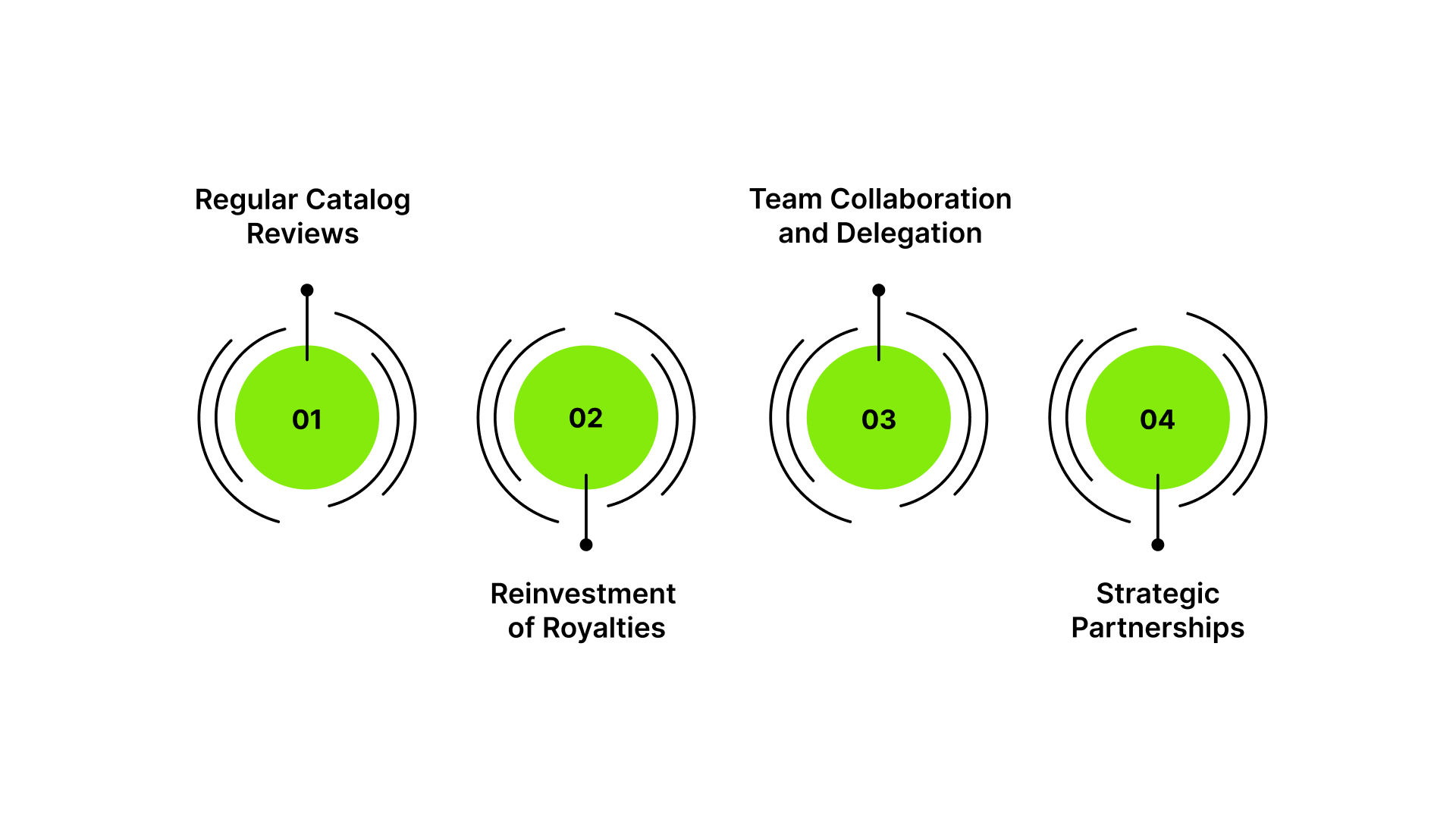
The final phase focuses on building a career that lasts beyond trends and single hits. At this stage, the goal is to ensure your music continues to earn, grow, and support your life as a professional artist.
Key Elements to Focus On:
Regular Catalog Reviews: Periodically evaluate your songs to identify opportunities for re-releases, remixes, or new licensing deals. This keeps your catalog active and income-generating.
Reinvestment of Royalties: Allocate earnings from streams, syncs, and publishing into new music, marketing, or career tools to maintain momentum.
Team Collaboration and Delegation: Work with managers, producers, and marketing specialists to handle tasks efficiently and focus on creative output.
Strategic Partnerships: Pursue collaborations, label agreements, or brand deals intentionally, rather than reacting to every opportunity. Choose partnerships that align with long-term growth.
Actionable Tip: Plan your career in multi-year cycles, not single releases. Set goals for catalog growth, revenue, audience expansion, and creative evolution to create a sustainable and resilient music career.
Want to turn your long-term music plans into real results? Madverse lets you release globally, collect royalties, track performance, and access marketing tools, all with 100% ownership. Sign up today.
To turn strategy into results, artists need the right platform for effective music career development. Let’s explore how Madverse supports this process.
How Madverse Fits Into Strategic Music Career Development
Independent artists often face obstacles that slow career progress: delayed track approvals, scattered tools, unclear rights management, and missed royalties. These gaps can make it hard to grow audiences, earn consistently, and maintain long-term stability.
Madverse provides a unified platform that addresses these challenges, combining distribution, publishing, analytics, and marketing into a single ecosystem. By centralizing these functions, artists and labels can focus on creating music while ensuring their work is globally recognized and remains fully owned.
Key Madverse Capabilities Include:
Global Distribution: Instantly release your music to 150+ streaming platforms, including Spotify, Apple Music, YouTube, and regional DSPs, while keeping 100% ownership of your masters.
Publishing Administration: Register your songs with global performing rights organizations (PROs) and collect royalties from all territories.
Instant AI Quality Control: Tracks are reviewed and approved in minutes using AI-driven QC, reducing release delays that often stall campaigns.
Automated Royalty Splits: Collaborators and team members are paid automatically in accordance with pre-set agreements. This eliminates spreadsheet headaches and ensures fairness, transparency, and timely payouts.
Analytics Dashboard: Monitor streams, revenue, listener demographics, and growth trends across platforms. Data-driven insights help artists and labels make informed marketing and release decisions for maximum impact.
Marketing Tools: Promote your music effectively with Express Ads, fan links, pre-saves, playlist pitching, and sync opportunities. These tools help you reach the right audience and build a loyal global fan base.
By consolidating distribution, rights management, and growth tools, Madverse empowers artists and labels to build long-term, sustainable careers instead of relying on one-off releases.
Final Thoughts
A successful career in music relies on clear ownership, structured systems, actionable data, and consistent effort. Independent artists in India who plan strategically can grow their audience, secure a steady income, and expand internationally.
Madverse supports this approach by combining global distribution, publishing administration, royalty management, and marketing tools in a single platform designed for independent artists and labels. By centralizing these capabilities, you can focus on creating music while ensuring your career grows systematically and sustainably.
If you are ready to take control of your music career and build long-term success, contact us to learn how Madverse can help.
FAQs
1. How do I handle licensing my music for films or ads?
You can license your tracks by contacting music supervisors, production houses, or via licensing platforms. Contracts should clearly define usage, duration, and compensation. Always retain publishing rights if possible. Proper documentation ensures you’re paid fairly for each placement.
2. What’s the best way to collaborate remotely with other artists?
Use cloud-based DAWs, shared project files, or collaboration platforms like Splice. Set clear roles, deadlines, and revenue splits before starting. Maintain regular communication to prevent creative conflicts. Back up all sessions to avoid data loss.
3. How can I maintain consistency in releasing music?
Create a release calendar with realistic deadlines for writing, recording, mixing, and promotion. Batch produce content when possible to avoid gaps. Prioritize quality over quantity while maintaining a steady presence. Track progress and adjust timelines as needed.
4. What’s an effective approach to building a mailing list for fans?
Offer free downloads, exclusive content, or early access to releases in exchange for email signup. Send regular, value-driven newsletters without spamming. Segment your audience by engagement level for better targeting. Use analytics to monitor open and click rates.
5. How do I protect my music from online piracy?
Register copyrights in your country and internationally if possible. Use digital fingerprinting or content ID on platforms like YouTube. Monitor platforms for unauthorized uploads and issue takedown notices if needed. Keep documentation of all proofs of creation for legal backup.