Introduction: Why Music Marketing Matters More Than Ever
Traditional gatekeepers—record labels, radio stations, A&R executives—no longer control who succeeds in music. Independent artists now earn over $5 billion annually from Spotify alone, capturing roughly 50% of the platform's total royalties.
Accessible digital tools now allow artists to build sustainable careers independently. Nearly 25% of artists generating over $100,000 annually on Spotify weren't even releasing music professionally five years ago.
The playing field has leveled, but success requires strategic marketing knowledge.
This guide delivers 10 proven strategies used by successful independent artists to grow their fanbase, increase streams, and monetize their music effectively.
TLDR: 10 Marketing Strategies to Accelerate Your Music Career
- Build a professional website as your algorithm-proof digital headquarters
- Use platform-specific strategies—TikTok for discovery, Instagram for community
- Choose distribution platforms that let you keep 95%+ of royalties
- Post consistent, authentic content showing your creative process
- Own your fan relationships with an email list outside social platforms
- Target playlist placements on Spotify, Apple Music, and YouTube Music
- Unlock sync licensing in TV, film, and ads for exposure and revenue
- Cross-pollinate audiences through artist and industry collaborations
- Leverage data analytics to understand your audience and refine strategy
- Invest in targeted ads on social platforms to reach new listeners fast
Strategy 1: Build Your Digital Foundation
Your website is the only digital real estate you truly own. Social platforms can change algorithms, suspend accounts, or disappear entirely—your website remains under your control.
To maximize your website's effectiveness, focus on these foundational elements.
Essential Website Components
Every artist website needs these core elements:
- Professional bio - Tell your story with emotional resonance, not just career facts
- Embedded music player - Let visitors hear your music without leaving your site
- Email signup form - Place prominently to capture visitor information
- Tour dates with ticketing - Integrated calendar that drives live event revenue
- Merchandise store - Direct sales without platform commissions
- Electronic Press Kit (EPK) - Dedicated section for media and promoters with high-res photos, bio, and press quotes
SEO Optimization for Artist Discovery
Implement structured data markup (Schema.org) for events and music to appear in Google's rich search results.
Optimize your site with these SEO essentials:
- Include your artist name, genre, and location-specific keywords throughout content
- Add descriptive alt text to all images
- Create unique page titles and meta descriptions for each section
- Build internal links between related pages
This technical foundation helps fans discover you through organic search rather than relying solely on social media.
Consistent Branding Across Platforms
Your visual identity—colors, fonts, photography style—should remain consistent across your website, streaming profiles, and social media. This unified branding builds recognition and professionalism.
Think of your website as headquarters and all other platforms as satellite offices that reflect the same brand identity.
Strategy 2: Master Social Media Marketing
Different platforms serve different functions in your marketing ecosystem. Understanding these distinctions is critical for efficient resource allocation.
Platform-Specific Strategy
TikTok dominates music discovery: 75% of users discover new songs on the platform, and 84% of songs entering the Billboard Global 200 in 2024 went viral on TikTok first.
Focus on short-form video content that showcases personality, not just polished performances.
Instagram builds community: Use it for behind-the-scenes content, Stories that show your daily life, and Reels that repurpose your best TikTok content.
Engagement rates average 0.50%—lower than TikTok's 2.50%—but the platform excels at nurturing existing fans.
Twitter facilitates conversation: Ideal for sharing thoughts, engaging in music industry discussions, and building relationships with other artists and industry professionals.
Content That Performs
Create content beyond promotional posts:
- Studio session clips showing your creative process
- Songwriting breakdowns explaining how you crafted specific lyrics or melodies
- Personal stories that connect emotionally with your audience
- Commentary on music industry trends or other artists' work
- User-generated content featuring fans using your music
Engagement Over Follower Count
A highly engaged audience of 1,000 fans delivers more value than 10,000 passive followers.
Respond to comments, ask questions in your captions, create polls and interactive content. TikTok users open the app approximately 20 times daily, spending an average of 58 minutes—consistent presence keeps you top-of-mind.
Strategy 3: Leverage Music Distribution Platforms Strategically
Distribution Models Explained
Aggregators like DistroKid and TuneCore charge annual fees (starting around ₹1,899/year) or per-release fees, allowing you to retain ownership while accessing major streaming platforms. Some offer tiered pricing with additional features like YouTube Content ID.
Hybrid models like Amuse provide free tiers with revenue sharing (typically 15% commission on YouTube Content ID) or paid subscriptions (₹149-₹399/month) with zero commission and faster releases.
Label services companies like Believe offer advanced services including playlist pitching and marketing support in exchange for revenue shares (10-30%) and are selective about their roster.
Once you understand these models, the next question becomes: how do you keep more of what you earn?
Maximising Royalty Retention
Independent artists should prioritise platforms offering the highest royalty percentages. Platforms like Madverse allow artists to keep 95% of royalties—significantly higher than industry averages. The platform also offers advanced features including:
- Dolby Atmos distribution for spatial audio releases
- YouTube Content ID to monetise user-generated content
- Royalty splits at source for seamless collaborative payments
- Sync licensing opportunities for TV, movies, commercials, and video games
- Editorial playlist pitching to increase discovery potential
![Infographic]
Strategic Release Timing
Release singles every 6-8 weeks rather than full albums. This cadence feeds streaming algorithms, keeps you in followers' Release Radar playlists, and maintains consistent visibility. Submit tracks to Spotify's editorial team at least 7 days before release to maximise playlist consideration.
Strategy 4: Create Compelling Content Consistently
Consistency feeds platform algorithms and keeps you top-of-mind with your audience. The artists who succeed maintain regular content output regardless of release schedules.
Content Ideas Beyond Music Promotion
- Show your recording process, equipment, and production techniques through studio session clips
- Break down how you wrote specific songs, including lyrical inspiration
- Share personal experiences that shaped your music or worldview
- React to other artists' work or discuss industry trends
- Give fans authentic glimpses into your daily routine as an artist
Batch Creation for Efficiency
Dedicate specific days to creating multiple pieces of content at once. Film several TikTok videos in one session, then schedule them throughout the week. This approach maintains consistency even during busy touring or recording periods.
Repurposing Across Platforms
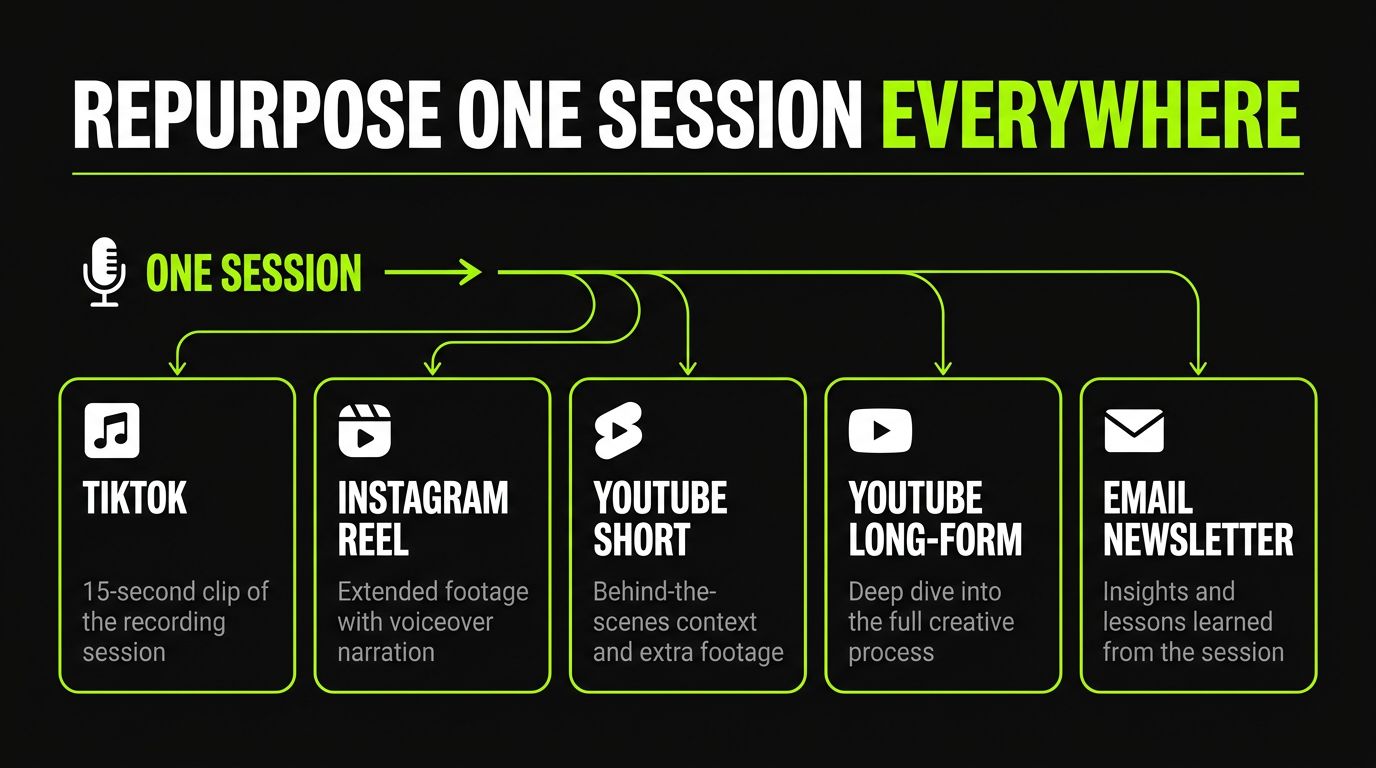
One studio session can fuel content across multiple platforms.
A single recording session generates:
- TikTok: 15-second clip of the recording
- Instagram Reel: Extended footage with voiceover
- YouTube Short: Additional context and behind-the-scenes
- YouTube long-form: Deep dive into the process
- Email newsletter: Insights and lessons learned
Authenticity Builds Connection
Polished content has its place, but 82% of Gen Z and 70% of Millennials discover music through social video content that feels genuine and unfiltered.
Show personality, make mistakes, be human. These imperfections create deeper fan relationships than perfectly polished content, and consistent engagement translates to better streaming performance and royalty earnings over time.
Strategy 5: Build and Nurture Your Email List
Email is the only marketing channel you truly own. Social platforms control who sees your posts through algorithms; email delivers directly to your fans' inboxes.
Why Email Outperforms Social Media
Email marketing achieves an average conversion rate of 6.05%—more than 3x higher than social media's 1.9% according to industry research.
For every rupee spent, email generates an average ROI of ₹850 to ₹3,000. These numbers make email your most valuable marketing asset.
Growing Your List Strategically
Focus on these three proven collection methods:
- Place signup forms prominently on your homepage, not buried in a footer—offer incentives like exclusive tracks, early ticket access, or behind-the-scenes content
- Collect emails at shows when fans are most engaged using tablet-based forms (they convert better than paper lists and sync automatically)
- Run occasional giveaways requiring email signup, ensuring prizes align with your music to attract genuine fans rather than freebie seekers
Email Content That Converts
Send emails with:
- New release announcements with exclusive first-listen links
- Tour date announcements with presale codes for subscribers
- Exclusive content like unreleased demos or acoustic versions
- Personal updates that make fans feel like insiders
- Direct merchandise and ticket sales links
Frequency and Segmentation
Email once or twice monthly to avoid unsubscribes—the average unsubscribe rate stays below 0.22% when you maintain appropriate frequency.
Segment your list by location for tour announcements or by engagement level for special offers to super fans. This targeted approach increases open rates and conversions.
![Infographic]
Strategy 6: Optimize for Playlist Placement
Playlists drive discovery at scale. One-third of all new artist discoveries on Spotify occur within personalised algorithmic playlists like Discover Weekly and Release Radar.
Editorial Playlist Pitching
Spotify, Apple Music, and other platforms allow artists to pitch unreleased tracks to editorial teams. Submit through Spotify for Artists at least 7 days before release—this timing is mandatory for Release Radar inclusion.
Effective pitches include detailed context:
- Genre and subgenre classifications
- Mood and instrumentation details
- The story behind the song
- Geographic regions where the track might resonate
- Similar artists for reference
Independent Curator Outreach
Beyond editorial playlists, independent curators offer another discovery path. Target playlists strategically:
- Research playlists featuring artists similar to you
- Use tools like Chartmetric to identify active curators
- Reach out respectfully via social media or email
- Personalise your message—explain why your track fits their playlist's vibe
**Never pay for playlist placement**. Paid schemes often use bots, violating platform terms and risking your account.
Create Your Own Playlists
When curator outreach reaches its limits, take control by building your own playlists.
Feature your music alongside similar artists to:
- Position yourself within a specific genre or mood
- Attract fans of artists you playlist alongside
- Showcase your musical taste and influences
- Generate shareable content for social promotion
Profile Optimization
Complete every field in your artist profiles—bio, photos, social links. Verified profiles with complete information receive higher priority for algorithmic and editorial playlists.
Strategy 7: Explore Sync Licensing Opportunities
Sync licensing—placing your music in TV shows, films, commercials, and video games—provides both substantial revenue and massive exposure.
Market Size and Revenue Potential
The global sync licensing market reached ₹57,000 crore (approximately $6.8 billion) in 2024 and is projected to grow to ₹1.08 lakh crore by 2033.
For music publishers globally, sync can represent 22-25% of total revenue—a significant income stream that many independent artists overlook.
Individual placements vary widely: major film or TV placements command ₹21 lakh to ₹84 lakh+, while micro-licensing for content creators typically generates ₹4,200 to ₹42,000 per placement.
Preparing Music for Sync
To maximise your sync potential, prepare your tracks strategically:
- Instrumental versions: Many placements require vocals-free tracks for background use
- Multiple edit lengths: 30-second, 60-second, and full-length versions accommodate different media needs
- High-quality masters are essential—poorly recorded tracks rarely secure placements
- Ownership clarity matters: "One-stop" tracks where you control both master and publishing rights are highly preferred by music supervisors for simplified clearance
Accessing Sync Opportunities
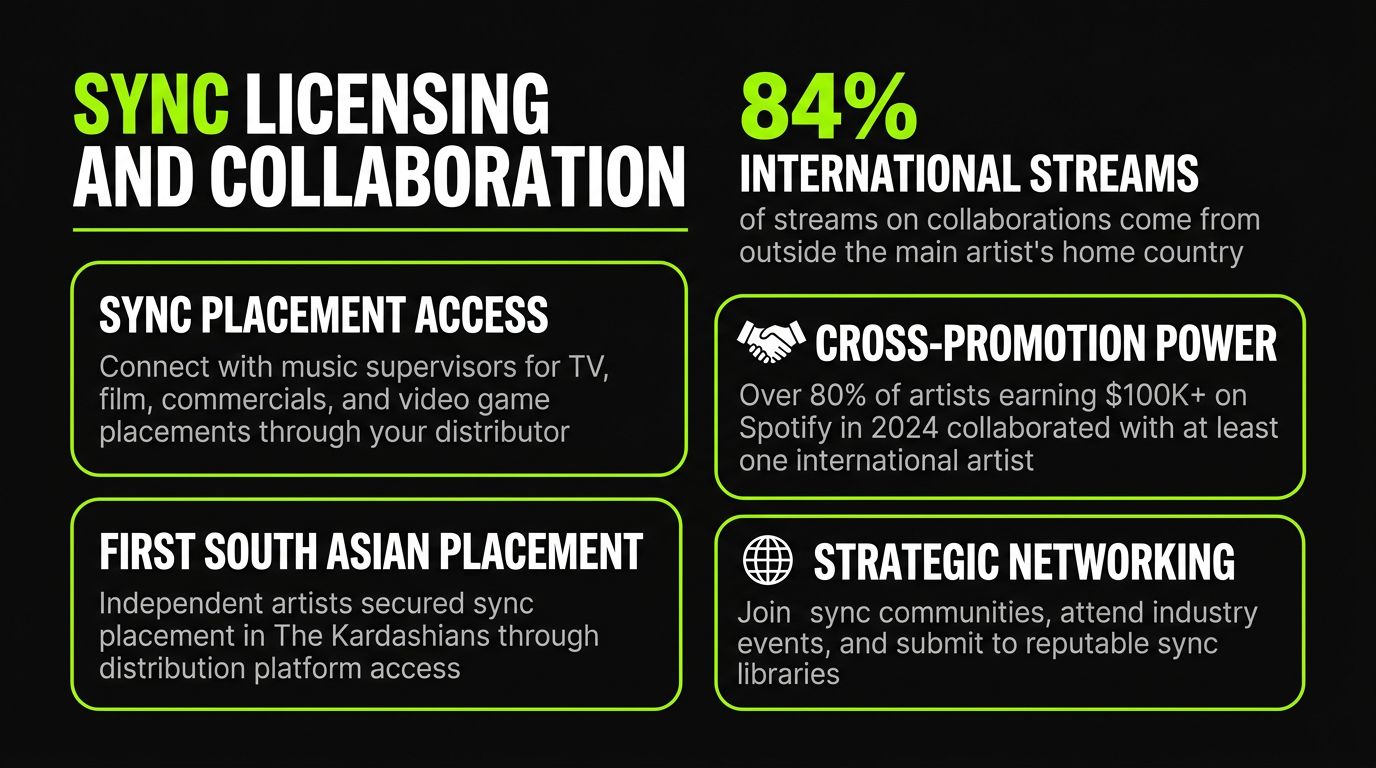
Distribution platforms increasingly offer sync licensing services, removing traditional barriers to entry. For example, Madverse includes sync licensing opportunities for TV, movies, commercials, and video games as part of their distribution package—connecting independent artists directly with music supervisors and placement opportunities. The platform notably secured the first South Asian track placement in The Kardashians, demonstrating the reach available to emerging artists.
Network with music supervisors through industry events, join sync-focused online communities, and submit to reputable sync libraries that represent independent artists.
Strategy 8: Collaborate and Network Strategically
Collaboration exposes you to another artist's fanbase while creating cross-promotional opportunities that benefit both parties. The data shows just how powerful these partnerships can be.
The Power of Cross-Promotion
84% of streams on international collaborations come from outside the main artist's home country, compared to under 60% for solo tracks. Over 80% of artists generating USD $100,000+ on Spotify in 2024 have collaborated with at least one international artist.
Finding the Right Collaborators
Seek artists whose audience aligns with your target demographic but doesn't directly compete. Analyze their streaming numbers, social engagement, and geographic fan distribution using platforms like Spotify for Artists and Chartmetric.
Collaboration Formats
Adding a collaborator as a featured artist ensures the release appears on both profiles, instantly doubling potential reach to followers. This is one of the most straightforward formats.
Co-writing sessions with other songwriters broaden your creative approach while splitting royalties, which creates ongoing passive income. Plus, you gain fresh perspectives on your music.
Remixes allow audience cross-pollination without requiring joint composition sessions—you rework existing tracks for other artists, exposing both fanbases to new sounds.
Working with producers who have their own following brings their audience directly to your release, especially if they're credited prominently.
Networking Beyond Collaborations
Build genuine relationships with industry professionals:
- Attend music conferences and industry events
- Join online communities focused on your genre
- Engage authentically on social media with artists, producers, and industry figures
- Offer value first—share others' work, give feedback, make introductions
Transactional networking is obvious and off-putting. Focus on building real relationships that naturally lead to opportunities over time.
Strategy 9: Use Data to Drive Decisions
Analytics transform guesswork into strategy. The artists succeeding in today's market treat their careers as data-driven businesses.
Metrics That Actually Matter
Engagement rate: More valuable than follower count. TikTok's average 2.50% engagement rate makes it 5x more effective than Instagram's 0.50% for discovery.
Stream-to-save ratio: Spotify tracks how many listeners save your tracks after hearing them. High save rates signal strong content that algorithms will promote further.
Listener conversion: Spotify categorizes listeners as New, Regular, or Super Listeners (15+ streams in 28 days). Super Listeners drive 60% of streams and 80% of merchandise purchases—identify and nurture them.
Geographic data: Discover where your audience clusters to inform tour routing and targeted advertising.
Demographic insights: Age, gender, and listening habits help refine your content strategy and brand partnerships.
Accessing Your Analytics
Start with Spotify for Artists, which provides detailed listener demographics, playlist sources, and conversion metrics. Apple Music for Artists offers similar insights for the Apple ecosystem.
YouTube Analytics tracks watch time, traffic sources, and audience retention for your video content, while each social platform provides native analytics showing post performance, follower demographics, and optimal posting times.
Distribution platforms like Madverse centralize these analytics across streaming services, giving you a unified dashboard to track performance without jumping between multiple platforms.
Data-Informed Decision Making
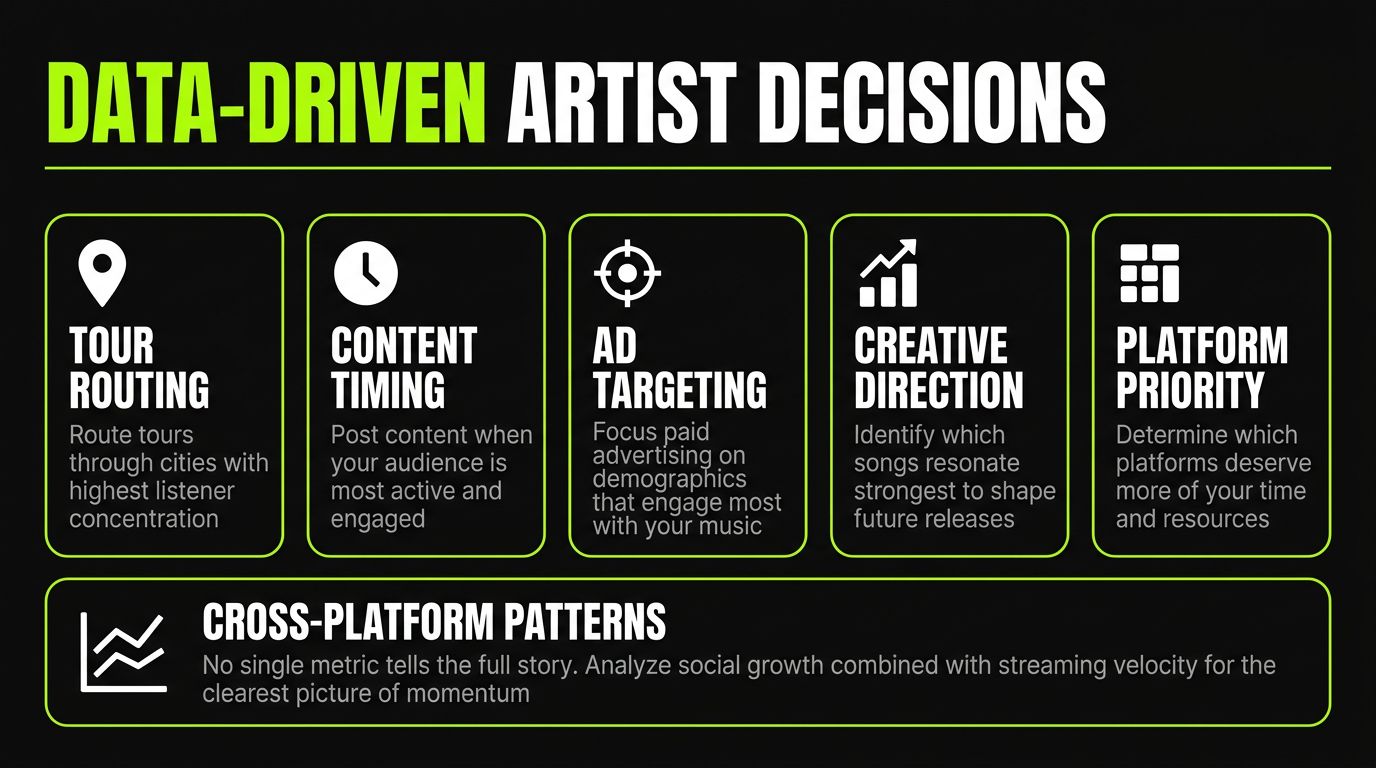
Once you're tracking the right metrics, put them to work:
- Route tours through cities with high listener numbers
- Create content at times when your audience is most active
- Target paid advertising to demographics that engage most with your music
- Identify which songs resonate strongest to inform future creative direction
- Determine which platforms deserve more of your time and resources
Remember: no single metric tells the complete story. Analyze patterns across multiple platforms—social growth combined with streaming velocity provides the clearest picture of your momentum and where to focus next.
Strategy 10: Invest in Paid Advertising Strategically
Strategy 10: Invest in Paid Advertising Strategically
Paid advertising amplifies organic efforts when used strategically. The key is starting small, testing thoroughly, and scaling what works.
When Paid Ads Make Sense
Use paid advertising for:
- Promoting new releases to targeted audiences
- Announcing tour dates in specific geographic markets
- Growing your email list through lead generation campaigns
- Retargeting website visitors who didn't take action
- Amplifying high-performing organic content
Understanding platform costs helps you allocate your budget effectively.
Platform-Specific ROI
| Platform | Average CPM (2025) | Best Use Case |
|---|---|---|
| Meta (Facebook/Instagram) | ₹700-₹800 | Precision targeting for merchandise and ticket sales |
| TikTok | ₹400-₹500 | Cost-effective awareness and viral reach |
| YouTube | ₹420-₹520 | Video views and long-form content engagement |
| Spotify Ads | ₹1,250-₹2,100 | Audio-first branding in high-context environment |
Budget Recommendations
Emerging artists (0-5k followers): Allocate ₹40,000-₹1.6 lakh per release. Focus on social content creation and targeted local ads to build initial momentum.
Growing artists (5-50k followers): Budget ₹1.6-₹6.3 lakh per release. Expand to digital ad campaigns, playlist pitching services, and influencer marketing.
Balanced allocation: Distribute budgets as 30-40% content creation, 20-30% digital ads, and 15-25% PR/playlist pitching.
Testing and Optimization
Start with small daily budgets (₹400-₹800) to test different audiences, creative formats, and messaging.
Analyze which combinations deliver the lowest cost per desired action—whether that's a stream, email signup, or ticket sale. Then increase spending on winners while eliminating poor performers.
Track meaningful results by:
- Using unique links or promo codes for each campaign
- Measuring actual streams, sales, or signups (not just platform metrics)
- Comparing cost per conversion across different ad sets
- Adjusting creative and targeting based on real performance data
Frequently Asked Questions
What are music marketing strategies?
Music marketing strategies are methods artists use to promote their music and build their fanbase, including social media marketing, playlist pitching, email campaigns, paid advertising, live performances, and press outreach. Effective strategies combine multiple channels to maximise discovery, engagement, and monetisation.
What are the 4 P's of music marketing?
The 4 P's are: Product (your music, brand, and artist identity), Price (streaming royalties, merchandise, ticket costs), Place (distribution channels like Spotify, Apple Music, YouTube), and Promotion (marketing tactics including social media, email, ads, and PR).
How much should independent artists budget for marketing?
Emerging artists should budget ₹40,000-₹1,60,000 per release, while growing artists can invest ₹1,60,000-₹6,00,000 per release. Prioritise content creation first, then add paid advertising once you have proven organic content that performs well.
How long does it take to see results from music marketing efforts?
Expect 6-12 months for meaningful traction, with most successful artists investing 5+ years of consistent effort. Focus on consistent execution rather than viral moments—sustainable careers are built through accumulated small wins over time.
Should I focus on one platform or be active everywhere?
Start with 1-2 platforms where your target audience is most active. TikTok currently offers the highest discovery potential for most genres, while Instagram excels at community building. Quality and consistency on fewer platforms outperforms sporadic presence everywhere.
How do I market my music with no budget?
Focus on organic strategies like consistent social media content, pitching to playlist curators, collaborating with other artists, and building an email list. Time investment replaces financial investment—expect to dedicate 10-15 hours weekly to marketing activities.