Introduction: AI is Rewriting the Rules of Artist Discovery
Every day, approximately 99,000 new tracks flood streaming platforms, creating an impossible challenge for traditional A&R teams trying to manually identify the next breakout star.
This staggering volume has fundamentally transformed how the music industry discovers talent—shifting from gut instinct and local showcases to data-driven algorithms that can spot rising artists before they hit mainstream radar.
Consider PinkPantheress: Warner Music Group's AI tool Sodatone flagged her early based on viral data signals, leading to a signing that launched her global career. Tommy Richman's monthly listeners jumped from around 300,000 to 46.4 million after AI tracking tools identified his rapid momentum.
This article explores how AI tools analyze streaming trends, social engagement, and audience behavior to revolutionize talent scouting—and how both labels and independent artists can leverage these technologies to level the playing field.
TLDR:
- AI tools now pre-filter 99,000 daily track uploads, making talent discovery scalable
- Platforms track "intent rate" (saves, playlist adds) to predict artist potential beyond stream counts
- Spotify data dominates A&R decision-making, with YouTube and SoundCloud serving specialized discovery roles
- Major labels invest heavily in proprietary AI, but affordable tools are democratizing access for indies
- Artists can optimize for discovery through consistent releases, metadata quality, and driving high-value engagement actions
How AI is Transforming the Talent Scouting Process
From Gut Instinct to Data-Driven Discovery
Traditional A&R relied on live showcases, demo tapes, and tastemaker recommendations—a regional, relationship-driven model that scaled poorly.
Modern AI-assisted scouting monitors millions of tracks simultaneously, using algorithms to detect momentum patterns that precede mainstream success.
The shift in methodology:
| Traditional A&R (Pre-2015) | AI-Assisted A&R (2020-2026) |
|---|---|
| Live showcases and demo tapes | Streaming data and social engagement analysis |
| Local/regional focus | Global monitoring of millions of tracks |
| Gut instinct and tastemaker tips | Velocity spikes and cross-platform correlation |
| Ticket sales and physical demos | Intent rate, save rate, and engagement quality metrics |
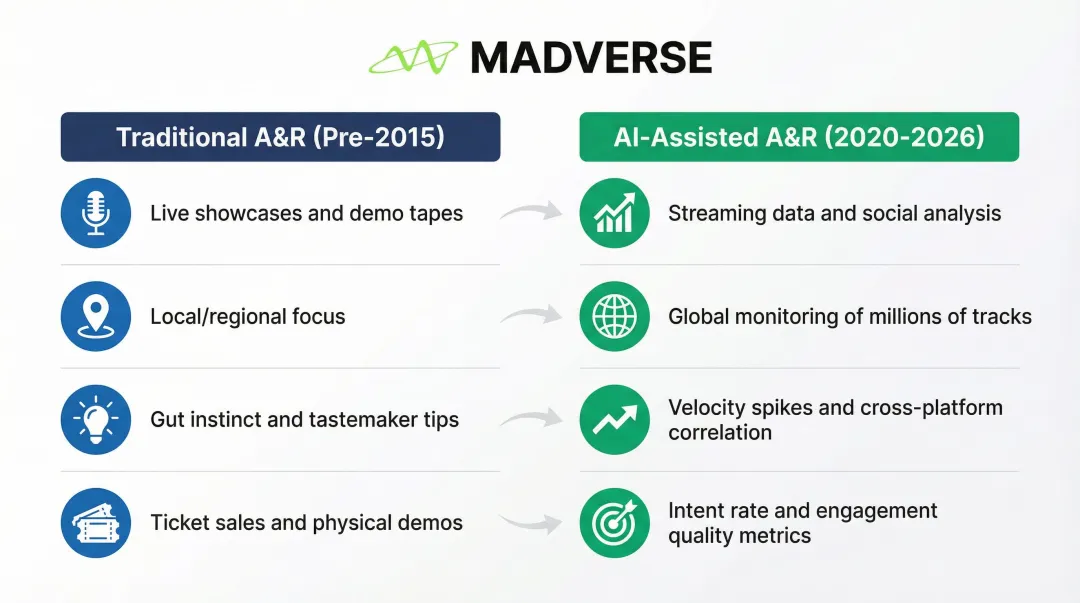
These methodology shifts enable scouts to identify emerging talent across any market—not just local scenes with strong industry connections.
Early Signals AI Detects Before Mainstream Breakout
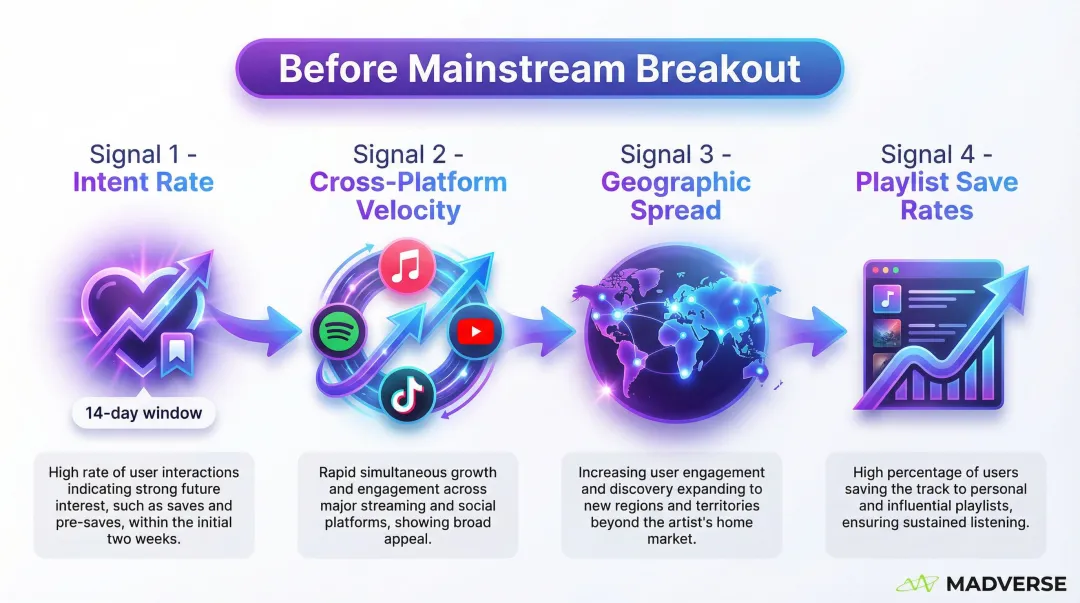
Modern algorithms don't just count streams—they analyze how listeners engage with music to predict future success. Key metrics include:
- Intent Rate — Platforms like Spotify track the percentage of listeners who save a track, add it to playlists, or follow an artist within 14 days of first hearing them. This metric predicts long-term fan retention far better than viral spikes that generate passive streams.
- Cross-Platform Velocity — Tools like Chartmetric monitor "7-day velocity," measuring how quickly an artist's ranking changes across TikTok, Spotify, and Instagram simultaneously. Coordinated growth across multiple platforms signals authentic momentum rather than isolated viral moments.
- Geographic Spread — AI visualizes listener data on heat maps, revealing regional trends before they go global. A spike in Shazams in a specific city often precedes streaming growth, with Shazam activity predicting roughly 50% of subsequent Spotify chart entries.
- Playlist Save Rates — When listeners save tracks to personal playlists (not just stream passively), algorithms flag this as a strong signal for amplification through features like Spotify's Release Radar and Discover Weekly.
Real-World Success: PinkPantheress and Tommy Richman
Warner Music Group's Sodatone platform flagged PinkPantheress early based on viral data signals. Parlophone co-president Nick Burgess confirmed: "PinkPantheress was discovered with a data tool that we have... one of our A&R people spotted the numbers really early."
Tommy Richman's trajectory demonstrates AI's predictive power. Data tracking tools identified his rapid growth when he had around 296,000 monthly listeners.
He subsequently skyrocketed to 46.4 million monthly listeners, outpacing legacy acts like The Beatles.
What AI Can't Replace: The Human Element
Despite algorithmic advantages, industry experts emphasize that AI cannot assess cultural relevance, predict creative evolution, or evaluate live performance potential.
Data reveals what is happening but not why it matters culturally.
A&R professionals still provide essential judgment about:
- Artist work ethic and management quality
- Long-term creative vision and adaptability
- Cultural fit with label identity
- Relationship dynamics that sustain careers
AI functions as a pre-filtering tool that surfaces candidates, but human expertise determines who gets signed and how they're developed.
Key AI Tools and Platforms Reshaping Artist Discovery
Streaming Platform Analytics
According to a 2024 survey of 125 A&R professionals, streaming platforms dominate talent discovery workflows:
Spotify ranks #1 as the most significant data source for A&R decision-making. Its granular engagement metrics—particularly saves, playlist adds, and follower growth—directly correlate with revenue potential.
Spotify's Discovery Mode delivers measurable results: artists see an average +50% increase in saves, +44% in playlist adds, and +37% in follows during the first month.
YouTube takes second place for discovering fresh music and diverse content. Its recommendation algorithm surfaces artists across genres, and video engagement metrics provide additional context about visual branding and audience connection.
SoundCloud excels at early-stage discovery, ranking third among A&R professionals. Underground and emerging artists often build initial followings here before migrating to mainstream platforms, making it valuable for scouting talent before competition intensifies.
Apple Music rounds out the top four, offering solid streaming data but less granular engagement insights compared to Spotify.
Social Media Integration
Social platforms now complement streaming analytics in talent scouting:
- Instagram: Used by 75.3% of A&R professionals for talent discovery—visual content, Stories engagement, and audience demographics complement streaming data
- TikTok: Used by 49.5% of A&R professionals—viral moments often precede streaming growth, with engagement rates and content virality patterns indicating breakout potential
AI-Powered Talent Discovery Platforms
Beyond individual platforms, specialized AI tools help labels and scouts identify breakthrough talent:
- Sodatone (Warner Music Group): Proprietary machine learning platform that analyzes streaming and social data to generate Jump Scores predicting artist success—tracks loyalty and engagement quality, not just volume
- Chartmetric: Independent cross-platform intelligence tool offering Predictive A&R that filters 10+ million artists, featuring Artist Score (0-100 rating), Playlist Journey analytics, and 7-day velocity tracking to spot trending artists before they peak
- Viberate: Provides an A&R Filter to find unsigned artists with genre and geographic segmentation, integrating social media and streaming data to create comprehensive artist profiles
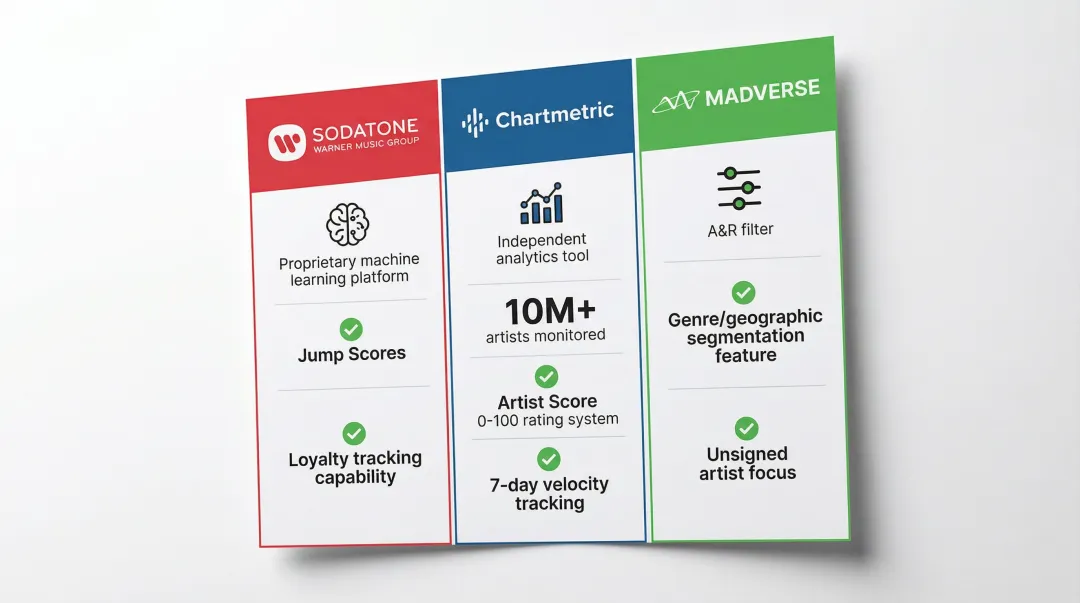
These platforms combine data across streaming, social media, radio, and live performance venues to provide holistic views of artist momentum. For independent artists using distribution services like Madverse, understanding how these tools evaluate talent helps optimize release strategies and audience targeting across the same platforms scouts monitor.
What Metrics Do AI Talent Scouts Actually Track?
AI tools analyze engagement quality to predict future value, not just raw numbers:
Core Predictive Metrics
- Intent Rate: The likelihood a listener will save, add to playlist, or follow after an initial stream, calculated using a 14-day attribution window. High intent rates signal genuine fandom
- Save Rate: Percentage of listeners who save a track for future listening—a stronger predictor of longevity than stream count alone
- Playlist Adds: How often users add tracks to personal playlists, which triggers algorithmic amplification
- Follower Growth Velocity: The speed at which an artist gains followers, with 7-day velocity calculations revealing trending artists before they peak
- Skip Rate: Low skip rates signal resonance; high skip rates kill algorithmic momentum
Cross-Platform Consistency Indicators
Beyond individual platform metrics, A&R scouts look for validation across multiple channels to rule out fake streams or bot activity:
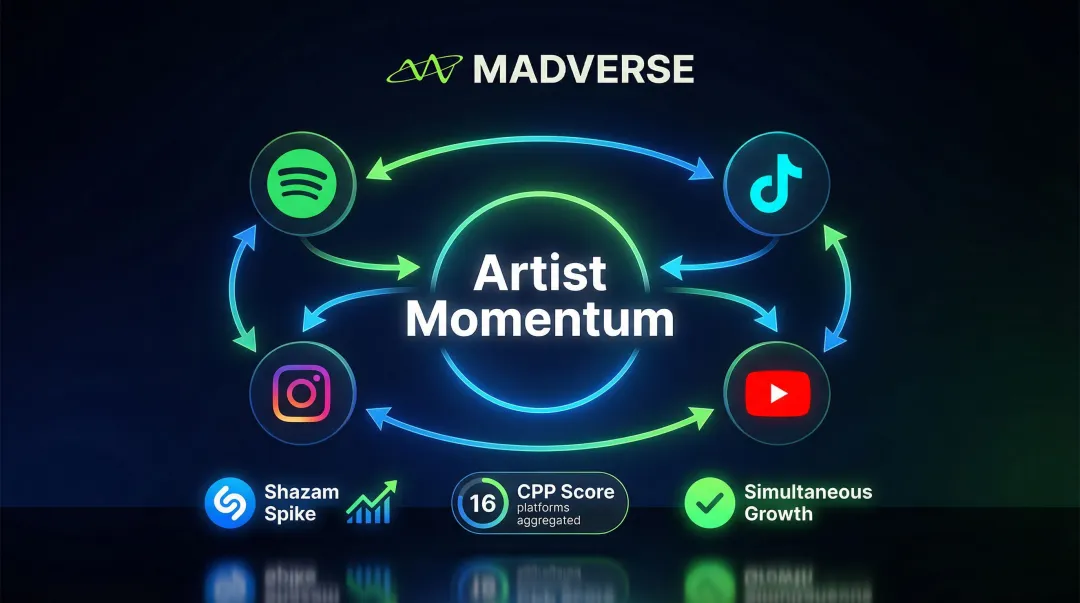
- Correlation Signals: Shazam spikes often precede streaming growth, predicting roughly 50% of subsequent chart entries
- Cross-Platform Performance (CPP) Score: Chartmetric aggregates data from 16 platforms to provide a single view of global footprint
- Simultaneous Growth: When an artist shows momentum across Spotify, TikTok, Instagram, and YouTube simultaneously, it signals authentic audience building
Geographic and Demographic Data
Where an artist is growing matters as much as how fast—labels analyze:
- Regional concentration vs. geographic spread
- Audience age and location patterns
- Market-specific momentum that indicates touring viability
- International growth potential based on early adoption in key markets
While specific threshold numbers vary by genre and market, A&Rs typically pay attention when artists show consistent month-over-month growth above 20%, combined with high intent rates and cross-platform validation. Platforms like Madverse provide artists with detailed analytics tracking these exact metrics, helping independent musicians understand what industry scouts are watching.
The Major vs. Indie Divide: Can AI Level the Playing Field?
The Technology and Access Gap
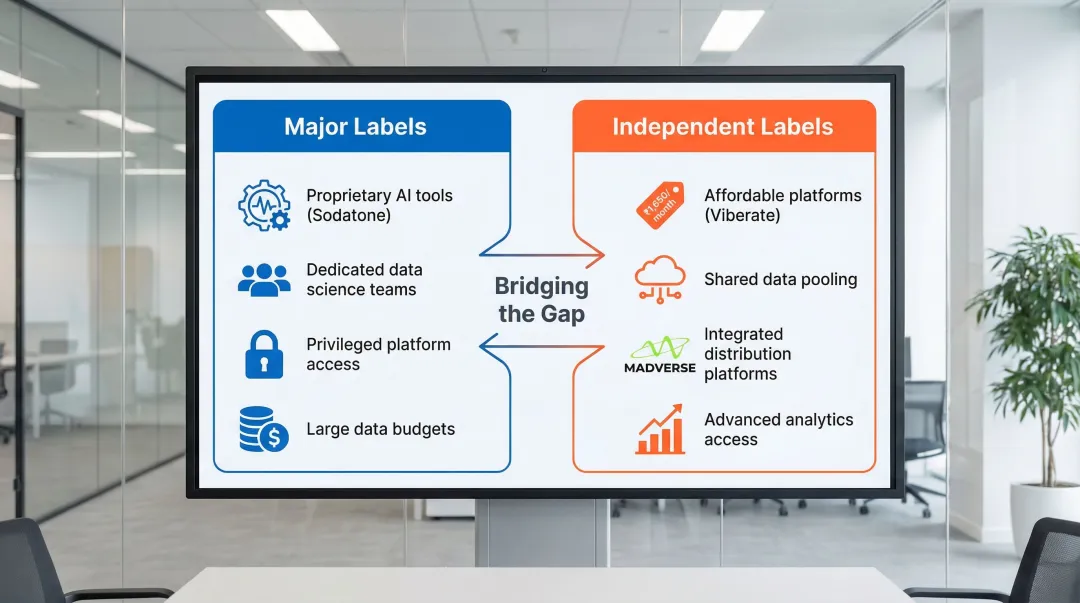
Major labels have acquired proprietary tools like Sodatone and employ dedicated data science teams with privileged access to platform data. This creates significant competitive advantages in identifying and signing talent before independents can react.
The budget reality: A 2024 survey found that 49% of smaller music companies (10 employees or fewer) operate with data budgets of ₹1,66,000 or less annually. Meanwhile, 59% of larger companies plan to increase their data spend, widening the gap.
Access barriers for independent labels:
- Premium intelligence tools cost ₹40,000 to ₹3,30,000 annually per user
- Only key employees at many companies access data tools due to cost constraints
- Fragmented data sources make it difficult to build comprehensive artist profiles
- Lack of direct platform relationships limits access to granular insights
Bridging the Gap: Solutions for Independent Labels
Independent labels aren't sitting idle. They're finding practical ways to compete:
Platforms like Viberate (starting at ₹1,650/month) and Chartmetric's tiered pricing make A&R filters previously exclusive to majors accessible to smaller operations. Some indie leaders advocate pooling data to create shared datasets that match major labels' predictive capabilities.
Comprehensive distribution platforms have emerged as another equalizer. Services like Madverse provide advanced analytics and roster management tools that help smaller operations compete with major label resources.
By consolidating distribution, analytics, and sync licensing opportunities in one platform, independent labels gain efficiency without enterprise-level budgets. These integrated solutions deliver the data visibility needed to identify promising talent early, track roster performance, and connect artists with placement opportunities that accelerate discovery.
How Artists Can Optimize for AI-Powered Discovery
AI-powered discovery tools analyze specific artist behaviors and metrics when identifying talent. Independent artists who understand these patterns can optimize their strategies to increase visibility with both algorithms and A&R scouts.
Here's how to make your music more discoverable:
Platform Optimization
Release Consistency Matters:
- Maintain regular release schedules (every 6-8 weeks) to keep engagement metrics active
- Long gaps between releases cause listener data to decay, making it harder to regain algorithmic momentum
- Consistent output signals professionalism to both algorithms and human A&Rs
Metadata Quality:
- Accurate genre tagging significantly improves discoverability across recommendation engines
- Complete artist profiles on Spotify for Artists, SoundCloud, and other platforms help algorithms correctly categorize music
- Missing or incorrect metadata can cause tracks to be ignored by recommendation systems entirely
Focus on high-value listener actions:
- Drive driving saves and playlist adds rather than just passive streams
- These actions feed the "intent rate" that Spotify's Discovery Mode and A&R tools prioritize
- Encourage fans to save tracks and add them to playlists through calls-to-action in social content
Promotional Strategy
Cross-Platform Coordination:
- Build momentum simultaneously across Spotify, Instagram, TikTok, and YouTube
- Cross-platform consistency signals authentic growth rather than isolated viral moments
- Use platform-specific content strategies while maintaining cohesive branding
Start locally, then expand:
- Focus initial promotional efforts on specific cities or regions to create concentrated growth
- Geographic concentration often triggers algorithmic attention more effectively than diffuse global reach
- Regional success creates compelling data stories for A&R professionals
Choose Distribution Partners Strategically:
- Select services that provide detailed analytics to track performance patterns
- Madverse distributes music to all major streaming platforms while offering advanced analytics to identify which promotional tactics drive results
- Sync licensing opportunities (like Madverse's TV, film, and commercial placements) create discovery pathways beyond streaming algorithms alone
By understanding which metrics AI systems prioritize, independent artists can optimize their strategies without label backing—using data insights to compete with signed artists.
Frequently Asked Questions
Which AI platform is most accurate for discovering music talent?
Spotify-based tools like Chartmetric lead for mainstream discovery with granular engagement data, while SoundCloud excels for early-stage underground talent scouting.
What is the best AI music platform for independent artists?
Platforms like Madverse that combine distribution, performance tracking, and sync licensing access serve independent artists best. For standalone analytics, tools like Viberate (₹1,650/month) offer strong value.
How do A&R professionals actually use AI to discover new artists?
A&Rs follow a three-step process: AI flags artists with strong momentum metrics, they review data for scale and sustainability, then apply human judgment on cultural fit and long-term potential.
Can independent artists benefit from AI talent scouting without a label?
Yes. Self-service analytics reveal which strategies drive engagement, helping artists optimize releases and promotional focus. Understanding these metrics lets artists engineer their own discoverability.
What specific metrics do AI talent scouts prioritize?
Top metrics include growth velocity (monthly listener increases), engagement quality (saves vs. passive streams), geographic spread, and cross-platform consistency showing momentum across multiple channels.
Is AI replacing human A&Rs in the music industry?
No. AI pre-filters daily uploads efficiently, but human judgment remains essential for assessing cultural relevance, creative evolution, and long-term potential. AI surfaces candidates; humans decide signings.