
Introduction
A single TV placement transformed independent artist Kari Kimmel's career—she's now secured over 650 placements and 18 theme songs by retaining ownership of her masters and acting as her own "one-stop" shop. For indie musicians, TV sync fees typically range from ₹40,000 to ₹16,00,000 per placement, with backend performance royalties often exceeding the upfront payment.
Most musicians struggle because they don't understand what music supervisors actually need. Supervisors receive upwards of 50 pitches daily, making it nearly impossible to break through.
Breaking through requires understanding the industry's technical requirements, legal clearances, and relationship-driven connections.
This guide covers what makes music "TV-ready," how to prepare your catalogue, the process to land placements, and mistakes that disqualify most submissions.
Key Takeaways
- Earn ₹40,000-₹16,00,000+ upfront plus backend royalties from TV placements
- Sync agents and music libraries are your gateway—direct pitching rarely works
- Rights must be 100% cleared with broadcast-quality production standards
- Deliver multiple versions (instrumental, clean, stems) with universal appeal
How to Land TV Music Placements: Step-by-Step Process
Step 1: Research Shows That Match Your Music Style
Finding the right shows for your music starts with strategic research. Use platforms like Tunefind and IMDb to identify TV shows currently using music similar to yours in terms of genre, mood, and energy.
Your research should include:
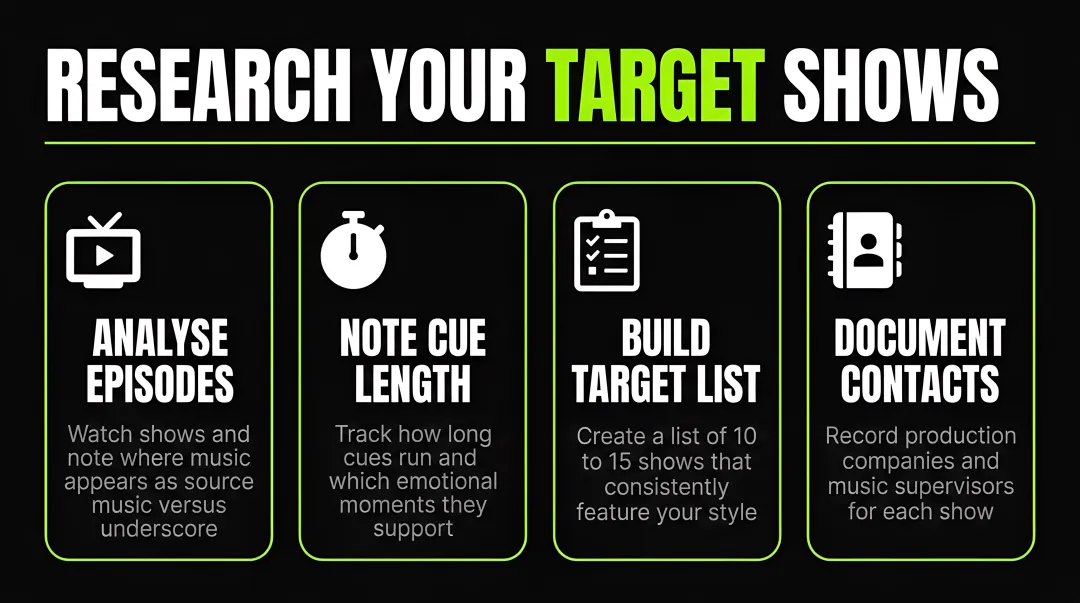
- Watch episodes and analyse where music appears (source music vs. underscore)
- Note how long cues run and what emotional moments they support
- Create a target list of 10-15 shows that consistently feature your style
- Document their production companies and music supervisors
This targeted approach prevents wasted pitches and helps you understand what specific shows actually need. You'll pitch smarter, not broader.
Step 2: Ensure Your Music Is Completely Pre-Cleared
Music supervisors need legal certainty before licensing any track. Uncleared samples or unclear ownership will immediately disqualify your submission because music supervisors can't risk getting their network sued.
Pre-clearance requirements:
- Verify you own 100% of the master recording rights or have written permission from all contributors via work-for-hire agreements
- Confirm all co-writers have signed split sheets agreeing to their ownership percentages
- Remove or properly clear any samples from other recordings (pre-recorded loops from programmes like GarageBand are acceptable)
- Check your publishing deal to see if you can independently licence your songs for sync
"One-stop" tracks—where you control 100% of both master and publishing—are the gold standard because supervisors can clear them with a single phone call. The simpler your rights structure, the faster you'll get placed.
Step 3: Create Professional, Sync-Ready Versions of Your Songs
Your recording quality must match what's currently on air. Produce a broadcast-quality master with professional mixing, mastering, and performances that meet technical broadcast standards.
Essential alternate versions:
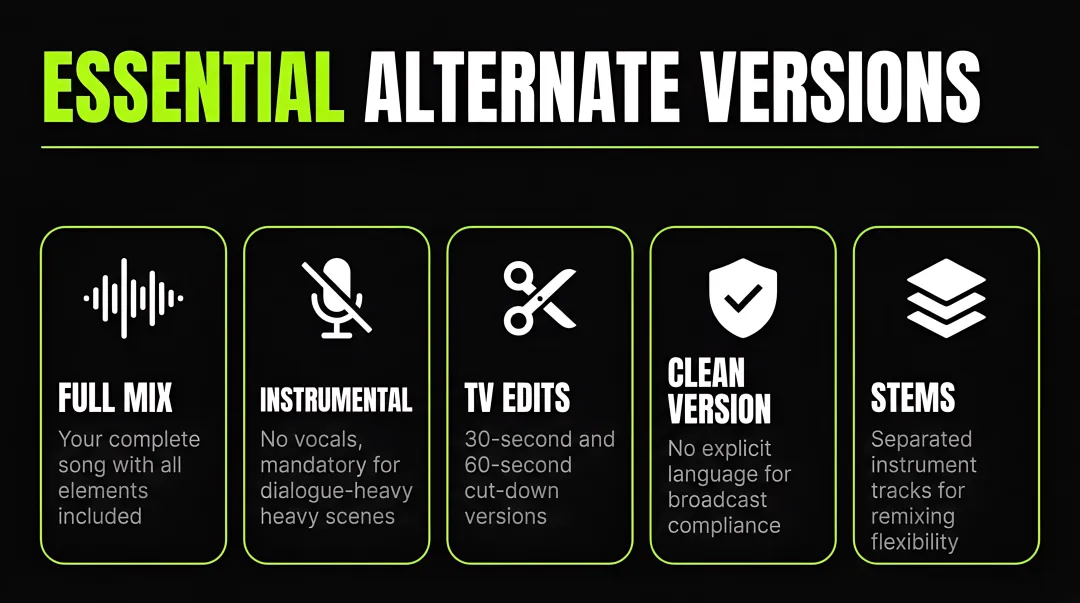
- Full mix - Your complete song
- Instrumental - No vocals (mandatory for dialogue-heavy scenes)
- TV edits - 30-second and 60-second cut-downs
- Clean version - No explicit language
- Stems - Separated instrument tracks for remixing flexibility
Embed comprehensive metadata into all files including song title, your contact information, PRO affiliation, ISRC code, and a brief description of mood/genre. Proper tagging makes your tracks searchable when supervisors filter their libraries.
Step 4: Build Relationships with Sync Agents and Music Libraries
With your tracks ready, it's time to connect with industry gatekeepers. Research sync agencies and music libraries that represent your genre by reviewing their catalogues and previous placements to ensure style alignment.
Submission best practices:
- Follow their submission guidelines exactly (most have specific requirements for file formats and metadata)
- Submit a selected collection of your 5-10 strongest, most "TV-ready" tracks rather than flooding them with your complete catalogue
- Quality over quantity is critical—one exceptional track beats ten mediocre ones
- Consider distribution platforms that include sync licensing services—Madverse, for example, provides access to music supervisors as part of their distribution offering and has placed South Asian tracks in high-profile shows like The Kardashians.
Step 5: Follow Up Strategically and Build Long-Term Relationships
If accepted by a sync agent or library, understand the terms: exclusive vs. non-exclusive, contract length, and commission splits (usually 50/50).
Long-term strategy:
- Continue creating new music specifically tailored for sync opportunities
- Study what's currently being placed on TV shows in your target list
- Be patient and professional—sync placements often take 6-12 months from submission to airing
- Relationships are built over years, not weeks
What Makes Music "TV-Ready"? Key Requirements Music Supervisors Look For
Music supervisors need songs that enhance scenes without overpowering dialogue, which means specific production and lyrical qualities are essential.
Universal Lyrical Themes and Appropriate Specificity
Music supervisors favour universal emotions and themes (love, new beginnings, overcoming challenges, celebration, nostalgia) that can fit multiple scene types without conflicting with scripts.
Lyrical guidelines:
- Avoid overly specific references (proper names, locations, situations) that might contradict storylines
- Balance universality with originality—express familiar emotions in fresh, memorable ways
- Supervisors distinguish authentic artistry from manufactured "sync bait"—genuine emotion wins
Production Quality Must Match Broadcast Standards
Your recordings must sound as polished as songs heard on streaming platforms and radio. This means professional-level musicianship, vocal performances, mixing, and mastering.
Key technical specifications for broadcast:
- Audio loudness: -24 LKFS (ATSC A/85) or -23 LUFS (EBU R128) with true peaks below -2 dBTP
- File format: Uncompressed WAV or AIFF at 48 kHz / 24-bit
The good news? Many successfully placed songs today originate from home studios. Location doesn't matter—sonic quality does.
Supervisors will reject tracks with poor vocal tuning, muddy mixes, or weak performances regardless of songwriting quality. Professional sound is mandatory.
Tempo and Energy Considerations
Mid-tempo and upbeat songs place more frequently than slow ballads, which are harder to place and more competitive.
What supervisors look for:
- Songs that feel energetic and forward-moving to support visual storytelling
- Mid-tempo range (80-110 BPM) works well for most scenes
- There's still demand for introspective, emotional pieces in specific moments
Genre Versatility and Current Sound
While all genres can find sync opportunities, music supervisors often look for songs that sound contemporary and could fit alongside current hits (without the expensive licensing fees).
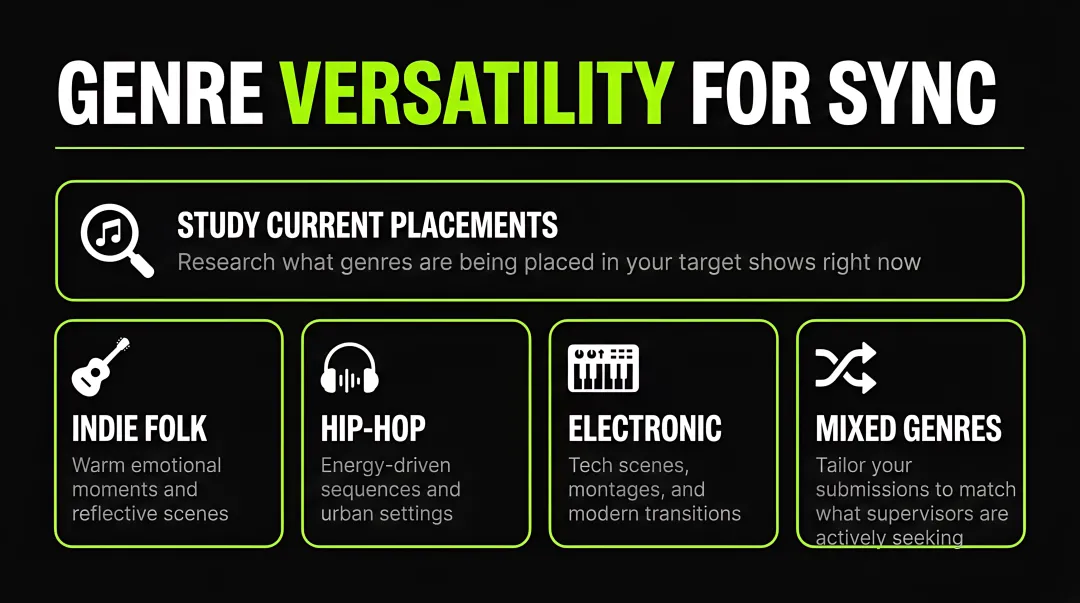
Study what's currently being placed in your target shows—are they using indie folk, hip-hop, electronic, or a mix? Tailor your submissions accordingly.
What You Need Before Pitching for TV Placements
Preparation and organisation determine whether music supervisors and sync agents will take you seriously.
Legal Documentation and Rights Clearance
Required documentation:
- Signed split sheets from all co-writers detailing ownership percentages
- Work-for-hire agreements from all session musicians and vocalists
- Proof you can legally licence both the master and publishing sides
- PRO registration (ASCAP, BMI, SESAC, or GMR)
Without these documents, you cannot legally licence your music for sync, regardless of quality.
Professional Presentation Materials
Create for each song:
- One-sheet (PDF) including song title, duration, genre/mood descriptors, lyrical themes, your contact info, and PRO affiliation
- Simple, professional website or EPK showcasing your sync-ready catalogue
- Easy streaming access and downloadable files
- Clear contact information
Access to Sync Opportunities
Getting your music in front of supervisors typically requires one of three paths:
Your options:
- Traditional sync agent or music library representation
- Self-pitching directly to supervisors (requires established relationships)
- Distribution platforms with integrated licensing services
Platforms like Madverse combine distribution with sync licensing, handling rights management while connecting artists directly to placement opportunities. Independent artists retain 95% of their royalties without needing separate representation.
Understanding Sync Licensing Deals and Payment Structures
Understanding how sync deals pay out helps you negotiate better rates and maximize your earnings. TV placements generate income from two separate sources: upfront licensing fees and backend performance royalties.
Sync Fees and Master Use Fees
A "sync licence" grants permission to use the underlying song (issued by the publisher), while a "master use licence" grants permission to use the specific recording (issued by the recording owner).
For indie artists who own both sides, these are often combined into an "all-in" deal with one payment split equally between both rights.
Typical upfront fees for indie artists:
- TV shows: ₹40,000-₹16,00,000 depending on the show's budget and usage
- Commercials: ₹16,00,000-₹4,40,00,000+
- Films: ₹8,00,000-₹64,00,000
- Video games: ₹1,60,000-₹8,00,000
Backend Performance Royalties
Beyond the upfront payment, your earnings continue after a TV show airs. Your PRO pays performance royalties to both the songwriter/publisher and the recording owner based on factors like network size, time of day, and length of the music cue.
Key points:
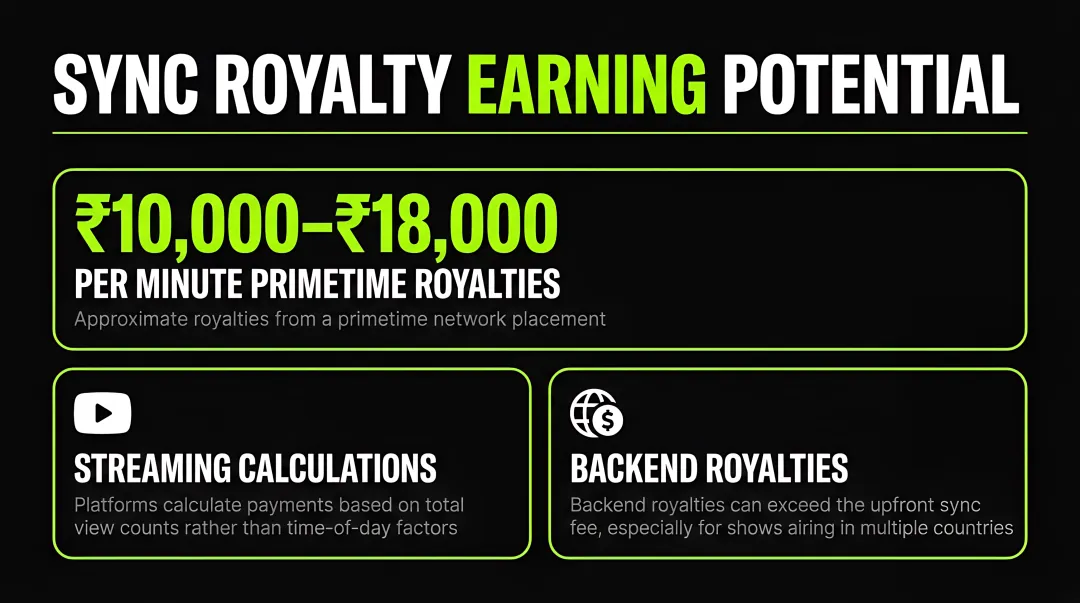
- A primetime network placement can generate approximately ₹10,000 to ₹18,000 per minute in royalties
- Streaming platforms calculate payments based on total view counts rather than time-of-day factors
- These backend royalties can sometimes exceed the upfront sync fee, especially for shows that air in multiple countries
Exclusive vs. Non-Exclusive Agreements
When working with sync agents or music libraries, you'll encounter two deal structures:
Non-exclusive agreements:
- Let you work with multiple sync agents or libraries simultaneously
- Agents may "retitle" your song (register it under a slightly different name) to track their specific placements
- Provide more pitching opportunities but typically yield lower individual fees
Exclusive agreements:
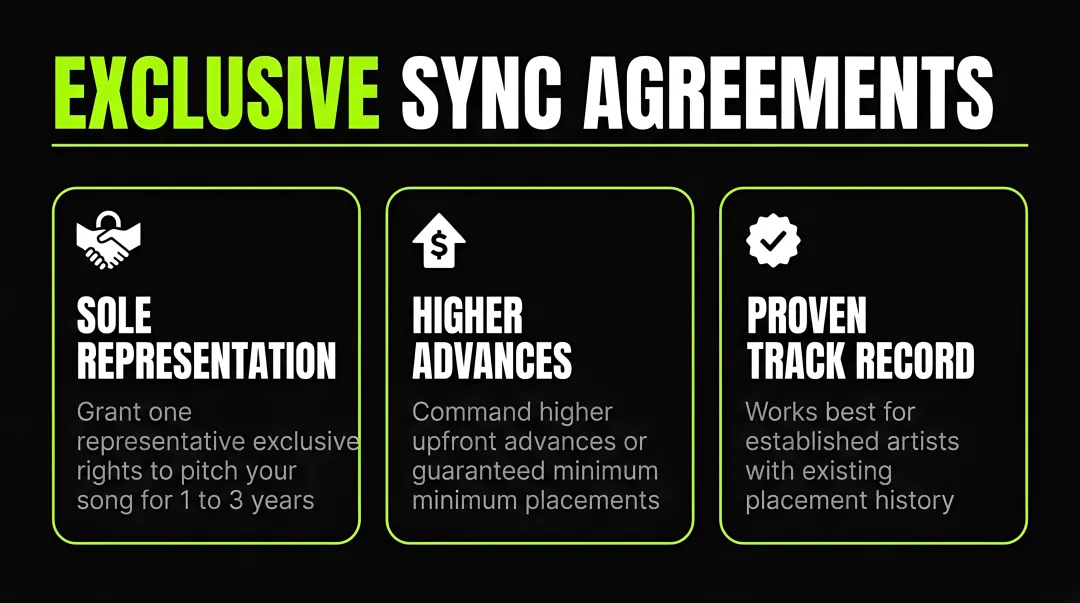
- Grant one representative sole rights to pitch your song during the contract term (typically 1-3 years)
- Command higher upfront advances or guaranteed minimum placements
- Work best for established artists with proven placement history
Common Mistakes That Kill Your TV Placement Chances
Even talented musicians with great songs get rejected because they make easily avoidable errors.
Submitting Music That Isn't Pre-Cleared
Sending songs with uncleared samples, unclear ownership splits, or without proper permissions from collaborators immediately disqualifies your submission.
Music supervisors and sync agents need 100% certainty that all rights are cleared before they'll even consider your music. One lawsuit can cost a network millions.
Ignoring Genre and Style Fit
Pitching music to shows that clearly don't use your style wastes everyone's time and damages your reputation.
To avoid this mistake, match your submissions carefully:
- If you're making happy pop music, don't pitch to dark crime dramas
- Study what music is actually being used in your target shows
- Only submit when there's a genuine stylistic match
Poor Audio Quality or Missing Alternate Versions
Submitting songs without instrumental versions, clean edits, or with amateur production quality signals you don't understand the sync licensing industry's requirements.
Music supervisors need flexibility. If they love your song but need an instrumental version for a dialogue-heavy scene and you don't have one ready, you've lost the opportunity.
Alternatives to Direct Pitching: Music Libraries vs. Sync Agents
Direct pitching to music supervisors rarely works anymore. Instead, most successful placements come through established intermediaries who already have supervisor relationships.
Non-Exclusive Music Libraries
Music libraries like AudioSocket, Musicbed, and Artlist accept submissions from independent artists and pitch your music to their network of clients in exchange for typically 50% of licensing fees.
Advantages:
- Submit to multiple libraries simultaneously, creating more opportunities without exclusivity constraints
- Get your music in front of networks of production companies, ad agencies, and supervisors
- Start building placements without needing an established track record
Research libraries by checking their previous placements, the quality of music in their catalogue, and their submission requirements before applying.
Sync Agents and Boutique Agencies
If non-exclusive libraries cast a wide net, sync agents take a sniper approach. These industry veterans maintain close relationships with music supervisors and pitch only pre-cleared tracks they personally vouch for.
Key considerations:
- Landing a reputable sync agent requires strong credentials—previous placements, solid streaming numbers, or exceptional production quality
- Most work on 50% commission with exclusive representation for TV/film licensing
- Agents pitch fewer tracks but with higher placement rates due to supervisor trust
Distribution Platforms with Built-In Sync Services
A third option has emerged recently: distribution platforms that bundle sync licensing with their core service. This approach bridges the gap between DIY library submissions and exclusive agent representation.
Benefits:
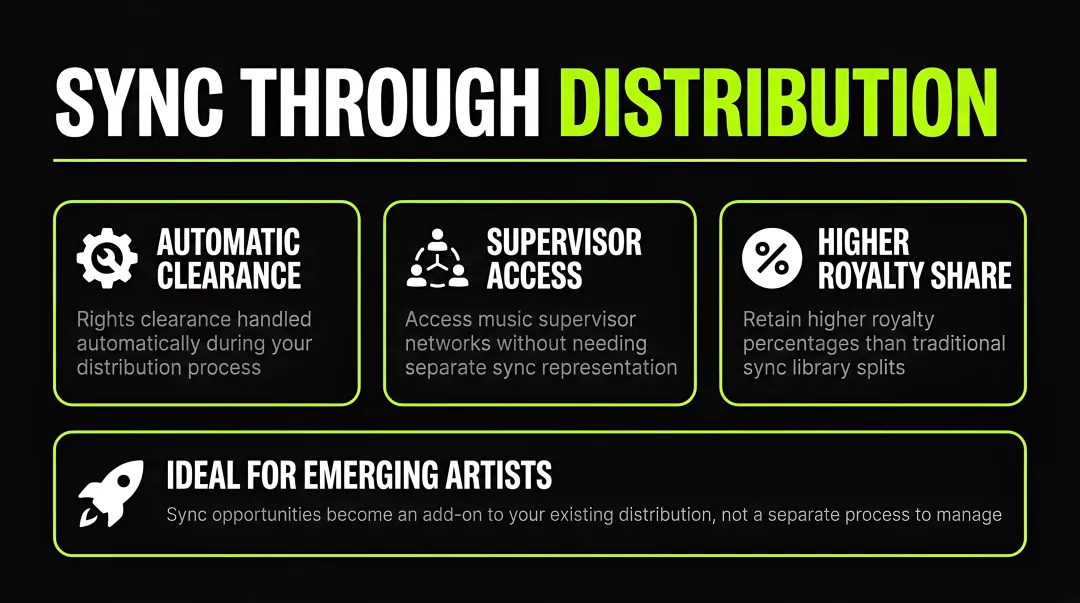
- Rights clearance handled automatically during distribution
- Access supervisor networks without needing separate sync representation
- Retain higher royalty percentages than traditional library splits
Platforms like Madverse combine distribution with sync licensing access, letting artists keep 95% of royalties while tapping into supervisor relationships. This setup works particularly well for emerging artists building their first placements—you're already distributing your music, so sync opportunities become an add-on rather than a separate hustle.
Frequently Asked Questions
How much does a sync agent cost?
Sync agents work on commission (typically 50% of licensing fees) with no upfront costs. Unlike publishers who may take permanent rights, agents only earn when you earn.
How long does it typically take to land your first TV placement?
Expect anywhere from 3 months to 2+ years, depending on your music's market fit, representation quality, and submission consistency. Building a sync-ready catalog and industry relationships takes time.
Do I need to live in Los Angeles or Nashville to get TV placements?
Location doesn't matter since artists submit everything digitally. However, living in music hubs helps with networking at industry events, which can accelerate success.
Can I pitch the same song to multiple music supervisors or libraries at once?
You can pitch to multiple non-exclusive music libraries at once, but you should avoid pitching the same song directly to multiple music supervisors working on the same show. Always disclose if you have existing representation to avoid conflicts.
What's the difference between a sync fee and performance royalties?
A sync fee is the upfront one-time payment for using your music. Performance royalties are ongoing payments from your PRO each time the show airs or streams, often exceeding the initial sync fee.
Do I need a music publisher to get TV placements?
A publisher isn't required—many independent artists successfully license their music through sync agents, libraries, or distribution platforms like Madverse that offer sync licensing opportunities. Publishers provide connections and handle admin work, but aren't mandatory for success.