Introduction
Breaking through as an independent artist has never been more challenging. With over 100,000 tracks uploaded to Spotify daily, standing out requires more than raw talent.
Yet the opportunity is unprecedented. Independent artists now control approximately 50% of Spotify's royalty payouts, generating over ₹41,500 crore in 2024 alone. Success demands strategic thinking, consistency, and authentic connection with your audience.
This guide covers essential marketing foundations you can implement immediately:
- Building a distinctive brand identity
- Establishing your digital presence across platforms
- Creating content that resonates with listeners
- Growing and engaging your audience organically
- Monetising your music effectively
Key Takeaways
- Build a clear brand identity and professional presence across streaming and social platforms
- Release singles every 6-8 weeks to maintain algorithmic visibility and audience momentum
- Email marketing delivers 42:1 ROI—prioritize building your list alongside social media
- Use platform analytics monthly to identify what's working and adjust your strategy accordingly
- Common mistakes to avoid: inconsistent branding, neglecting email lists, posting only during releases
Building Your Artist Brand Identity
Your artist brand is what makes you recognizable and memorable in a crowded music landscape. It encompasses your musical style, visual aesthetic, values, and the experience fans have when engaging with your work.
Building a strong brand identity helps fans connect with you emotionally and remember you when scrolling through endless music options.
Define Your Unique Position
Understanding your unique position starts with honest analysis. What sets you apart from other artists in your genre?
- Musical influences and distinctive sound elements
- Personal story or background that informs your music
- Specific themes or messages in your lyrics
- Performance style or production approach
Who's Your Ideal Listener?
Once you understand your unique sound, identify who connects with it most. Trying to appeal to everyone dilutes your message—research your ideal listener instead:
- Demographics (age range, location, lifestyle)
- Listening habits (preferred platforms, discovery methods)
- Values and interests beyond music
- Where they spend time online
Example: If you create lo-fi hip-hop, your audience likely skews 18-30, values authenticity, and discovers music through TikTok and algorithmic playlists rather than radio.
Create Consistent Visual Branding
Your visual identity should make you instantly recognizable across every platform:
- Memorable artist name that's searchable and available across platforms
- Signature color palette (2-4 colors) that reflects your music's mood
- Consistent typography for graphics and promotional materials
- Cohesive photography style across profile photos and content
Craft Your Story
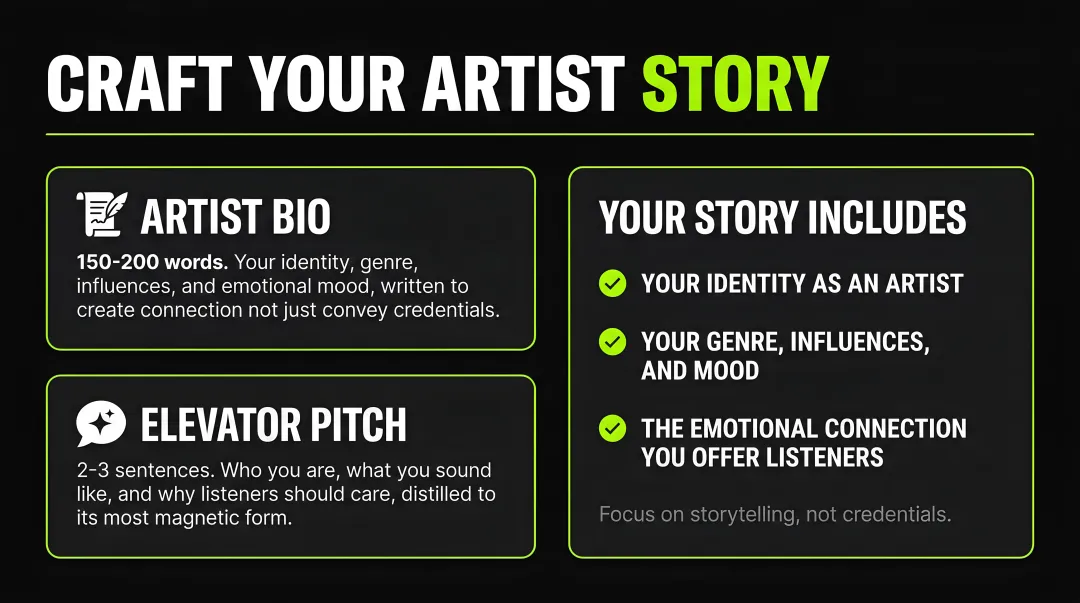
Write a compelling artist bio (150-200 words) and elevator pitch (2-3 sentences) that communicate who you are, what you sound like, and why listeners should care.
Your story should include:
- Your identity as an artist
- Your genre, influences, and mood
- The emotional connection you offer listeners
Focus on storytelling rather than listing credentials—your story should create emotional connection, not just convey information.
Setting Up Your Digital Presence
Your digital presence is your professional foundation—the framework that allows fans, industry professionals, and algorithms to discover your music.
Build Your Artist Website
Your website serves as your central hub, independent of platform algorithm changes.
Key elements to include:
- Professional bio and high-quality photos
- Embedded music player with latest releases
- Upcoming show dates and ticket links
- Press kit (bio, photos, music) for media and booking
- Email signup form (offer exclusive content as incentive)
- Contact information for bookings and inquiries
Ensure mobile responsiveness and fast loading times—most visitors will access via phone.
Optimise Streaming Platform Profiles
Beyond your owned website, streaming platforms are where most listeners will discover and consume your music. Claim and optimise profiles on all major platforms (Spotify, Apple Music, YouTube Music, Amazon Music, Tidal). Use a distribution service that maximises your royalty retention while providing promotional tools.
For example, Madverse allows artists to keep 95% of royalties while providing automated playlist pitching and comprehensive analytics to help independent artists compete effectively.
Profile Optimisation Checklist:
- High-resolution artist photo (at least 750px x 750px for Spotify)
- Compelling bio with genre tags
- Links to social media profiles
- Featured playlists showcasing your music
- Artist verification enabled
Enable platform-specific tools:
- Spotify for Artists (analytics and playlist pitching)
- Apple Music for Artists (lyrics syncing and Q&A features)
- YouTube Official Artist Channel
Establish Social Media Presence
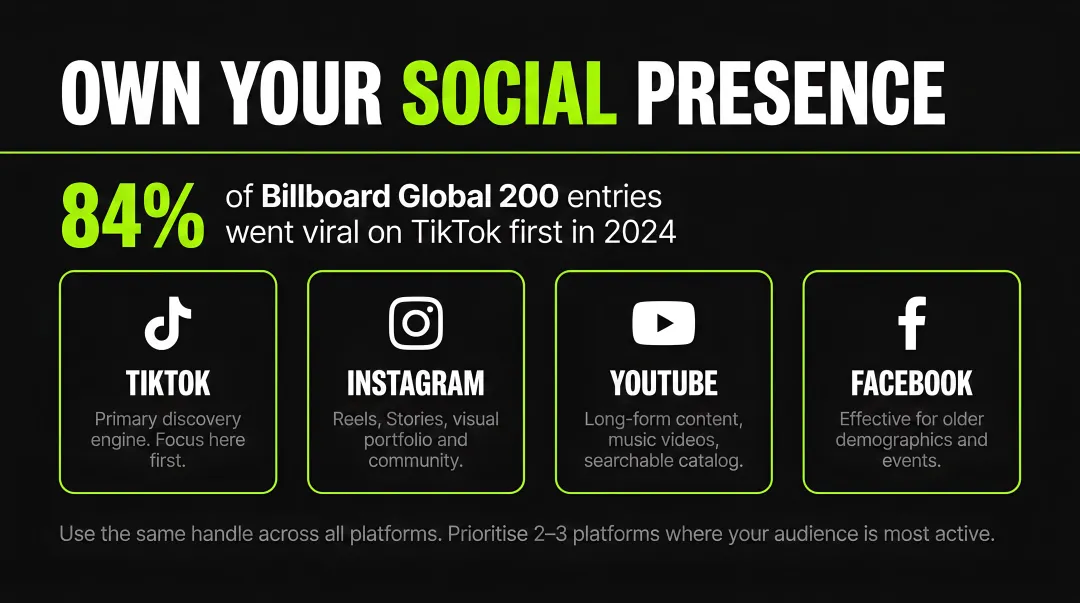
Use the same handle across all platforms for consistency. Prioritise 2-3 platforms where your target audience is most active rather than spreading yourself thin.
Platform selection guide:
- TikTok: Primary discovery engine; 84% of Billboard Global 200 entries in 2024 went viral here first
- Instagram: Visual portfolio and community building through Reels and Stories
- YouTube: Long-form content, official music videos, and searchable catalog
- Facebook: Effective for older demographics and event promotion
Creating a Content and Release Strategy
Consistent content and strategic releases keep you visible in algorithms and top-of-mind for fans. Sporadic activity leads to audience drop-off and missed opportunities.
Adopt a Singles-First Release Strategy
Release one single every 6-8 weeks rather than saving everything for an album. This frequency:
- Triggers streaming algorithms (Release Radar, Discover Weekly)
- Maintains momentum between releases
- Gives each track room to find its audience
- Provides multiple promotional cycles throughout the year
Build a Content Calendar
Balance promotional posts with engaging content:
Content mix (weekly):
- 1-2 promotional posts (new releases, shows, merchandise)
- 2-3 engaging posts (behind-the-scenes, personal stories, fan interactions)
- 1-2 trending or participatory content pieces (challenges, duets, tutorials)
Aim for 3-5 posts per week on primary platforms. Posting 3-5 times weekly on Instagram offers the best balance of visibility and sustainability.
Once your posting rhythm is established, ensure your content creates a cohesive visual identity.
Create a Visual World for Each Release
Coordinate visual assets that tell a cohesive story:
- Professional cover art
- Promotional graphics for social media
- Short video clips (Canvas for Spotify, snippets for TikTok)
Additional visual content:
- Lyric videos or visualizers
- Behind-the-scenes content from recording sessions
All assets should share consistent aesthetic elements that reinforce your brand.
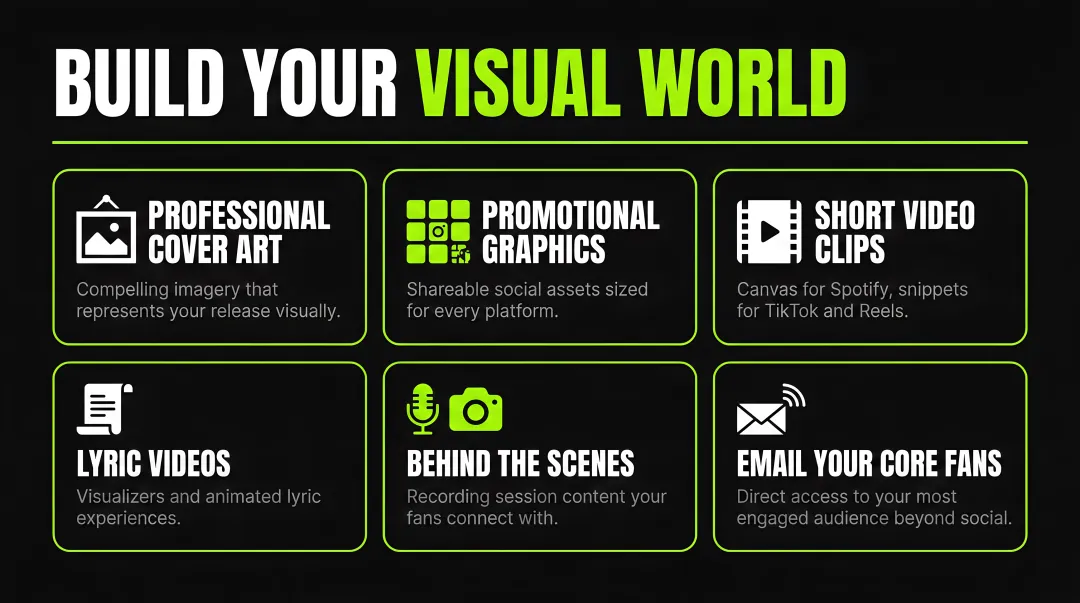
While social media builds awareness, email gives you direct access to your most engaged fans.
Build Your Email List from Day One
Email marketing generates $42 return for every $1 spent according to US industry data—significantly outperforming social media for merchandise and ticket sales.
Email list building tactics:
- Offer a free download or exclusive track in exchange for signup
- Provide early access to tickets or limited merchandise
- Share exclusive behind-the-scenes content
- Send monthly newsletters with personal updates
Unlike social platforms where algorithms control your reach, email gives you direct access to your most engaged fans.
Growing and Engaging Your Audience
A smaller, highly engaged audience is more valuable than large, passive follower counts. Prioritize genuine connection over vanity metrics.
Foster Genuine Engagement
Building that genuine connection requires consistent, personal interaction with your listeners.
Daily engagement practices:
- Respond to comments and direct messages personally
- Ask questions in your posts to encourage conversation
- Create polls and interactive content (Q&As, "this or that" choices)
- Show appreciation for fan support (reshare fan content, give shoutouts)
Strong engagement sends positive signals to algorithms. High save rates and shares increase the likelihood of being picked up by Discover Weekly and Release Radar.
Collaborate Strategically
Collaborations expose you to new, adjacent audiences:
- Co-write songs with artists in your genre
- Feature on each other's tracks
- Host Instagram Lives or TikTok duets together
- Create playlist swaps with complementary artists
The impact is measurable: artists who actively collaborate see 11% week-over-week streaming growth compared to just 3% for solo acts.
Submit for Playlist Consideration
Playlist pitching strategy:
- Submit through Spotify for Artists 3-4 weeks before release
- Write detailed, compelling pitch explaining the song's story and mood
- Optimize your artist profile before pitching
- Research and pitch to independent playlist curators via SubmitHub
- Build momentum with smaller playlists before targeting editorial lists
Playlist placement is cumulative—each addition increases your algorithmic visibility.
Leveraging Analytics and Data
Data reveals what's working and what's not, allowing you to make informed decisions rather than guessing.
Track Key Streaming Metrics
Review analytics monthly through platform tools. Most distribution platforms provide detailed performance dashboards that track listener behavior across all major streaming services.
Critical metrics to monitor:
- Skip rate: High skips signal poor engagement; optimize song intros
- Saves and playlist adds: High-intent actions that boost algorithmic visibility
- Listener demographics: Age, gender, location inform content and touring decisions
- Geographic hotspots: Identify cities for tour routing and targeted ads
Monitor Social Media Performance
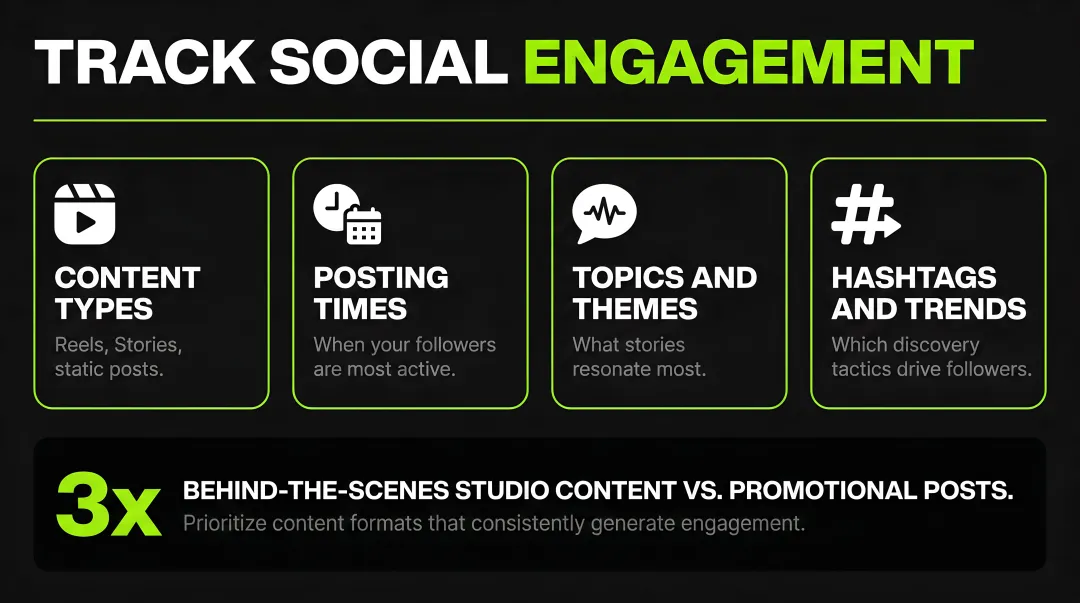
Track engagement patterns to identify what resonates with your audience:
- Content types: Reels, Stories, static posts
- Posting times and days: When your followers are most active
- Topics and themes: What stories resonate most
- Hashtags and trends: Which discovery tactics drive followers
Prioritize content formats that consistently generate engagement. If behind-the-scenes studio content outperforms promotional posts by 3x, shift your content calendar accordingly.
Common Marketing Mistakes to Avoid
Inconsistent Branding
Different names, conflicting visuals, and varying bios across platforms confuse potential fans and dilute your professional image. Audit all platforms quarterly to ensure cohesive presentation.
Neglecting Email Marketing
Relying solely on social media leaves you vulnerable to algorithm changes and platform policies you can't control. Artists with email lists of 1,000+ subscribers report 156% higher merchandise sales than those using only social media.
Posting Only When Selling
Constantly promoting without providing value trains your audience to ignore your posts. Balance promotional content with posts that entertain, educate, or inspire.
The ideal content mix:
- 80% value-driven content (behind-the-scenes, tips, stories, engagement)
- 20% promotional (releases, merch, ticket sales)
Monetizing Your Music Career
Building a sustainable music career requires multiple income sources beyond streaming royalties. Most successful independent artists combine 3-5 revenue streams to create financial stability and fund their creative work.
Multiple Revenue Channels
Revenue diversification strategies:
- Merchandise: T-shirts, vinyl, posters, and limited-edition items
- Exclusive content: Patreon, fan clubs, or membership platforms
- Sync licensing: Place music in TV, film, commercials, and video games
- Teaching: Offer lessons, workshops, or online courses
- Live performance: Shows, tours, and virtual concerts
Once you've identified your revenue mix, crowdfunding can help finance specific growth initiatives.
Strategic Crowdfunding
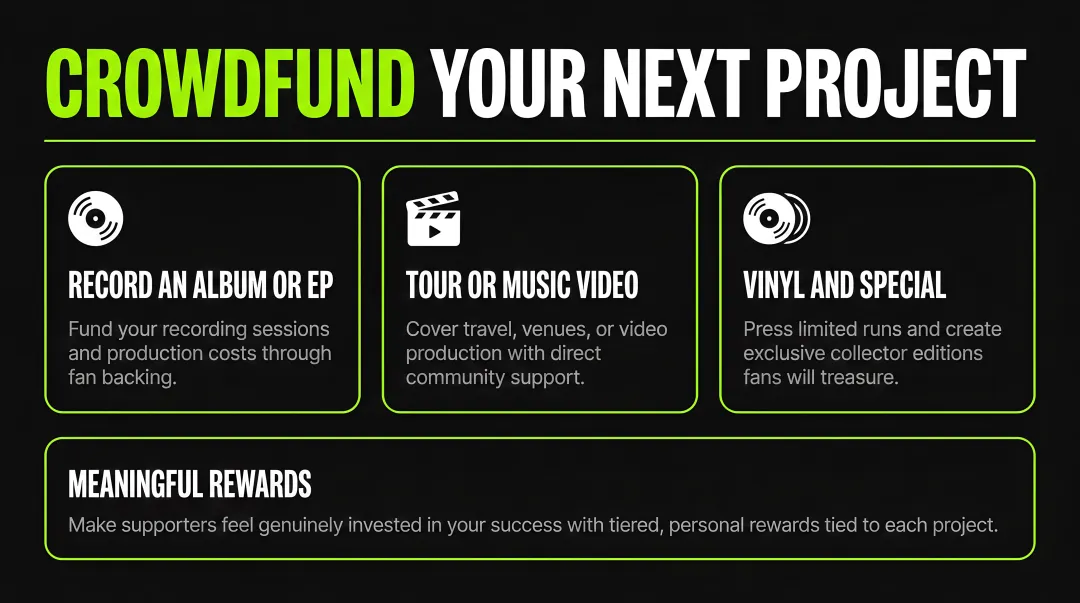
Use crowdfunding for specific projects :
- Recording an album or EP
- Funding a tour or music video
- Pressing vinyl or creating special editions
Offer meaningful rewards that make supporters feel invested in your success.
While crowdfunding handles one-time projects, optimizing your streaming setup ensures consistent monthly revenue.
Maximize Streaming Revenue
To maximize streaming income:
- Choose distribution services that let you keep 95%+ of royalties—platforms like Madverse allow artists to retain maximum earnings while accessing all major streaming platforms
- Collect all royalty types: performance, mechanical, and sync
- Prioritize platforms with transparent reporting and quick payouts
- Track how independent artists now capture 50% of Spotify royalties
Frequently Asked Questions
Do I need a website if I'm active on social media?
Yes. A website serves as your professional hub that you control completely, unlike social platforms that can change algorithms overnight. It's essential for press kits, booking inquiries, and industry credibility.
How much should I spend on music marketing as an independent artist?
Allocate 20-30% of your music budget to promotion. Start with low-cost strategies like organic social media and playlist pitching before investing in paid ads, tracking ROI throughout.
How often should I post on social media?
Post 3-5 times per week on primary platforms like Instagram and TikTok. Focus on quality and consistency over quantity—daily posting isn't necessary and can lead to burnout.
Should I focus on building a following before releasing music?
Do both simultaneously. Release music consistently while building your audience through content that showcases your personality, process, and artistry. Waiting until you have a large following delays momentum and wastes valuable time.
How do I get my music on editorial playlists?
Submit through Spotify for Artists 3-4 weeks before release with a compelling pitch. Build momentum through independent curators first, and use distribution services like Madverse that offer editorial playlist pitching to improve your chances.
What's the best social media platform for musicians?
It depends on your genre and audience. TikTok and Instagram excel for discovery, YouTube for long-form content and monetization. Focus on 2-3 platforms where your audience is most active rather than spreading yourself too thin.