Many talented producers struggle with the business side of their craft. They invest countless hours perfecting their sound but neglect the marketing fundamentals that help artists, labels, and sync supervisors discover their work. The reality is stark: producers who treat their career as a business—with consistent branding, strategic networking, and data-driven promotion—are the ones landing placements, building followings, and earning sustainable income.
This guide outlines seven proven promotional strategies that can help you gain visibility, attract high-quality collaborators, and grow your production business in 2026. From building a recognizable brand identity to leveraging distribution platforms that maximize your reach, these tactics are backed by industry data and real-world success stories.
TLDR: Quick Wins for Music Producer Promotion
- Develop a distinct brand identity with consistent visuals, producer tags, and a clear niche to differentiate yourself
- Focus on TikTok and YouTube for maximum discovery—84% of Billboard Global 200 songs in 2024 went viral on TikTok first
- Professional portfolio sites (BeatStars or custom) with categorized beats and clear licensing drive more sales
- Strategic networking in producer communities and collaborations with artists accelerate visibility
- Distribute instrumental albums to Spotify, Apple Music, and major platforms to build credibility and passive income
Build a Professional Brand Identity
Your brand is what transforms you from just another producer into a recognizable name that artists actively seek out. In a market where thousands of producers offer similar services, a cohesive brand identity becomes your competitive advantage.
Define Your Niche and Sound
Start by identifying your production specialty. Are you the go-to producer for melodic trap, cinematic scoring, lo-fi beats, or aggressive drill production?
Trying to be everything to everyone weakens your message and makes it harder for the right collaborators to find you.
Successful producers like Metro Boomin and Kenny Beats built their careers on distinctive sonic signatures. Metro's dark, cinematic production style became synonymous with a specific era of hip-hop.
Kenny Beats took a different approach, leveraging his personality and process through The Cave YouTube series to become a cultural icon beyond just his placements.
Create Consistent Visual Branding
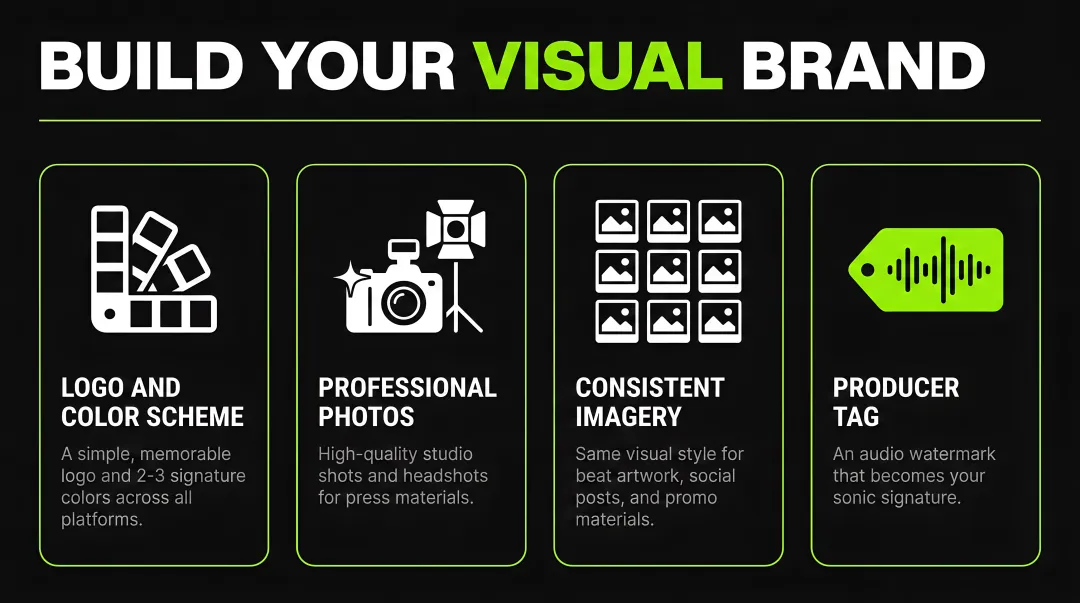
Your visual identity should be as recognizable as your sound:
- Logo and color scheme - Develop a simple, memorable logo and stick to 2-3 signature colors across all platforms
- Professional photos - Invest in high-quality studio shots and headshots for press materials
- Consistent imagery - Use the same visual style for beat artwork, social media posts, and promotional materials
- Producer tag - Create an audio watermark that becomes your sonic signature (think "If Young Metro don't trust you...")
Build Your Electronic Press Kit (EPK)
Once you've established your visual identity, package everything into a professional Electronic Press Kit (EPK). This becomes your calling card when pitching to labels, artists, and music supervisors. Update it quarterly and include:
Essential EPK Components:
- Concise bio focusing on your sound, background, and notable collaborations
- 3-5 of your strongest tracks with streaming links
- High-resolution photos (studio shot and professional headshot)
- Streaming statistics, social following, and press quotes
- Clear contact information for booking and inquiries
Leverage Social Media Strategically
Social media isn't optional for producers in 2026—it's the primary discovery engine. The key is understanding which platforms deliver the best ROI for your specific goals and creating platform-native content rather than just broadcasting the same message everywhere.
TikTok for Viral Discovery
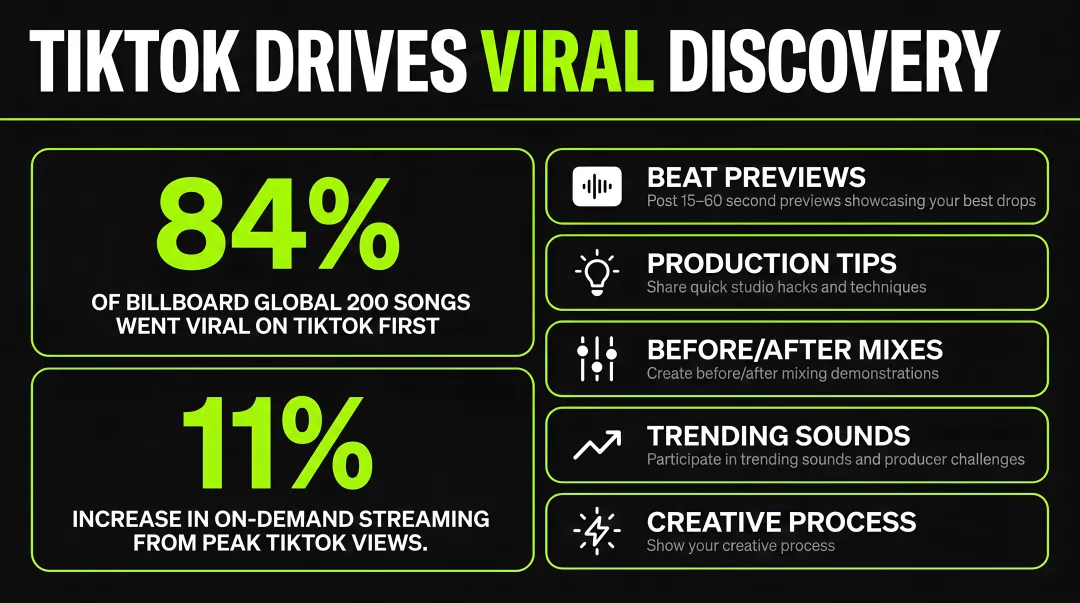
TikTok drives modern music discovery. According to the TikTok Music Impact Report, 84% of songs that entered the Billboard Global 200 in 2024 went viral on TikTok first.
Peak TikTok views connect to an 11% increase in on-demand streaming.
TikTok Content Strategies:
- Post 15-60 second beat previews showcasing your best drops
- Share quick production tips and studio hacks
- Create before/after mixing demonstrations
- Participate in trending sounds and producer challenges
- Show your creative process in time-lapse format
The algorithm rewards consistency and engagement over follower count. Post 3-5 times weekly and respond to every comment in the first hour to maximize visibility.
YouTube for Authority Building
Educational content on YouTube builds authority. Tutorials and process videos create deeper connections with your audience while driving subscriber growth.
Effective YouTube Content:
- Beat-making process videos showing your workflow
- Tutorial content on specific production techniques
- Sample pack demonstrations and sound design breakdowns
- Studio tour and gear review content
- Collaboration videos with artists or other producers
Kenny Beats built massive credibility through The Cave, which showcased his personality and process. This content strategy led directly to high-profile collaborations and client inquiries.
Instagram for Networking
Relationship building happens on Instagram. DMs remain the standard channel for reaching artists, DJs, and fellow producers, while your feed serves as your portfolio.
Instagram Best Practices:
- Share beat snippets and studio setup shots
- Post production tips and behind-the-scenes content
- Announce collaborations and placements
- Use Instagram Stories and Reels for casual, authentic content
- Engage actively with artist communities through comments and DMs
- Use relevant hashtags like #typebeat, #beatmaker, or genre-specific tags
Engagement Over Broadcasting
Broadcasting won't build your career. Real engagement does:
- Respond to every comment within the first hour of posting
- Collaborate with other producers on content
- Participate in challenges and trending formats
- Share and comment on other producers' work
- Build genuine relationships, not just follower counts
A smaller, engaged audience delivers more value than a large, passive following. Focus on quality interactions that lead to real opportunities.
Create and Showcase Your Portfolio
Your portfolio is your sales tool. It must demonstrate range, quality, and professional polish while making it effortless for potential clients to understand what you offer and how to work with you.
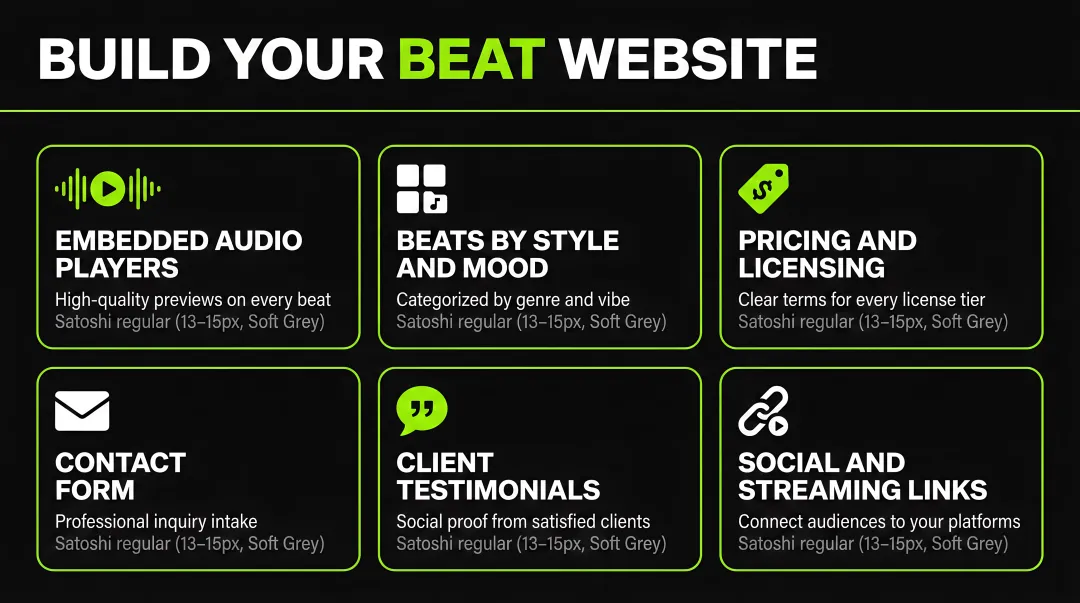
Build a Beat Showcase Website
While social media drives discovery, a dedicated website gives you complete control over the client experience and collects audience insights.
Essential Website Elements:
- Embedded audio players with high-quality previews
- Beats categorized by style, mood, or genre
- Clear pricing and licensing information
- Professional contact form for inquiries
- Testimonials from satisfied clients
- Links to your social profiles and streaming platforms
Platform Comparison:
| Platform | Best For | Considerations |
|---|---|---|
| BeatStars | High traffic and built-in audience (drives 65% of global beat sales) | High competition; requires active marketing |
| Custom Website | Full branding control and no platform fees | Requires self-driven traffic and SEO effort |
| Airbit | Similar marketplace benefits to BeatStars | Slightly smaller audience but good alternative |
Most successful producers use both: a marketplace profile for transaction volume and a custom site for branding and premium clients.
Once your website is live, focus on optimizing individual platform profiles to drive traffic back to your central hub.