Introduction
The sync licensing market generated $632 million globally in 2023, growing 4.7% year-over-year—and for independent artists, a single placement can deliver income equivalent to millions of streams. While streaming pays roughly $0.003-$0.005 per play, a modest $5,000 TV sync equals approximately 1.25 million streams in pure revenue.
Yet breaking into sync feels like navigating a locked vault. Music supervisors rarely accept direct pitches from unknown artists, and the process demands cleared rights, professional representation, and industry relationships most independents don't have.
One missing split sheet or uncleared sample can permanently blacklist you from future opportunities.
This guide walks you through the exact steps to prepare your catalog, create "syncable" music, connect with the right gatekeepers, and avoid costly mistakes that derail placements before they happen.
Key Takeaways
- Sync placements pay ₹40,000-₹40 lakh+ upfront plus backend royalties
- Reach music supervisors through sync agents, libraries, or distribution platforms
- Your tracks need universal themes, instrumentals, cleared samples, and broadcast-quality production
- Expect 6-12 months of relationship-building before landing your first placement
Step 1: Prepare Your Music Catalog for Sync Licensing
Own or Clear All Rights
Every sync license requires two distinct rights:
- Master rights: Ownership of the sound recording (typically held by the artist or label)
- Publishing rights: Ownership of the composition—lyrics and melody (held by songwriters or publishers)
If you co-wrote a song or used a producer's beat, you don't control 100% of these rights. Music supervisors need written confirmation from all rights holders before licensing.
Without this "one-stop" clearance, your music is impossible to license—regardless of quality.
Create Essential Alternate Versions
Supervisors need flexibility to edit music to picture. Standard delivery packages include:
- Instrumental: Mandatory for most placements (dialogue often conflicts with lyrics)
- Clean/radio edit: Required for broadcast TV and family-friendly content
- 60-second and 30-second edits: Standard for commercials
- Stems: Isolated tracks (vocals, drums, bass, instruments) that allow editors to remix your song for specific scenes
When a supervisor expresses interest, missing these versions means missing the placement window entirely.
Deadlines in sync move fast—often 24-48 hours.
Complete Split Sheets for Every Song
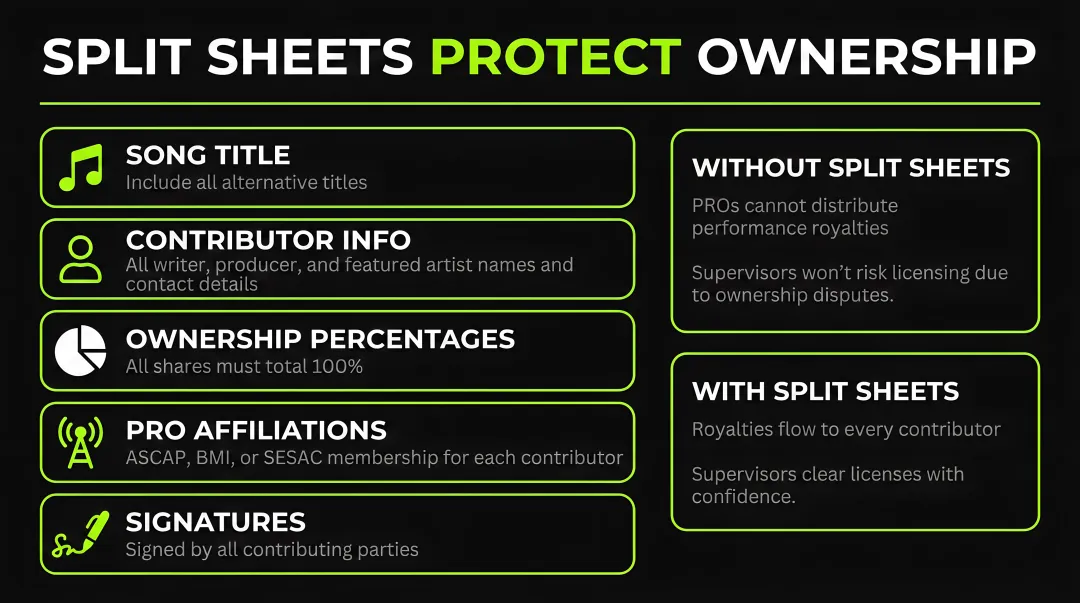
Split sheets define exact ownership percentages for all contributors—writers, producers, featured artists.
Without signed split sheets, PROs can't distribute performance royalties, and supervisors won't risk licensing your music due to potential ownership disputes.
What split sheets must include:
- Song title and alternative titles
- All contributor names and contact information
- Ownership percentages (must total 100%)
- PRO affiliations (ASCAP, BMI, SESAC)
- Signatures from all parties
Register with a PRO
Performance Rights Organizations (ASCAP, BMI, SESAC) collect backend royalties when your placement airs on TV or radio. These royalties often equal or exceed upfront sync fees over time, especially if content enters syndication or streams globally.
Register every song before pitching. Backend royalties represent long-term passive income that compounds with repeated airings.
Step 2: Make Your Music "Syncable"
Study Music Supervisor Preferences
Supervisors seek music that serves visual narratives without overwhelming them. Avoid:
- Overly specific lyrics ("my great uncle the taxidermist in Topeka")
- Niche references that date quickly or turn off audiences
- Avant-garde production that limits placement contexts
Instead, focus on universal emotional themes—resilience, celebration, heartbreak, empowerment—that translate across multiple scenes and genres.
Meet Broadcast Technical Standards
Once your music captures the right emotional tone, it needs to meet technical requirements that supervisors demand.
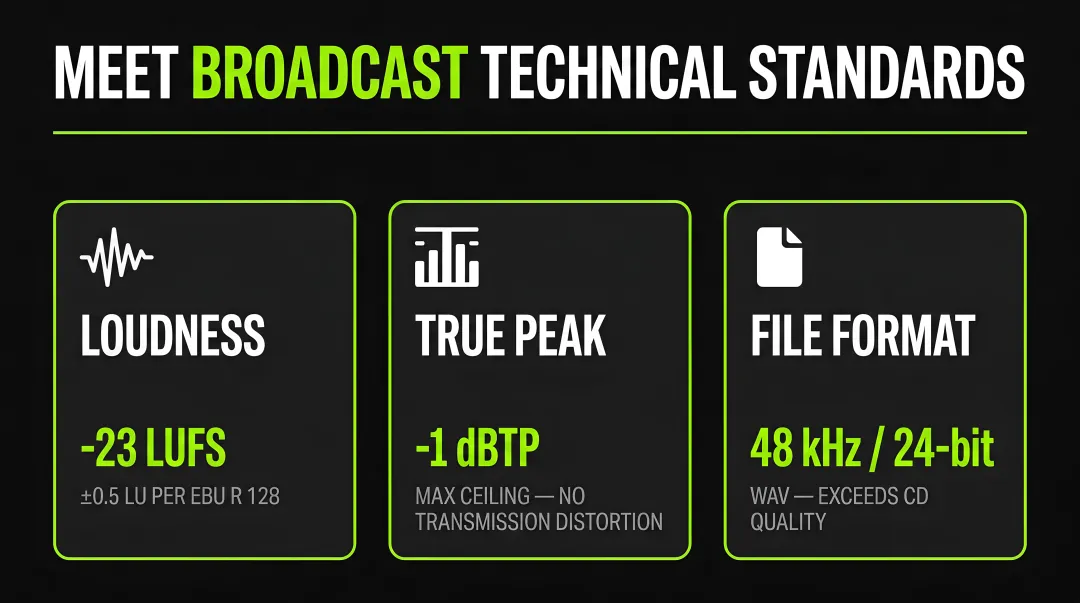
Your tracks must meet professional broadcast specifications:
- Loudness: -23 LUFS (Loudness Units Full Scale) ±0.5 LU per EBU R 128 standards
- True peak: Not exceeding -1 dBTP to prevent transmission distortion
- Format: 48 kHz / 24-bit WAV files (higher than standard CD quality)
Music that fails these specs gets rejected regardless of artistic merit. If you're distributing through platforms like Madverse—which has secured sync placements in productions like The Kardashians—ensure your mastering engineer understands broadcast specifications before submission.
Research Your Musical Lane
With your music both thematically suitable and technically sound, focus on strategic targeting. Analyze which TV shows, films, and brands consistently use your genre. Create a target list of 10-15 specific projects:
- Teen dramas favor indie pop and alternative
- Sports content leans toward hip-hop and electronic
- Emotional scenes often feature singer-songwriter and folk
- Commercials prioritize upbeat, high-energy tracks
Tailor your catalog to match the sonic identity of your target placements rather than pitching everything everywhere.
Step 3: Understand the Sync Licensing Ecosystem
Key Players and Their Roles
Understanding who makes placement decisions helps you target the right contacts:
- Music supervisors select music for projects and make final licensing decisions. They rarely accept unsolicited material from unknown artists due to volume and legal risk.
- Sync agents represent artist catalogs to supervisors, handle rights clearances, and negotiate deals. Working with an agent means giving up 20-50% commission, but only when placements actually happen.
- Music libraries curate pre-cleared catalogs that supervisors browse for quick licensing. Libraries take 40-60% of fees but provide consistent smaller placements.
- Publishers manage composition copyrights and may have in-house sync teams pitching their writers' songs directly to projects.
Typical Sync Fee Ranges
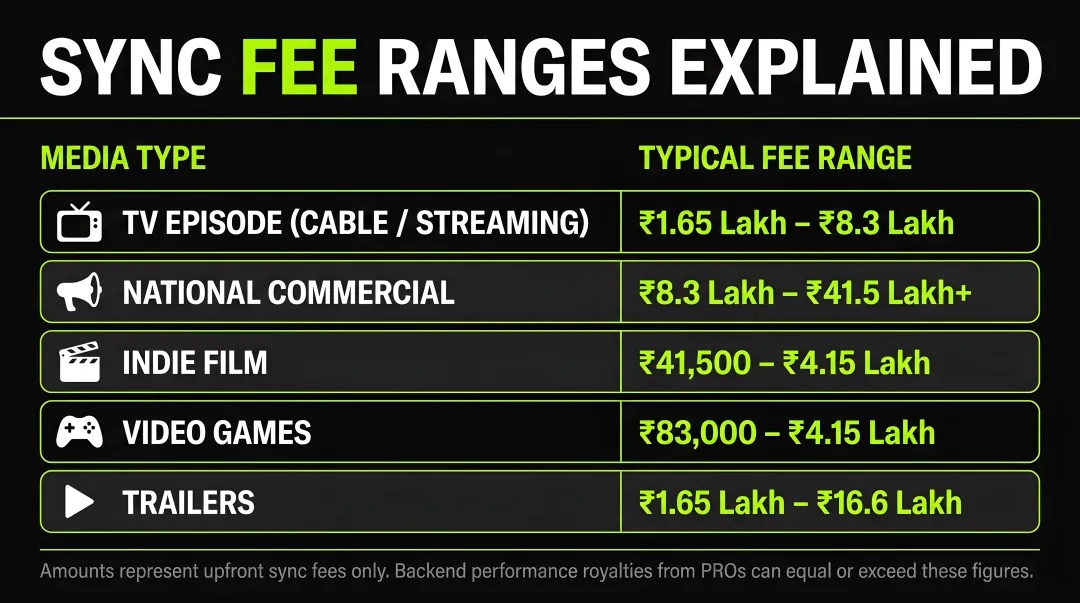
Each type of player operates within established fee structures. Here's what you can expect across different media types:
| Media Type | Typical Fee Range |
|---|---|
| TV Episode (Cable/Streaming) | ₹1.65 lakh - ₹8.3 lakh |
| National Commercial | ₹8.3 lakh - ₹41.5 lakh+ |
| Indie Film | ₹41,500 - ₹4.15 lakh |
| Video Games | ₹83,000 - ₹4.15 lakh |
| Trailers | ₹1.65 lakh - ₹16.6 lakh |
The amounts in this table represent upfront sync fees only. Backend performance royalties from PROs can equal or exceed these amounts as content re-airs over time.
Backend Royalties Matter
Performance royalties generate recurring payments when synced content broadcasts on TV, radio, or public venues. For TV placements, backend royalties often exceed upfront fees—especially when shows enter syndication or stream globally for years.
Consider a track placed in a popular streaming series. The initial sync fee might be ₹4 lakh, but if the show runs for five seasons and gets licensed internationally, backend royalties can generate ₹8-10 lakh or more over the content's lifetime.
Step 4: Get Signed with Sync Agents or Music Libraries
Research Reputable Representatives
Compile a list of 10-15 sync agents and libraries specializing in your genre. Study credits of shows using similar music to identify who represents those artists.
Exclusive vs. non-exclusive representation:
- Exclusive: One company holds sole licensing rights. Offers higher fees (up to 50% more) and dedicated pitching but locks you into 1-3 year commitments
- Non-exclusive: Work with multiple reps simultaneously. Provides broader exposure and flexibility but typically yields lower per-placement fees
Most emerging artists benefit from non-exclusive deals initially to build placement history and test different partners.
Prepare a Professional Pitch Package
Your submission must include:
- Brief bio (3-4 sentences maximum)
- Links to your 3-5 best sync-ready tracks via platforms like DISCO
- Confirmation that you've cleared all rights and finalized splits
- Available alternate versions (instrumentals, clean edits)
Never send file attachments. Use streaming links with embedded metadata.
Leverage Distribution Platforms with Sync Services
Beyond traditional sync agents, modern distribution platforms now offer integrated sync licensing services. These services connect independent artists directly with supervisors while handling rights clearances and split management at source.
Platforms like Madverse Music combine streaming distribution with sync licensing access, allowing artists to retain 95% of royalties across all revenue streams. This structure differs from traditional sync agents who typically take 20-50% commission, offering independent artists an alternative path to sync opportunities without the exclusivity requirements of traditional representation.
Step 5: Build Relationships and Pitch Strategically
Network Laterally
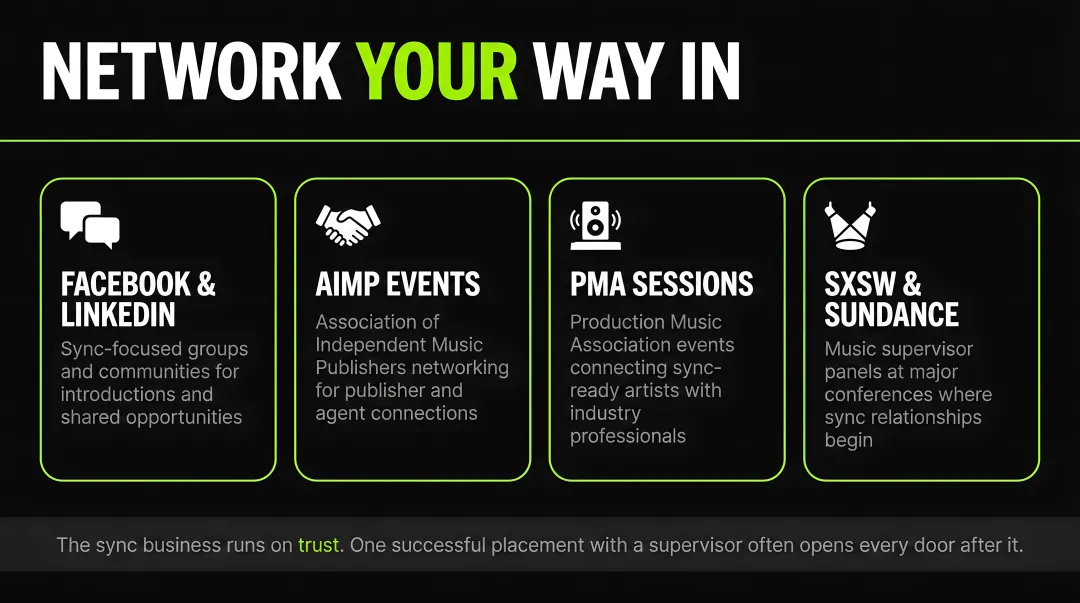
Connect with other songwriters, producers, and sync-focused artists who can introduce you to agents and share opportunities. Specific places to build connections include:
- Sync-focused Facebook groups and LinkedIn communities
- AIMP (Association of Independent Music Publishers) events
- Production Music Association networking sessions
- Music supervisor panels at conferences like SXSW or Sundance
The sync business runs on trust and relationships. One successful placement with a supervisor often leads to multiple future opportunities—they remember reliable sources who deliver quality music on brief and on deadline.
Personalize Direct Pitches (When Possible)
Direct pitching is rare for unknown artists but possible with the right approach. Reference specific shows or episodes the supervisor worked on. Explain why your music fits their aesthetic rather than sending generic mass emails.
Timing matters:
- Holiday music needs pitching 6+ months early (July-August for Christmas placements)
- TV production schedules require music 3-6 months in advance
- Films may license 6-12 months before release
Follow Up Professionally
Send one polite follow-up 2-3 weeks after initial contact. If no response, wait 3-6 months before trying again with new material. Persistence matters, but aggressive follow-ups burn bridges permanently.
When Should You Pursue Sync Licensing?
Timing matters in sync licensing. While lucrative, it demands significant preparation and isn't the right move for every artist at every stage.
You're ready to pursue sync when you have:
- 10+ professionally produced tracks with broadcast-quality mixing
- Cleared all rights with signed split sheets
- Resources to create required alternate versions
- Willingness to invest 6-12+ months building relationships before seeing placements
Sync may not be the priority if:
- You're early in your career with limited catalog
- Your music is too experimental or niche for commercial use
- You lack resources for professional production and alternate versions
- Your primary income goal is touring and live performance
What You Need Before Pursuing Sync Placements
Before pitching to music supervisors, you need three foundations in place: clear rights documentation, broadcast-ready audio files, and professional presentation materials.
Without these, supervisors won't consider your music—regardless of quality.
Music Rights and Legal Documentation
Verify you control 100% of master and publishing rights, or have written agreements from all co-owners authorizing sync licensing. Have all contributors sign complete split sheets before pitching anything.
Split sheets must contain:
- Song title and alternatives
- All contributor names and contact info
- Ownership percentages totaling 100%
- PRO affiliations
- All signatures
Production Requirements and Technical Specifications
Beyond legal clearance, your audio files must meet broadcast standards:
- High-quality mixing/mastering at -23 LUFS
- True peak levels not exceeding -1 dBTP
- 48 kHz / 24-bit WAV format
- Professional production matching commercial releases
Create alternate versions (instrumentals, stems, clean edits) before pitching. When supervisors request these files, you must deliver within 24-48 hours.
Professional Presentation and Networking Foundation
Finally, establish your professional presence:
- Website with EPK: Include bio, high-res photos, music samples, and contact information
- Music portfolio platform: Use DISCO or similar services for easy supervisor access to your catalog
- Active social media: Show you're actively releasing music and building an audience
- Industry connections: Join sync-focused organizations to learn standards and network within your genre's community
Key Factors That Affect Sync Placement Success
Success in sync licensing isn't just about talent. Four critical factors determine whether your track gets placed or overlooked.
Lyrical Content and Theme Universality
Why it matters: Overly specific lyrics limit placement opportunities. Supervisors need songs that work across multiple contexts without forcing awkward fits.
Impact on success: Supervisors place songs with universal themes more frequently than niche narratives.
A song about "overcoming obstacles" works for sports montages, personal growth scenes, and brand campaigns. A song about "my 1987 Pontiac Firebird" works for very specific scenes only.
Music Production and Genre Fit
Production quality and genre alignment directly impact placement rates:
- Pop — teen dramas and coming-of-age content
- Hip-hop — sports programming and urban narratives
- Indie folk — emotional scenes and character development
- Electronic — tech commercials and modern lifestyle brands
Research target shows before pitching. Don't send your entire catalog everywhere—curate submissions based on each supervisor's demonstrated preferences.
The technical side matters as much as the creative.
Rights Clearance and Response Speed
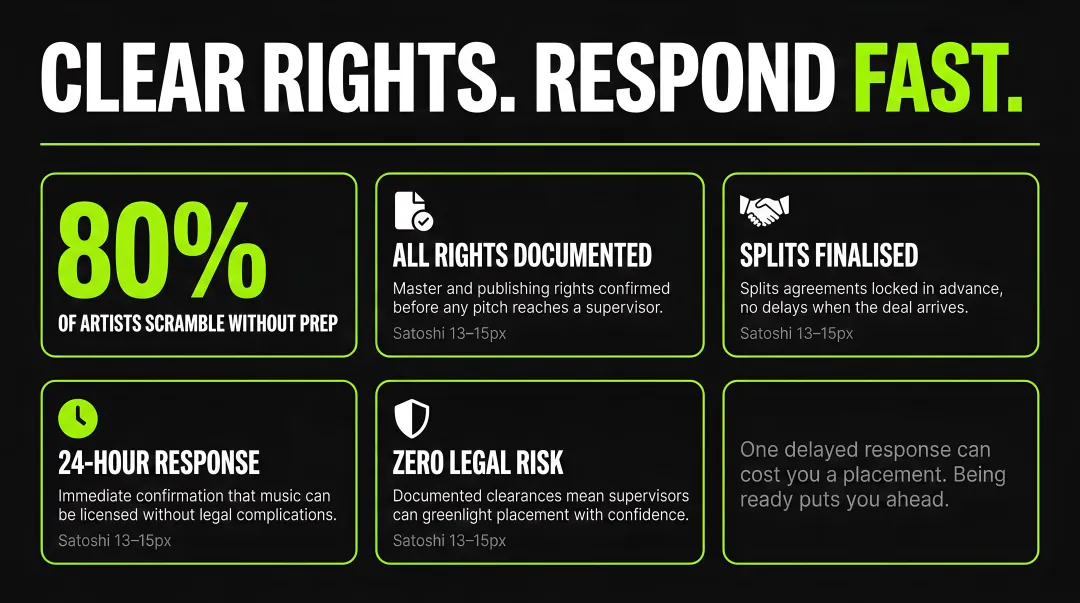
Why it matters: Supervisors work under tight deadlines and need immediate confirmation that music can be licensed without legal complications.
What separates prepared artists:
- All rights cleared and documented
- Splits agreements finalized
- 24-hour response capability
- Master and publishing rights confirmed
One delayed response can cost you a placement. Being ready puts you ahead of 80% of artists who scramble when opportunities arrive.
Beyond the music itself, human relationships drive repeat placements.
Relationship Strength and Trust
Why it matters: Sync is a relationship business. Supervisors return to trusted sources who've consistently delivered quality cleared music.
Impact on success: One successful placement with a supervisor often leads to multiple future opportunities. They remember reliable artists when new projects need music.
Common Mistakes When Seeking Sync Placements
Pitching Without Cleared Rights
Submitting music without cleared rights or completed split sheets permanently damages your reputation. If a supervisor licenses your track and later faces legal disputes over ownership, they'll never work with you again—and they'll warn colleagues.
Sending Generic Mass Emails
Copying the same pitch to 50 supervisors without mentioning their specific shows signals you haven't done your homework. Supervisors delete these immediately and may block future emails.
Using Uncleared Samples
Even "transformed" samples require clearance. Purchasing beats from BeatStars or Airbit doesn't automatically grant sync rights.
Standard leases typically cover streaming and limited video use—nothing more. Major distributors like Netflix and HBO reject films with uncleared samples to avoid litigation.
Missing Deadline Windows
Sync deadlines move fast—often 24-48 hours from request to delivery. Without alternate versions ready in advance, you'll scramble when supervisors express interest.
The essentials you need prepared:
- Instrumental versions (clean vocals removed)
- Stems (individual tracks: drums, bass, vocals, etc.)
- Alternate edits (15-second, 30-second, 60-second cuts)
If you can't deliver these immediately, the placement goes to someone who can.
Alternatives to Direct Music Supervisor Pitching
Direct pitching rarely works for independent artists—supervisors receive hundreds of unsolicited submissions weekly. These three alternatives offer better odds because they come with built-in credibility and streamlined licensing.
Sync Agents and Licensing Representatives
Sync agents represent your catalog to supervisors, handle rights clearances, and negotiate deals. They typically take 20-50% commission only when placements happen—no upfront fees.
Best for artists who:
- Have 15+ professionally produced, sync-ready tracks
- Own 100% of master and publishing rights
- Can wait 6-12 months to build relationships and see results
Important distinction: Commission-only sync agents differ from publishers who take ownership percentages. Avoid representatives requesting publishing rights—legitimate sync agents work on commission alone.
Music Libraries and Production Music Companies
Libraries maintain pre-cleared catalogs that supervisors browse for quick licensing. You submit tracks for consideration, and if accepted, the library handles all licensing and payments.
This path works well when:
- You're building your first sync placements (libraries offer entry points)
- You prefer consistent smaller placements over occasional big deals
- You want passive income without active pitching
Watch out for: Exclusive vs. non-exclusive agreements. Exclusive libraries prevent you from pitching tracks elsewhere—sometimes for years. Premium libraries like Musicbed and Artlist are selective but offer better supervisor relationships. Research reputation before committing.
Distribution Platforms with Sync Licensing Services
Modern distribution platforms now bundle sync licensing with streaming distribution. These services connect artists directly with supervisors while managing rights and royalty splits automatically.
The all-in-one advantage:
- Single platform for both streaming distribution and sync opportunities
- No separate contracts with sync agents or libraries
- Rights management and splits handled at source
- Typically lower commission rates (5-15% vs. 20-50% for traditional agents)
For example, Madverse Music includes sync licensing as part of its distribution service, letting artists keep 95% of royalties while providing dedicated account managers who pitch to supervisors. This model works particularly well for artists already using the platform for releases, since your catalog is immediately sync-ready without additional submissions.
Frequently Asked Questions
How do you get music placement in TV and film?
Three main paths exist: sign with sync agents who pitch to supervisors, join music libraries that offer pre-cleared tracks, or use distribution platforms with sync licensing services like Madverse Music.
What is a sync agent and do I need one?
Sync agents represent artists to music supervisors, handle rights clearances, and negotiate deals for commission. While not required, they're often necessary since most supervisors won't accept direct pitches from unknown artists.
How much do sync placements typically pay independent artists?
TV episodes pay ₹1.6-8 lakh, films pay ₹40,000-4 lakh (indie) to ₹8-64 lakh (major studios), commercials pay ₹8-40 lakh+, and video games pay ₹80,000-4 lakh. Backend performance royalties from PROs can equal or exceed upfront fees over time as content re-airs.
What are split sheets and why do they matter for sync licensing?
Split sheets document exact ownership percentages for all song contributors—writers, producers, featured artists. Without them, supervisors won't license your music due to legal risks from unclear ownership.
Can I pitch my music directly to music supervisors?
While technically possible, direct pitching rarely succeeds for independent artists. Supervisors are overwhelmed with submissions and prefer working with trusted sync agents and libraries who guarantee cleared rights. Build relationships through networking at industry events rather than cold emailing.
How many music streams does it take to make ₹1,000 compared to one sync placement?
At typical streaming rates (₹0.25-₹0.40 per stream), you'd need 2,500-4,000 streams to earn ₹1,000. A single TV placement often pays ₹40,000-₹8,00,000+ upfront plus backend royalties, demonstrating why sync is one of the most lucrative revenue streams for independent artists.