
Introduction
The independent music landscape has transformed dramatically by 2026. Today's artists have access to more promotional tools than ever before—from algorithmic playlist placements to AI-powered advertising—yet they face unprecedented competition.
With an average of 99,000 new tracks uploaded daily to streaming platforms, simply uploading music to Spotify or Apple Music no longer guarantees discovery.
This creates a critical gap: while distribution has become accessible to everyone, discovery remains the bottleneck. Independent artists must now master strategic, multi-channel promotion that combines streaming optimization, social media storytelling, and direct fan engagement.
Success in 2026 requires treating promotion as an ongoing process, not a one-time campaign.
Key Takeaways
- Multi-platform strategy combining streaming optimization, social presence, and fan engagement drives success
- Master DSP optimization through pre-release submissions, playlist pitching, and algorithmic triggers
- Build authentic social communities on TikTok, Instagram, and YouTube with consistent, valuable content
- Own your audience through email lists and fan subscription platforms for algorithm-proof revenue
- Track saves, playlist adds, and engagement rates—data reveals what works
Understanding the Independent Music Promotion Landscape in 2026
The independent music sector has reached a historic milestone, accounting for 46.7% of the global market and generating ₹1.19 lakh crore in revenue in 2024. More artists than ever are releasing music without label backing, with independent artists and labels collectively generating over ₹41,650 crore from Spotify alone.
Technology has leveled the playing field. Distribution platforms now offer sophisticated tools—from analytics dashboards to sync licensing opportunities—that were once exclusive to major labels.
Artists can upload music globally, track performance in real-time, and collect royalties directly.
This accessibility creates a paradox: while distribution is easy, discovery is brutally hard. With over 202 million tracks available on streaming services, organic visibility is impossible without strategic promotion.
Independent artists must become skilled marketers alongside being creators, mastering the data-driven strategies that trigger algorithmic recommendations and convert casual listeners into loyal fans.
Top Music Promotion Strategies for Independent Artists in 2026
Successful promotion in 2026 requires a diversified approach across multiple channels. No single strategy delivers breakthrough results—instead, effective campaigns combine streaming optimization, social media content, playlist placements, press coverage, and direct fan engagement.
Building Your Multi-Channel Foundation
Each channel serves a specific purpose in your growth journey:
- Streaming platforms provide the foundation for discovery and revenue
- Playlists offer immediate visibility boosts and algorithmic triggers
- Social media builds authentic communities and drives traffic to streaming
- Press coverage establishes credibility and long-term searchability
- Direct fan relationships create stable, platform-independent revenue streams
- Live performances deepen connections and generate promotional content
Measuring What Matters in 2026
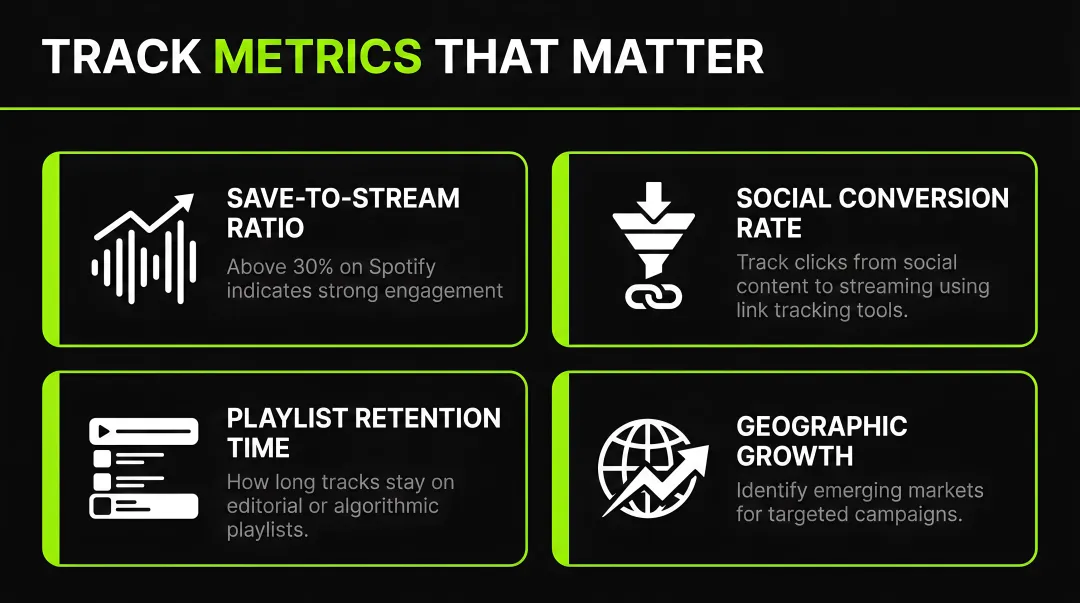
Track these key metrics to optimize your promotion strategy:
- Save-to-stream ratio on Spotify (above 30% indicates strong engagement)
- Conversion rates from social content to streaming (use link tracking tools)
- Playlist retention time (how long tracks stay on editorial or algorithmic playlists)
- Geographic growth patterns (identify emerging markets for targeted campaigns)
The most successful independent artists treat these channels as interconnected pieces, testing one platform at a time and scaling what works. For example, if Instagram Reels drive 3x more streams than TikTok for your genre, double down on Reels content while maintaining a baseline TikTok presence.
Digital Streaming Platform Strategies
Streaming platforms remain the engine of music consumption, with Spotify paying out over $11 billion to the music industry in 2025—the largest annual payment by any retailer in history. Optimizing your presence on these platforms is non-negotiable.
Profile Optimization Essentials
Start with the basics. Complete your artist profiles on Spotify, Apple Music, Amazon Music, and YouTube Music with:
- High-resolution profile photos (at least 1000x1000px)
- Compelling artist bios that tell your story and highlight your sound
- Curated playlists featuring your music alongside similar artists
- Updated tour dates and social media links
- Verified artist status (most distributors provide this)
Pre-Release Submission Strategy
Submit unreleased music to Spotify editors at least 7 days before your release date to secure placement in Release Radar for your followers and consideration for editorial playlists.
For best results, submit 4-6 weeks in advance with a compelling pitch narrative that includes:
- Genre and mood descriptors
- The story behind the song
- Similar artists for reference
- Why this track deserves playlist placement
Apple Music offers pre-add functionality that allows fans to add music to their library before release, signaling demand to the algorithm.
Algorithmic Optimization Tactics
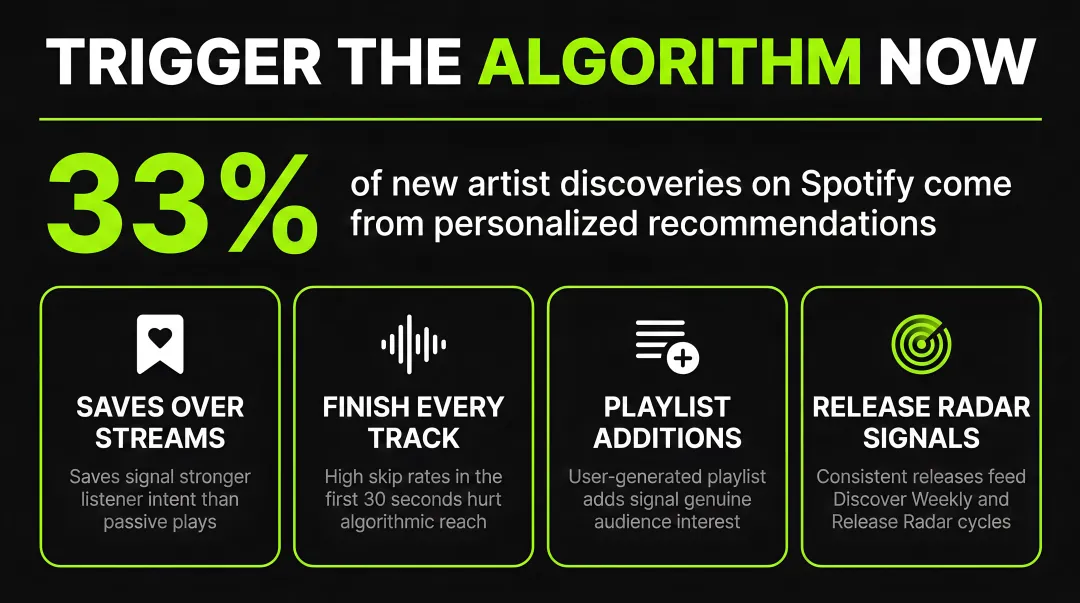
Beyond editorial playlists, algorithmic recommendations drive discovery. Approximately 33% of new artist discoveries on Spotify happen through personalized recommendations like Discover Weekly and Release Radar.
Trigger these algorithms by encouraging:
- Saves over streams - Saves signal stronger intent than passive plays
- Complete track listens - High skip rates (especially in the first 30 seconds) hurt algorithmic performance
- Playlist additions - User-generated playlist adds indicate genuine engagement
- Repeat listens - Consistent plays from the same listeners boost recommendations
Many distribution platforms now include promotional tools—analytics dashboards, playlist pitching services, and sync licensing opportunities—that help you track performance and identify growth opportunities. Platforms that let you retain a higher percentage of royalties (95% or more) ensure your streaming success translates directly to income.
Platform-Specific Features
Leverage unique features to enhance engagement:
- Spotify Canvas - Upload 8-second looping visuals that display during playback
- Apple Music Spatial Audio - Offer immersive audio experiences for compatible tracks
- YouTube Premieres - Create event-style releases with live chat and countdown timers
Playlist Pitching & Playlist Curation Strategy
Playlist placement remains one of the highest-ROI promotional strategies, with playlist promotion delivering 150-500% effective ROI for independent artists.
Three-Tier Playlist Approach
Focus your efforts across three distinct playlist categories:
- Editorial playlists: Curated by platform staff with massive reach but extremely low acceptance rates—often under 5%. Platforms like Madverse offer editorial playlist pitching through their distribution portal, helping you craft compelling submissions
- Independent curator playlists: Managed by individuals, blogs, or brands with more realistic acceptance rates and often more engaged listeners than algorithmic playlists
- User-generated playlists: Created by everyday listeners with smaller individual followings, but together they drive substantial discovery
Submission Platform Effectiveness
Once you understand the playlist landscape, choose submission platforms strategically:
| Platform | Acceptance Rate | Best For |
|---|---|---|
| Playlist Push | ~32% | Vetted curators with authentic engagement |
| Groover | ~20% | Industry feedback plus playlist placements |
| SubmitHub | Variable | Blog features and independent curators |
Playlist Push reports significantly higher acceptance rates than industry averages by vetting curators for genuine engagement rather than fake followers.
Build Your Own Playlists
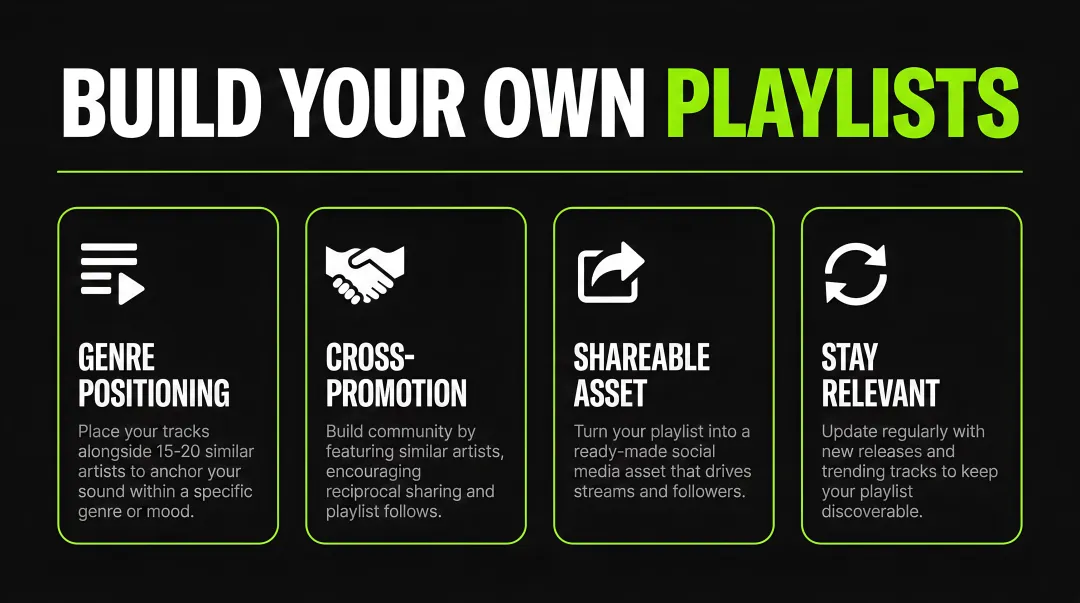
Create branded playlists that include your music alongside 15-20 similar artists. This strategy:
- Positions you within a specific genre or mood
- Builds community through cross-promotion
- Provides a shareable asset for social media
- Generates additional streams as followers discover your playlist
Update playlists regularly with new releases and trending tracks to maintain relevance.
Social Media & Content Marketing
Social media drives the majority of music discovery in 2026, with 75% of users discovering new songs on TikTok. Yet authenticity and storytelling matter more than virality—platforms increasingly reward genuine engagement over follower counts.
Platform-Specific Strategies
TikTok (2.5% average engagement rate):
- Short-form music snippets showcasing hooks or memorable moments
- Behind-the-scenes studio content and songwriting process
- Participation in trending sounds and challenges
- Educational content about your creative process
Instagram (0.5% average engagement rate):
- Reels featuring performance clips or creative visuals
- Stories for daily updates and fan interaction
- Carousel posts with lyrics or promotional graphics
- Live sessions for real-time fan connection
YouTube (algorithm prioritizes watch time):
- Full music videos (professional or DIY)
- Vlogs documenting your artist journey
- Shorts for quick, algorithm-friendly content
- Livestreams for extended fan engagement
Content Pillars for Musicians
Structure your content strategy around four core pillars:
- Educational content includes songwriting tips, gear reviews, and music theory insights
- Entertainment - Performance clips, covers, creative interpretations
- Behind-the-scenes material: Studio sessions, day-in-the-life footage, creative process
- Promotional - Release announcements, show dates, merchandise launches
Consistency Through Planning
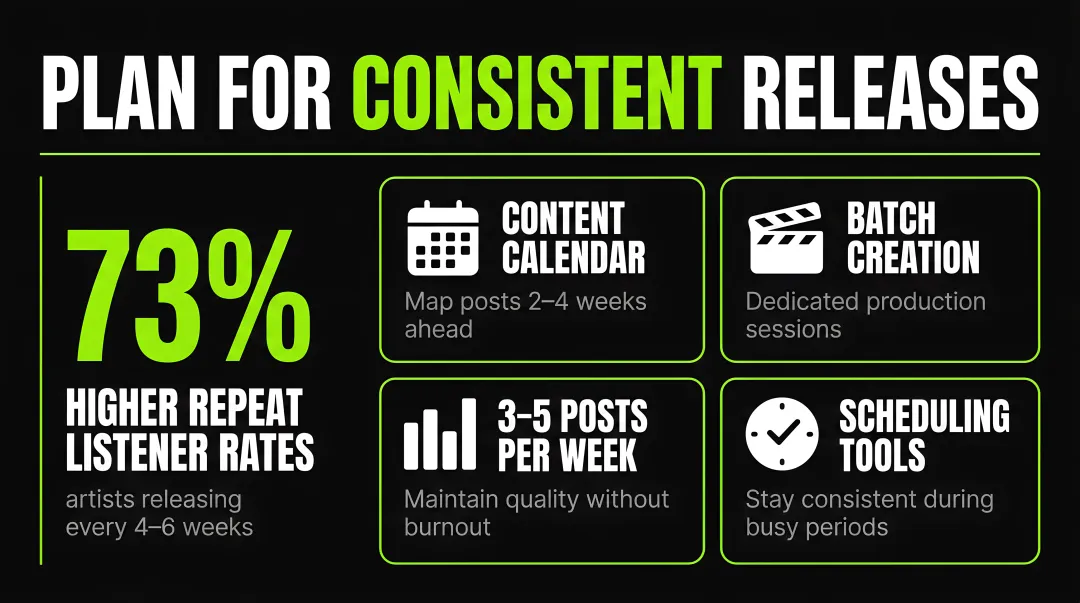
Artists who release music every 4-6 weeks maintain 73% higher repeat listener rates. Apply this consistency principle to content creation:
- Develop a content calendar mapping posts 2-4 weeks ahead
- Batch-create content during dedicated production sessions
- Maintain 3-5 posts per week without sacrificing quality
- Use scheduling tools to maintain consistency during busy periods
Press Coverage & Blog Features
Despite video content dominance, written media remains valuable for SEO, credibility building, and long-term discoverability. Blog features and articles remain indexed indefinitely, driving referral traffic months or years after publication.
Why Press Still Matters
Written coverage serves multiple strategic purposes:
- Search visibility: Backlinks from reputable sites improve Google rankings
- Credibility signals: Features in established publications validate your artistry
- Long-tail discovery: Unlike social posts with 24-hour lifespans, articles drive traffic indefinitely
- Industry attention: Press coverage catches the eye of bookers, labels, and sync supervisors
Identifying Target Publications
Research blogs and publications that cover your genre by:
- Analysing where similar artists have been featured
- Following genre-specific music blogs and online magazines
- Monitoring Spotify playlist curators who also run blogs
- Checking "People Also Read" sections on relevant articles
Prioritise quality over quantity. Ten features in highly relevant publications outperform fifty features in generic blogs.
Crafting Effective Press Kits
Your press kit should include:
- Compelling artist bio (150 words) emphasising your unique story
- High-resolution photos (at least 300 DPI) for publication use
- Streaming links to all major platforms where your music is distributed
- Press release with a newsworthy angle beyond "new music available"
- Exclusive content offers like premiere opportunities or interview availability
Make each pitch personal by referencing specific articles the publication has run. Explain why your music fits their editorial focus, connecting your sound to their coverage patterns.
Building Direct Fan Relationships
Social media algorithms change without warning, often burying your posts from fans who want to see them. Email lists and subscription platforms give you direct access to engaged fans—channels you control completely.
Email Marketing for Musicians
Email marketing delivers an average ROI of $42 for every dollar spent, making it one of the most cost-effective promotional channels available.
Best Practices:
- Use QR codes at shows for instant email signups
- Offer incentives like exclusive tracks or early ticket access
- Segment your audience by engagement level and location
- Share exclusive content in every email—unreleased demos, studio footage, early ticket access
- Send 2-4 emails monthly to stay connected without overwhelming subscribers
Target open rates above 22% and click-through rates above 2.5% to match music industry benchmarks.
Fan Subscription Platforms
Beyond email, subscription platforms let you monetize your most dedicated fans directly.
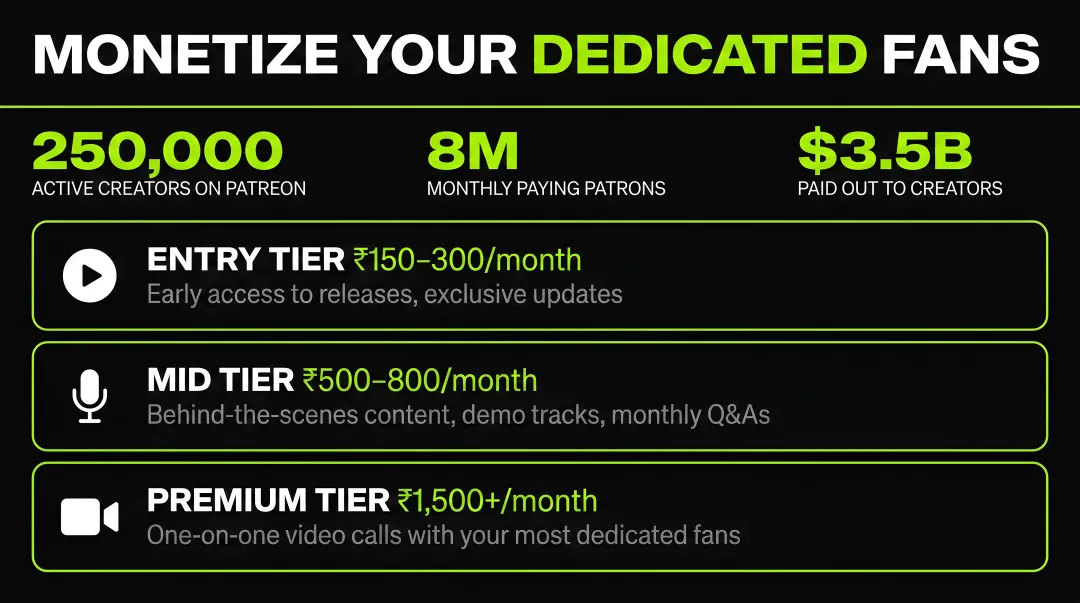
Patreon supports over 250,000 active creators and 8 million monthly paying patrons, with the platform paying out over $3.5 billion to creators. These platforms create tiered engagement opportunities:
- Entry tier (₹150-300/month) - Early access to releases, exclusive updates
- Mid tier (₹500-800/month) - Behind-the-scenes content, demo tracks, monthly Q&As
- Premium tier (₹1,500+/month) - One-on-one video calls, songwriting feedback, credits on releases
Discord works alongside subscription platforms for real-time fan interaction. Many artists use Patreon for monetization and Discord for community building, creating a complete ecosystem for superfans.
Live Performances & Touring Strategy
Live performances deepen fan connections while generating promotional content for social media.
Superfans represent only 2% of monthly listeners but account for over 18% of monthly streams—and these superfans are most likely to attend shows.
Local Scene Building
Before pursuing larger venues, establish yourself locally:
- Perform at open mics to test new material and network
- Book house concerts for intimate fan experiences
- Accept supporting slots with established local artists
- Collaborate with other independent artists for co-bills
Each performance is an opportunity to collect email addresses, sell merchandise, and convert casual listeners into dedicated fans.
Livestream Strategy
Building a local following creates momentum, but livestream performances extend your reach globally without travel costs.
Platforms like Instagram Live, Twitch, and YouTube offer:
- Real-time fan interaction through chat
- Content you can repurpose for social media
- Global reach without travel costs
- Practice performing under pressure
Over 80% of artists who generated ₹8.3 crore+ on Spotify in 2024 were active touring artists, proving the strong correlation between live performances and streaming success.
Measuring Success & Optimizing Your Strategy
Data-driven decision-making separates successful independent artists from those who spin their wheels. In 2026's saturated music market, tracking the right metrics helps you double down on what works and cut what doesn't.
Adjust your strategy based on results, not assumptions.
Key Performance Indicators to Track
Streaming Performance:
- Save rate: 3-8% indicates strong track appeal
- Skip rate below 15% signals quality retention
- User-generated playlist adds (genuine engagement indicator)
- Repeat listener rate of 65-75% month-over-month
These streaming signals tell platforms your music deserves algorithmic promotion.
Social Media Engagement:
- Engagement rate (likes, comments, shares divided by followers)
- Click-through rate on bio and post links
- Video completion rate for Reels and TikToks
- Sound usage in user-generated content
Email Marketing:
- Open rate: above 22% for music industry
- Click-through rate: above 2.5%
- Conversion rate (streams, purchases, RSVP actions)
Revenue Tracking:
- Revenue per listener: ₹250-400 per 1,000 monthly listeners
- Social follower to ticket buyer conversion rate
- Average merchandise transaction value
Using Analytics Tools
Native analytics from streaming and social platforms give you the most accurate, real-time data without additional costs:
- Spotify for Artists - Detailed streaming data, listener demographics, playlist performance
- Apple Music for Artists - Play counts, Shazam data, city-level listening trends
- YouTube Analytics - Watch time, traffic sources, audience retention
- Instagram Insights - Reach, engagement, best posting times
- Email platform analytics - Open rates, click rates, subscriber growth
A/B Testing and Optimization
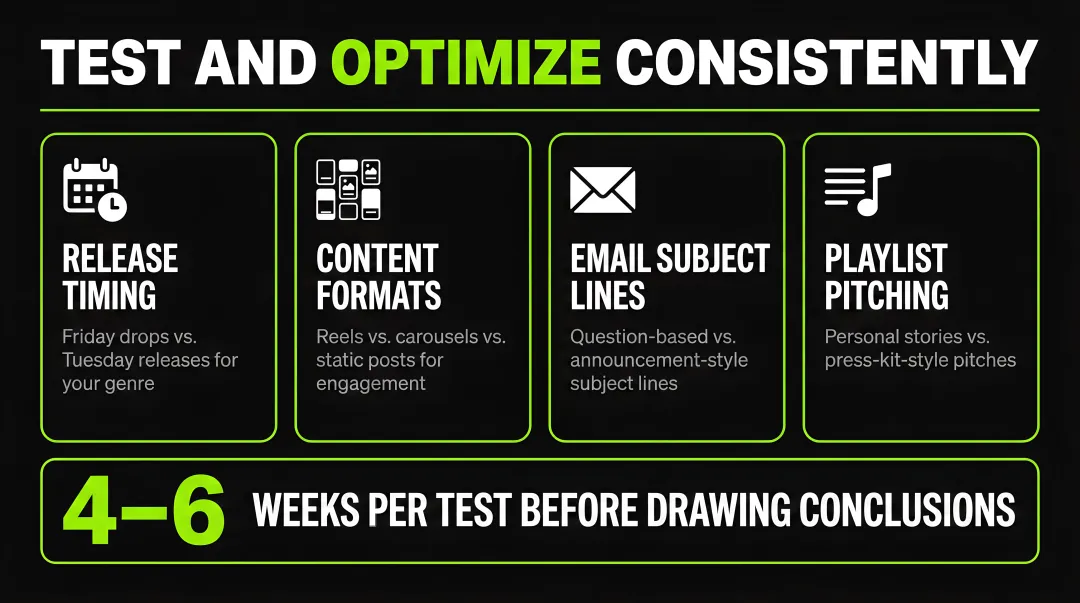
Test different approaches consistently to identify what resonates with your audience:
- Release timing: Compare Friday drops vs. Tuesday releases for your genre
- Content formats: Test Reels vs. carousels vs. static posts for engagement
- Email optimization: Try question-based vs. announcement-style subject lines
- Playlist pitching: Test personal stories vs. press-kit-style pitches
Give each test 4-6 weeks before drawing conclusions. When data shows diminishing returns, pivot quickly. The artists who adapt based on metrics outperform those who stick with assumptions.
Frequently Asked Questions
How much should independent artists budget for music promotion?
Allocate 20-30% of your music budget to promotion, with per-release spending typically ranging from ₹40,000 to ₹4,00,000. Prioritize playlist promotion (150-500% ROI) and email marketing (₹3,500 return per ₹85 spent) over paid advertising, which often delivers negative direct ROI.
What's the most effective music promotion strategy for new artists with no fanbase?
Focus on consistent TikTok and Instagram Reels content (3-5 posts weekly) combined with strategic playlist pitching to independent curators. These deliver the best cost-to-impact ratio when starting from zero. Avoid paid advertising until you reach 1,000 monthly listeners.
How far in advance should I start promoting a new release?
Start 6-8 weeks before release (4 weeks minimum). Key milestones: 6 weeks out (announce, launch pre-save), 4 weeks out (pitch playlists/blogs), 2 weeks out (ramp social content), release week (maximize output). Pre-save campaigns can convert 25% of social traffic and boost day-one ranking by 200%.
Should independent artists hire a PR company or do promotion themselves?
DIY makes sense for emerging artists with limited budgets (under ₹1,00,000 per release). Hire PR companies when you have proven traction, budgets exceeding ₹1,50,000, and major releases. Understanding promotion basics is essential either way.
How important are TikTok and social media for music promotion in 2026?
Social media is critical but should be one component of a multi-channel strategy. TikTok's 2.5% engagement rate makes it most effective for discovery, but balance social with email lists and streaming optimization for algorithm-proof growth.
What's the difference between organic and paid music promotion?
Organic promotion includes playlist pitching, social media content creation, press outreach, and community building—strategies that require time and effort but minimal financial investment. Paid promotion includes social media advertising, playlist placement services, radio promotion, and influencer partnerships. Organic typically delivers better long-term ROI but requires consistency over months. Paid can accelerate growth but works best when supporting already-proven content. Never use fake stream services, which violate platform terms and can result in permanent removal.