
Introduction
The sync licensing market has grown into a USD $650 million global industry as of 2024, representing one of the fastest-growing revenue streams for independent artists.
While streaming payouts remain frustratingly low, a single sync placement in a TV show, commercial, or video game can generate thousands of dollars upfront—plus ongoing backend royalties every time the content airs.
Independent artists worldwide—including those who secured the first South Asian track placement on The Kardashians—have proven that sync isn't just for major label acts anymore. These placements deliver both substantial income and massive exposure, transforming careers overnight.
This guide explores the top platforms changing how artists access sync opportunities in 2026, breaking down selection criteria, revenue models, and actionable strategies to help you land your first—or next—placement.
Key Takeaways
- Sync licensing connects your music with visual media, offering high-value fees plus performance royalties
- Leading platforms now deliver 3x more placements through vetted industry connections and fair revenue splits
- Choose platforms based on exclusivity terms, genre fit, payment structures, and your career stage
- Diversify across platforms while keeping sync-ready catalogs with stems and instrumentals
- Distribution platforms with sync divisions offer one-stop solutions retaining 95%+ royalties
Overview of Sync Licensing in the Music Industry
Streaming royalties alone won't pay your bills. As artists scramble for sustainable income, sync licensing has emerged as one of the most lucrative opportunities in modern music—and it's growing faster than almost any traditional revenue stream.
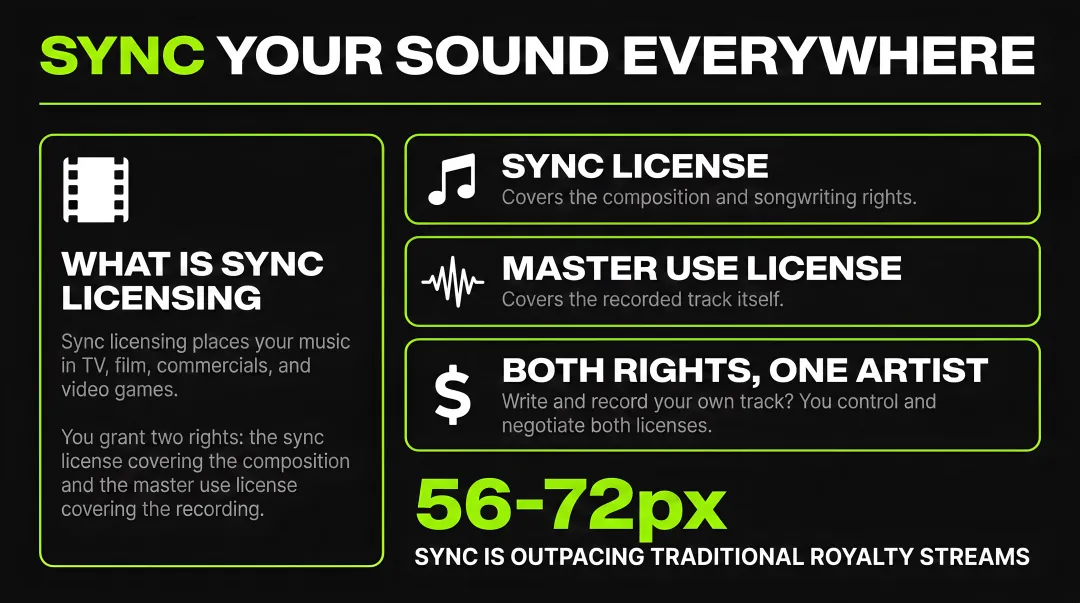
Sync licensing involves licensing music to be "synchronized" with visual media. You grant two rights: the sync license (for the composition/songwriting) and the master use license (for the recording). If you wrote and recorded your track yourself, you control both. Co-writers or label partnerships require all parties to approve deals.
The market has transformed dramatically. Independent publishers saw their sync income jump 18.4% to reach $69.2 million in 2024, outpacing most traditional revenue streams.
Sync opportunities span multiple media types:
- Global ad campaigns: $100,000–$250,000+ depending on brand reach, exclusivity, and artist profile
- National TV/radio ads: $10,000–$50,000 based on territory and campaign duration
- Major studio films: $20,000–$100,000+ (varies by usage prominence and budget)
- Cable/streaming TV episodes: $2,000–$10,000 for network shows, depending on scene placement
- AAA video games: $10,000–$50,000+ tied to game budget and interactive usage
- Trailers: $10,000–$80,000 for theatrical vs. online distribution
- Micro-syncs (YouTube/social): $20–$500 through volume-based subscription platforms
The industry has shifted toward diverse music representation. Globalized content production—think Squid Game, Lupin—has created surging demand for non-Western music styles.
This shift opens real opportunities for artists from underrepresented markets. Madverse demonstrated this potential by securing the first South Asian track placement in The Kardashians, showing that premium sync opportunities once dominated by Western pop are now accessible to artists worldwide.
The platforms below represent different approaches to connecting artists with these opportunities, from massive marketplaces to selective boutique agencies.
Top Sync Licensing Platforms for Artists in 2026
These platforms were selected based on verified placements, transparent terms, artist testimonials, and proven track records across different budget tiers and media types.
Musicbed
Musicbed serves as a premium curated library for filmmakers, brands, and content creators. With approximately 70,000 tracks from 1,500 carefully selected artists, it focuses on cinematic, high-quality music that elevates visual storytelling.
What sets Musicbed apart is its rights-managed licensing model—artists earn royalties from each placement rather than accepting buyouts. The platform's selective curation means higher placement fees and stronger relationships with premium clients. Approval requires submitting professional-quality recordings that meet their cinematic standards.
| Exclusivity Requirements | Revenue Split & Payment Terms | Best For |
|---|---|---|
| Typically exclusive for submitted tracks; artists cannot license the same recordings elsewhere during the agreement term | Artists retain ownership and earn per-license royalties; no upfront buyout, payment varies by client usage and license type | Cinematic composers, indie artists with emotive/story-driven music, filmmakers seeking high-end production value |
Epidemic Sound
Since pioneering the subscription model for the creator economy, Epidemic Sound has built a library of 50,000+ tracks. The platform serves YouTubers, podcasters, and digital creators who need consistent music access without per-use fees.
Artists assign ownership to Epidemic Sound in exchange for upfront buyouts (typically several thousand dollars per track) plus a 50/50 split on streaming royalties. This model provides predictable income for production music but removes tracks from your artist catalog permanently.
| Exclusivity Requirements | Revenue Split & Payment Terms | Best For |
|---|---|---|
| Full exclusive ownership transfer; artists assign master and composition rights to Epidemic Sound | Upfront buyout (several thousand dollars per track) + 50/50 split on streaming royalties generated by the platform | Full-time production music creators prioritising steady income over artist brand, background/ambient music specialists |
Songtradr
This massive global marketplace connects artists directly with music buyers through AI-powered matching technology. Songtradr handles everything from micro-syncs to major film placements, offering a freemium model that scales with your needs.
Artists keep 60% of sync fees on the free tier, or upgrade to Pro accounts for 80% retention. The platform's strength lies in volume—thousands of opportunities across budget ranges—though competition is fierce given the open marketplace model.
| Exclusivity Requirements | Revenue Split & Payment Terms | Best For |
|---|---|---|
| Non-exclusive; artists retain rights and can license tracks through multiple platforms simultaneously | Free tier: 60% to artist; Pro tier: 80% to artist; payments processed after client pays, typically 30-60 days | DIY artists seeking volume opportunities, those comfortable with self-promotion and active pitching, diverse genre representation |
Marmoset
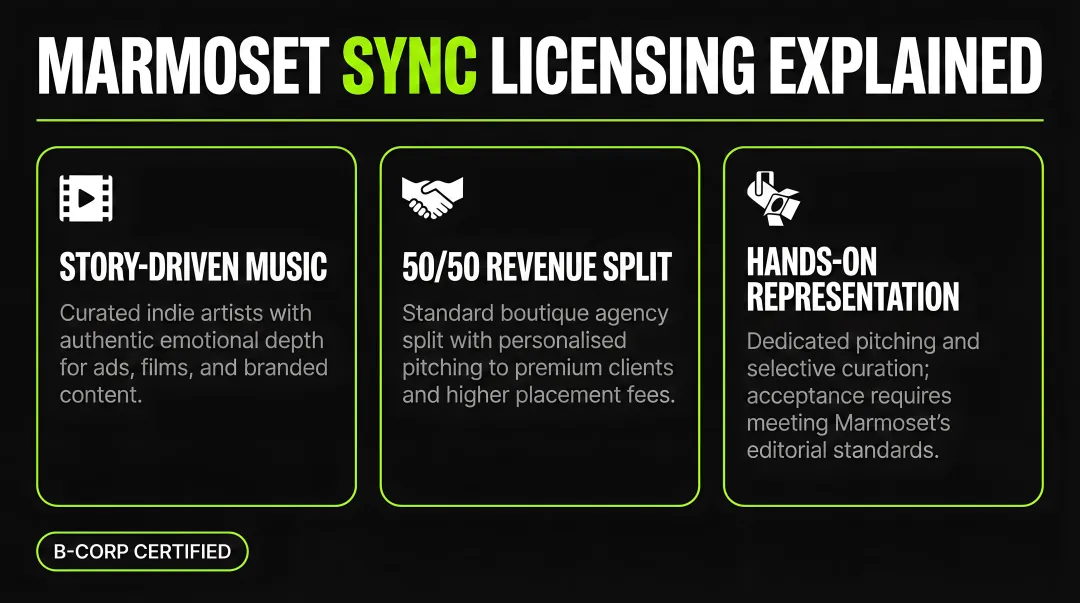
As a boutique agency and certified B-Corp, Marmoset focuses on "story-driven" music for ads, films, and branded content. The platform works selectively with indie bands and artists who bring authentic emotional depth to visual projects.
The 50/50 revenue split is standard for boutique agencies, but Marmoset's hands-on approach means personalised pitching to premium clients. Artists benefit from dedicated representation and higher placement fees, though acceptance requires meeting their curation standards.
| Exclusivity Requirements | Revenue Split & Payment Terms | Best For |
|---|---|---|
| Selective exclusive representation for submitted catalog; artists work closely with Marmoset's team on specific projects | 50/50 split on sync fees; upfront payments vary by placement (major ads can reach five to six figures); backend royalties collected through PROs | Indie bands with emotive, narrative-driven music; artists seeking hands-on representation and premium brand partnerships |
Distribution Platforms with Sync Divisions (Madverse, TuneCore, CD Baby)
Distribution platforms have evolved beyond simple DSP delivery to offer integrated sync licensing, creating one-stop solutions for independent artists. This model eliminates the need for separate distribution and sync relationships while maintaining artist ownership.
Madverse demonstrates this approach with sync opportunities across TV, film, commercials, and video games while artists keep 95% of their royalties. The platform handles pitching to music supervisors, brands, and filmmakers, removing administrative burdens while ensuring proper PRO registration and metadata management.
Key advantages include:
- Full catalog control with non-exclusive terms
- Sync opportunities integrated with distribution services
- Analytics showing both streaming and placement performance
- High-profile placements (including the first South Asian track on The Kardashians)
- Passive sync income alongside active distribution
| Exclusivity Requirements | Revenue Split & Payment Terms | Best For |
|---|---|---|
| Non-exclusive; artists retain 100% ownership and can submit to multiple sync platforms while using distribution services | Artists keep 95% of royalties (Madverse); transparent sync fee sharing; integrated payment systems with streaming royalties | Independent artists and labels wanting comprehensive solutions, those prioritising ownership and flexibility, artists seeking passive sync income alongside active distribution |
How We Chose the Best Sync Licensing Platforms
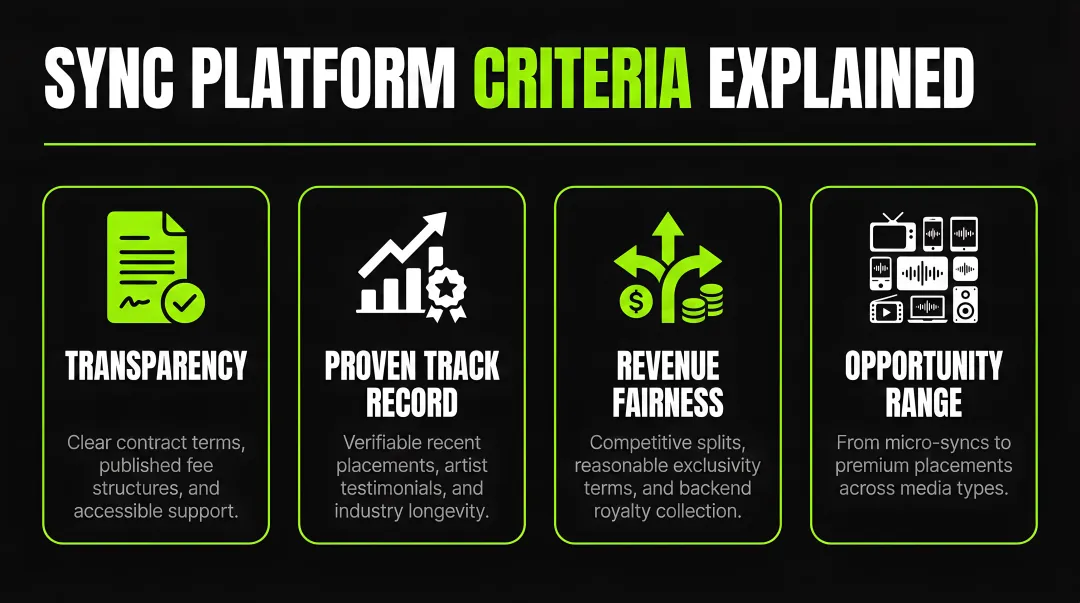
Platform selection was based on four critical criteria:
- Transparency: Clear contract terms, published fee structures, and accessible support
- Proven track record: Verifiable recent placements, artist testimonials, and industry longevity
- Revenue fairness: Competitive splits, reasonable exclusivity terms, and backend royalty collection
- Opportunity range: From micro-syncs to premium placements across media types
Understanding these criteria helps you avoid common pitfalls that can limit your sync opportunities.
Common mistakes artists make:
- Signing exclusive deals without reading reversion clauses (terms that return rights to you) – this locks your entire catalog to one platform
- Chasing big-name platforms only, while boutique agencies often deliver higher fees and better artist relationships
- Ignoring "perpetual" contract terms that can trap your music for years without negotiated term limits
- Failing to diversify with hybrid strategies: exclusive deals for production tracks, non-exclusive for artist releases
The best platform depends on your specific goals. Consider these key questions:
- Do you prioritise high-volume placements or premium fees per placement?
- Would you prefer exclusive representation with hands-on support, or flexibility across multiple platforms?
- Are you willing to invest upfront membership fees, or do commission-only models suit your budget better?
- Does your genre benefit more from specialised boutique agencies or broad marketplace exposure?
Conclusion
Sync licensing in 2026 offers real opportunities for independent artists, but success requires strategic platform selection aligned with your career goals, music style, and business preferences.
The market has evolved beyond "major label only" gatekeeping. Independent artists now secure placements in global TV shows, major brand campaigns, and AAA video games.
To maximize your sync licensing success:
- Research each platform's terms carefully before signing
- Test non-exclusive options before committing to exclusive representation
- Build a sync-ready catalog with instrumental versions, stems, and detailed metadata
- Track performance across platforms to identify your best ROI
If you want to combine distribution with sync licensing while keeping 95% of your royalties, Madverse offers an integrated approach. Their sync division actively pitches to supervisors while you maintain full ownership, creating passive income streams alongside your streaming revenue.
Explore Madverse's sync services to start turning your music into placements that pay.
Frequently Asked Questions
What is the best music licensing platform?
It depends on your goals. Marketplaces like Songtradr offer high-volume accessibility, while boutique agencies like Marmoset provide premium placements. Distribution platforms with sync divisions (Madverse, TuneCore) let you maintain ownership while accessing opportunities.
How to license music for commercial use?
Prepare high-quality recordings with instrumental versions and stems. Register with a PRO (ASCAP, BMI, or your regional PRO) for backend royalties, then submit to sync platforms or pitch to music supervisors. Ensure you control both composition and master rights.
What's the difference between exclusive and non-exclusive sync licensing?
Exclusive deals restrict you to one platform but offer higher fees, upfront payments, and priority pitching. Non-exclusive lets you work with multiple platforms for broader exposure, though fees may be lower. Many artists use both strategically.
How much can artists earn from sync licensing deals?
Fees vary by media type: indie web series (₹4,000–₹40,000), cable TV shows (₹1.6 lakh–₹8 lakh), network TV (₹4 lakh–₹12 lakh), national commercials (₹8 lakh–₹80 lakh+), and major films (₹16 lakh–₹80 lakh+). You also earn backend performance royalties through your PRO.
Do I need to own 100% of my music rights to license for sync?
You need control over both composition and master recording, or written permission from all rights holders. "One-stop" tracks (where you control everything) are preferred by supervisors for faster clearance and earn backend royalties through your PRO.
How long does it take to get a sync placement?
Timelines vary widely. Urgent projects may license tracks within days. Traditional TV/film placements typically take weeks to months from brief to final clearance. Building a catalog and submitting consistently increases your chances over time—think of it as planting seeds that may sprout months or years later.