Introduction
When multiple contributors pour their talent into a single track—producers crafting beats, songwriters penning lyrics, featured artists delivering verses—the creative magic is undeniable. But when payment time arrives and splits aren't managed properly, that magic can quickly sour into disputes, delayed payments, and broken trust. In collaborative music projects, getting royalty splits wrong doesn't just hurt earnings; it damages professional relationships that took years to build.
These relationship fractures have real financial consequences. When producers, featured artists, songwriters, and managers all hold rights to a track, even small calculation errors multiply across thousands of streams. According to industry data, around 40% of top 100 songs now involve featured artists or collaborations, creating a web of payment obligations that spreadsheets simply can't handle at scale.
The problem is massive: the Mechanical Licensing Collective received nearly ₹3,500 crore (approximately $424 million) in unmatched royalties in 2021 alone—much of it due to poor metadata and split documentation. For independent artists and labels working on tight margins, every rupee matters.
Key Takeaways
- Split music earnings among multiple rights holders automatically across master and publishing rights
- Automated tools eliminate payment errors and delays while ensuring transparent, accurate royalty distribution
- Key features: flexible configurations, real-time calculations, transparent reporting, and tax compliance
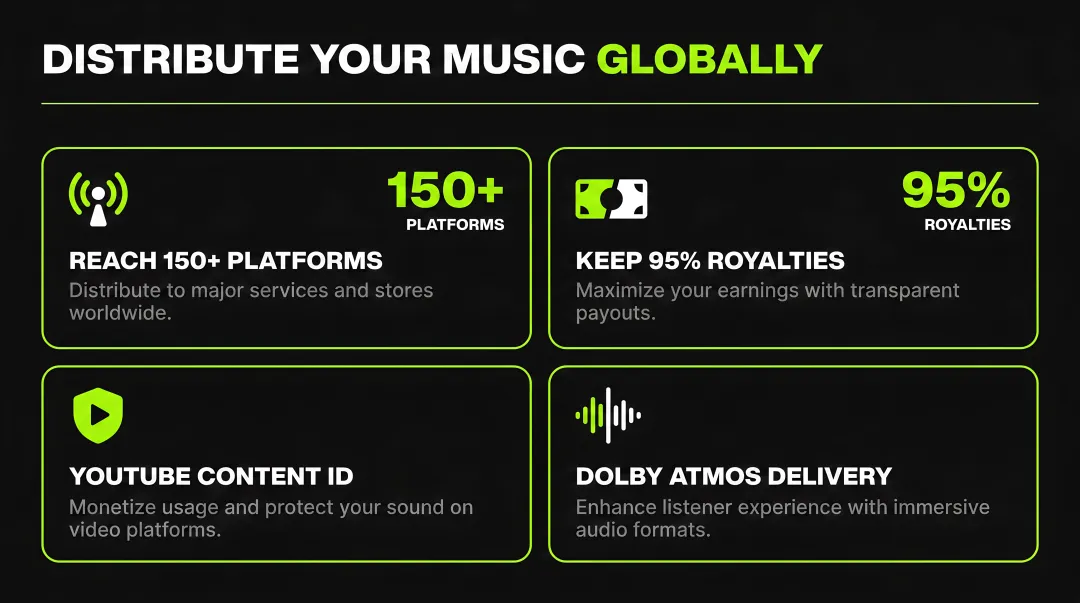
- Madverse's royalty splits at source ensure collaborators receive their share directly, with artists keeping 95% of royalties
What is Royalty Split Management?
Royalty split management is the process of dividing music earnings among multiple contributors—artists, producers, songwriters, managers—based on agreed percentages or contractual agreements.
Every time a song generates revenue through streaming, downloads, or licensing, that income must be accurately allocated to each rights holder according to their share.
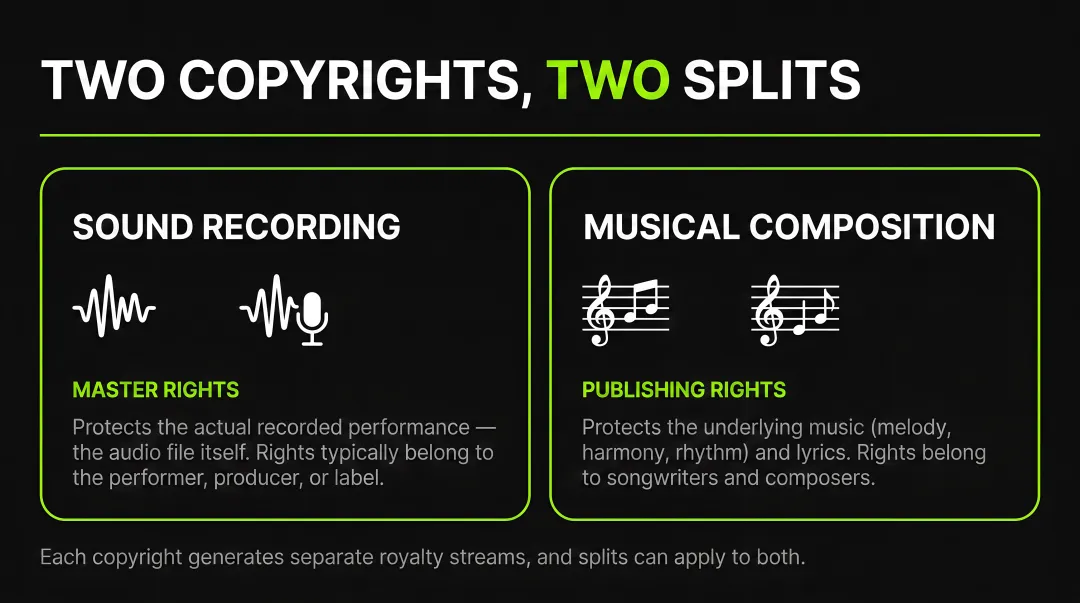
Two Copyrights, Two Split Types
Understanding splits requires distinguishing between two fundamental copyrights:
- Sound Recording (Master Rights): Protects the actual recorded performance—the audio file itself. Rights typically belong to the performer, producer, or label
- Musical Composition (Publishing Rights): Protects the underlying music (melody, harmony, rhythm) and lyrics. Rights belong to songwriters and composers
Each copyright generates separate royalty streams, and splits can apply to both. A producer might own 5% of the master recording, while a songwriter holds 25% of the composition.
Common Split Scenarios
These copyright distinctions play out in real-world collaborations where multiple parties contribute to a single release. Split management becomes essential in several situations:
- Collaborative tracks: Multiple artists splitting master royalties equally or by contribution
- Producer points: Producers receiving 3-7% of the artist's royalty share (typically negotiated as "points")
- Songwriter shares: Multiple writers dividing composition royalties based on creative input
- Manager commissions: Managers taking 15-20% off the top before other splits
- Label deals: Labels taking a percentage before remaining royalties split among artists
Splits can be configured at different levels—individual tracks, full albums, or entire catalogs—depending on how agreements are structured.
Why Royalty Split Management Tools Matter
Manual split management might work for your first collaborative single. By your tenth release with rotating producers and featured artists, spreadsheets become a liability.
The Accuracy Problem
Manual calculations introduce human error at every step. Dividing pennies across multiple contributors from dozens of DSPs means even small percentage mistakes compound quickly.
Automated tools eliminate these errors by importing DSP statements directly and applying consistent calculation logic, ensuring every collaborator receives exactly what they're owed.
The Transparency Crisis
With manual split management, collaborators wait months for vague statements that don't show where revenue came from or how percentages were calculated. This opacity breeds distrust.
Automated platforms provide real-time dashboards where each rights holder can independently verify their earnings, see platform-by-platform breakdowns, and track payment schedules.
Speed Equals Satisfaction
Traditional royalty accounting operates on quarterly or semi-annual cycles. Modern tools process splits in real-time or near-real-time, enabling immediate royalty distribution to collaborators.
Producers seeing their share hit their account within days—not months—strengthens working relationships and enables better financial planning.
Dispute Prevention
Clear documentation prevents arguments:
- Automated splits from release day eliminate "I thought we agreed on 30%" disputes
- Transparent calculations provide verification for all parties
- Audit trails create permanent records of agreements
- The system becomes the single source of truth
This foundation reduces conflicts before they start.
What to Consider When Choosing a Royalty Split Management Tool
Selecting the right tool isn't about finding the most feature-rich platform. It's about matching capabilities to your specific collaboration structures, payment needs, and growth trajectory.
The following factors help you connect technical features to real-world outcomes like faster payments, fewer disputes, and stronger collaborator relationships.
Split Configuration Flexibility
Different projects demand different split structures. An equal three-way split for a band is straightforward. A tiered structure where a label takes 50%, then the remaining 50% splits among three artists and a producer? That requires sophisticated configuration.
Evaluate whether the tool supports:
- Custom split percentages down to decimal points
- Hierarchical splits (label → artist → producer cascades)
- Different splits for different territories (higher percentages in home markets)
- Separate splits for master vs. publishing royalties
- Backend points that only activate after recoupment thresholds
Complex collaborations demand flexible tools. Simple 50/50 splits don't require advanced features, but multi-tier label deals with recoupment waterfalls do.
Automation and Calculation Accuracy
Manual calculation is where errors happen. Once DSP statements arrive, automation should handle everything through payment distribution without human intervention.
Critical automation capabilities:
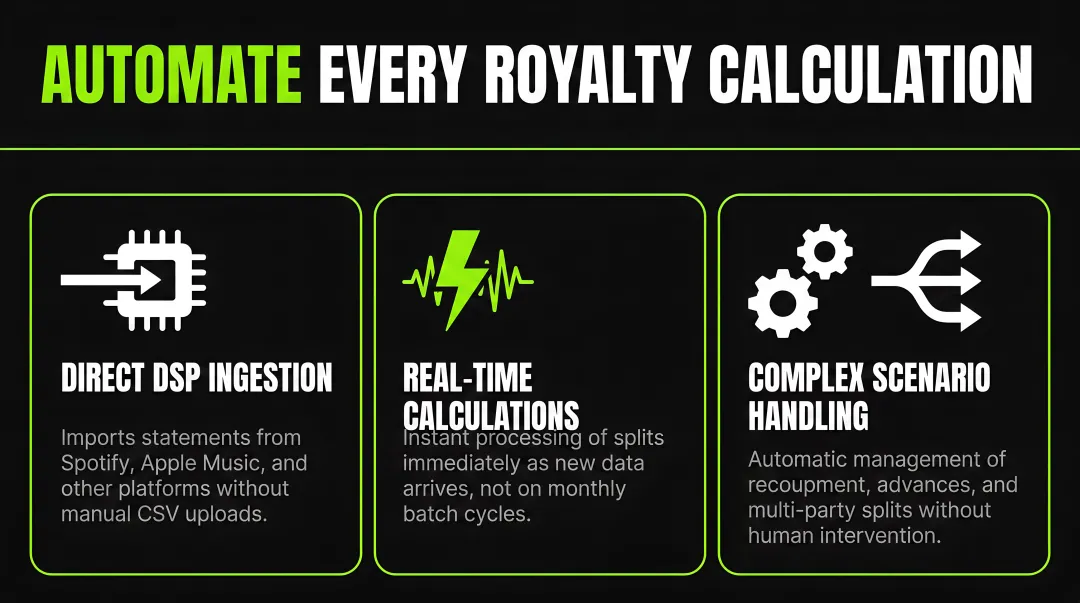
- Direct DSP ingestion: Imports statements from Spotify, Apple Music, and other platforms without manual CSV uploads
- Real-time calculations: Instant processing of splits immediately as new data arrives, not on monthly batch cycles
- Complex scenario handling: Automatic management of recoupment deductions, advance offsets, and minimum payment thresholds automatically
- Error detection: Automatic flagging of mismatches or missing data before payments go out
Industry research shows that automation reduces processing errors by over 90% compared to manual workflows, directly protecting both your reputation and your collaborators' earnings.
Transparency and Reporting
Collaborators need to independently verify their earnings. Opacity creates suspicion; transparency builds trust.
Essential reporting features:
- Individual collaborator portals: Each rights holder logs in to view their own earnings without seeing others' full splits
- Platform-by-platform breakdowns: Shows exactly how much came from Spotify vs. Apple Music vs. YouTube
- Territory-level detail: Reveals geographic performance for international releases
- Historical tracking: Maintains complete earnings history with downloadable statements
- Visual dashboards: Charts and graphs that make trends immediately obvious
Platforms should explain numbers, not just display them. Look for tools that provide context: "Your share increased 23% this month due to playlist adds in Germany."
Payment Speed and Methods
Payment speed directly impacts collaborator satisfaction. Independent artists living on royalty income can't wait 90 days for their share.
Payment considerations:
- Payout frequency: DistroKid offers twice-weekly payouts, while Apple Music pays monthly within 45 days
- Cash flow alignment: Choose tools that match your collaborators' payment timing needs
- Payment methods: Support for ACH (low cost, US-focused), PayPal (international-friendly), wire transfer (higher fees but universal), and direct deposit
- Multi-currency support: Automatic currency conversion for international collaborators
- Minimum thresholds: Lower minimums mean faster first payments for new collaborators
Tools offering 1-2 day payouts provide significant advantage when recruiting top producers and featured artists.
Platform Integrations and Data Sources
Your tool is only as accurate as the data it receives. Direct integrations with major DSPs ensure complete, timely information.
Integration priorities:
- Major DSP connections: Direct data feeds from Spotify, Apple Music, YouTube, Amazon Music, Tidal
- Distributor compatibility: Works with your existing distributor (DistroKid, TuneCore, CD Baby) or replaces it
- Aggregated reporting: Combines data from multiple sources into unified dashboards
- API access: Allows custom integrations with accounting software, label management systems, or financial tools
- DDEX standard support: Industry-standard data exchange protocols ensure compatibility across platforms
Missing integrations mean manual data entry, which defeats the purpose of automation.
Tax and Legal Compliance
Royalty payments trigger tax obligations. The right tool handles compliance automatically, protecting you from IRS penalties and international withholding issues.
Tax compliance requirements:
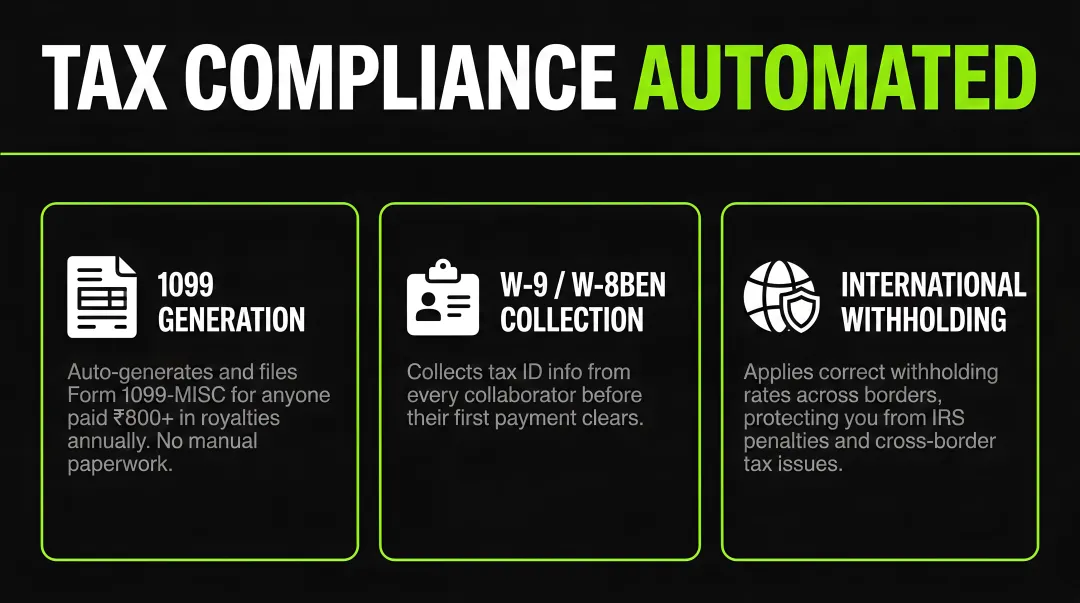
- 1099 generation: U.S. law requires Form 1099-MISC for anyone paid ₹800+ in royalties annually. Your tool should generate and file these automatically
- W-9/W-8BEN collection: Gathers tax identification information from collaborators before first payment
- International withholding: Applies appropriate tax withholding for foreign collaborators based on tax treaties
- Backup withholding: Handles cases where collaborators fail to provide valid tax information
- Audit trails: Maintains legally sound records of split agreements with digital signatures and timestamps
Poor tax compliance creates liability. In worst cases, you could be held responsible for collaborators' unpaid taxes.
How Madverse Can Help
Madverse is a music distribution and label services platform built to handle complex royalty splits while maximizing artist earnings. The platform eliminates intermediary payment layers that slow down traditional distributors.
Royalty Splits at Source
Madverse's standout feature is royalty splits at source—each collaborator receives their share directly from the platform, eliminating intermediary delays and payment friction. When royalties arrive from DSPs, they're automatically divided and distributed according to pre-configured splits, meaning producers and featured artists don't wait for the primary artist to manually forward payments.
Industry-Leading Revenue Retention
This direct-split approach pairs with Madverse's high retention model. Artists keep 95% of royalties, meaning more money flows to rights holders from the start and makes every split more valuable.
Team Collaboration and Roster Management
Madverse provides dedicated tools for labels and collectives managing multiple artists and complex split structures from a single dashboard. The platform's roster management capabilities allow you to:
- Configure different split structures for each artist or release
- Track performance across your entire roster with unified analytics
- Manage agreements digitally with organized documentation
- Access dedicated account managers for split configuration support
Beyond Basic Distribution
Madverse offers additional revenue opportunities that complement split management:
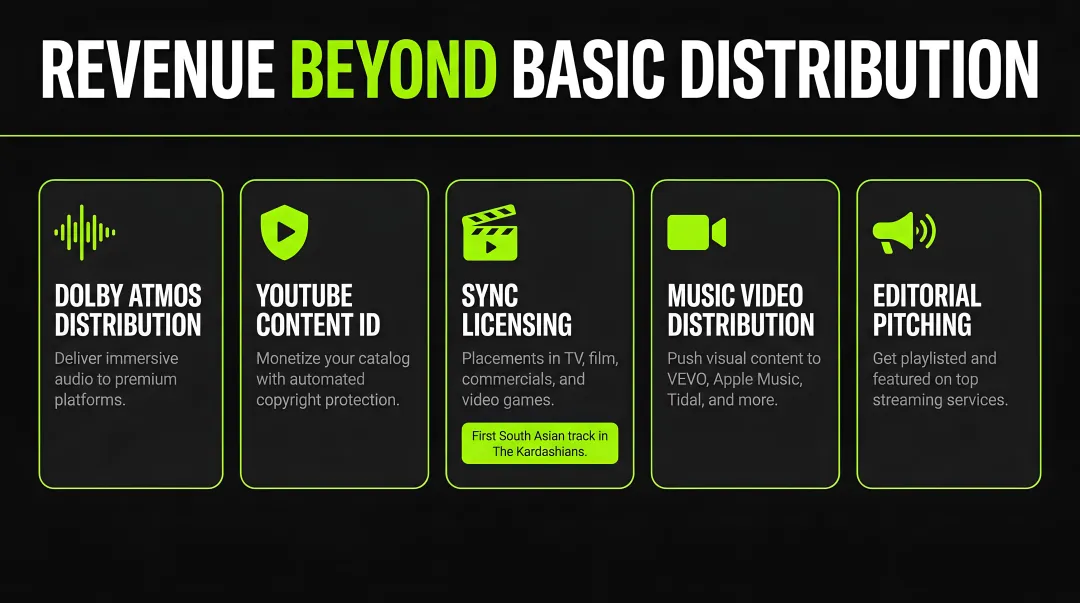
- Dolby Atmos distribution: Deliver immersive audio to premium platforms
- YouTube Content ID: Monetize your catalog across YouTube with automated copyright protection
- Sync licensing opportunities: Access placements in TV, film, commercials, and video games (Madverse synced the first South Asian track in The Kardashians)
- Music video distribution: Push visual content to VEVO, Apple Music, Tidal, and more
- Editorial playlist pitching: Get your releases in front of curators at major DSPs
All these revenue streams integrate with Madverse's split management, ensuring every dollar—whether from streaming, sync, or Content ID—gets divided accurately.
Conclusion
Choosing the right royalty split management tool isn't about finding the platform with the longest feature list. It's about matching your collaboration style, payment needs, and growth trajectory. A solo artist with occasional features needs different capabilities than a label managing twenty artists with complex producer agreements.
The most important decision you'll make is getting splits right from the beginning. Look for platforms that provide:
- Clear split agreements documented at the release stage
- Automated calculations that eliminate manual errors
- Transparent reporting accessible to all collaborators
- Fast, reliable payment processing
When collaborators trust they'll be paid accurately and quickly, they're more likely to work with you again—and recommend you to others. Platforms like Madverse handle royalty splits at source, ensuring each rights holder receives their share directly without manual distribution.
As collaborative music creation continues to grow—with more features, more producers, more international partnerships—the tools you use to manage splits will become increasingly central to your financial health and professional reputation. Choose tools that scale with your ambition, protect your relationships, and put more money in every collaborator's pocket.
Frequently Asked Questions
Is it possible for music to have more than one copyright owner?
Yes, music routinely has multiple copyright owners. The composition and master recording are separate copyrights, each potentially split among songwriters, publishers, artists, producers, and labels. Royalty split tools manage these overlapping ownership structures.
How do royalty splits differ from publishing splits?
Recording royalties (master rights) go to performers, producers, and labels for the audio recording. Publishing royalties (composition rights) go to songwriters and publishers for the music and lyrics. Both can be split among multiple parties but flow through different payment systems.
What happens if collaborators don't agree on split percentages?
Splits should be agreed upon in writing before release. Platforms with documented agreements, digital signatures, and audit trails prevent disputes. Without upfront clarity, disagreements often escalate into payment delays or legal action.
Can I change royalty splits after a song is released?
While technically possible on some platforms, changing splits post-release is complicated. It typically requires all parties' consent and may only apply to future earnings, not historical payments. This makes upfront clarity essential—fixing split errors after release is far more difficult than getting them right initially.
What information do I need to set up a royalty split?
You'll need each collaborator's email or platform account, agreed-upon percentage splits, payment details (bank account or PayPal), and tax information (W-9 for U.S. collaborators, W-8BEN for international). Collecting this information before release prevents payment delays.
How do royalty split tools handle international payments?
Modern platforms support multi-currency payments, automatic currency conversion, and tax withholding for international collaborators. Fees and processing times vary by country, so verify your platform's capabilities for your collaborators' regions.